- Indian women spend triple the time on unpaid domestic work compared to men daily
- Time poverty triggers chronic stress, raising cortisol and disrupting metabolism
- Elevated cortisol leads to muscle loss, lower metabolic rate, and weight management issues
The image of the modern Indian woman is frequently painted as a celebratory picture of efficiency. She balances corporate deadlines while simultaneously managing household chores, preparing fresh meals, and supervising eldercare. Societal narratives praise this ability to remain always multitasking, labelling it as a superpower. However, behind this culturally enforced mask of resilience lies a silent, biological crisis. This persistent juggling act creates a structural scarcity known as time poverty, defined as a critical deficit of discretionary time needed for rest, leisure, and basic self-care. While the economic implications of this temporal depletion are frequently discussed, its severe physiological toll remains largely hidden. In reality, always multitasking is not a badge of honour; it is a metabolic disruptor that is fundamentally altering an Indian woman's metabolism.
The Invisible Weight Of Unpaid Care Work
In India, temporal deprivation is deeply gendered. According to data from the Time Use Survey (TUS) published in a comprehensive report on the unpaid care work burden in India, Indian women spend an average of 299 minutes daily on unremunerated domestic duties, compared to a mere 97 minutes spent by men. This stark 3:1 ratio ranks among the highest globally.
When a woman attempts to combine formal employment with this massive domestic load, she enters a gruelling "second shift". The impact of multi-tasking on health manifests as a structural "time tax" that strips away her sleeping hours, exercise windows, and relaxation. This chronic lack of downtime functions as an upstream social determinant of health, laying the groundwork for severe lifestyle diseases in Indian women.
Also Read: 'Good Girl' Behaviour May Double Women's Illness Risk Later In Life: Study
How Time Poverty Reprograms The Metabolic Rate
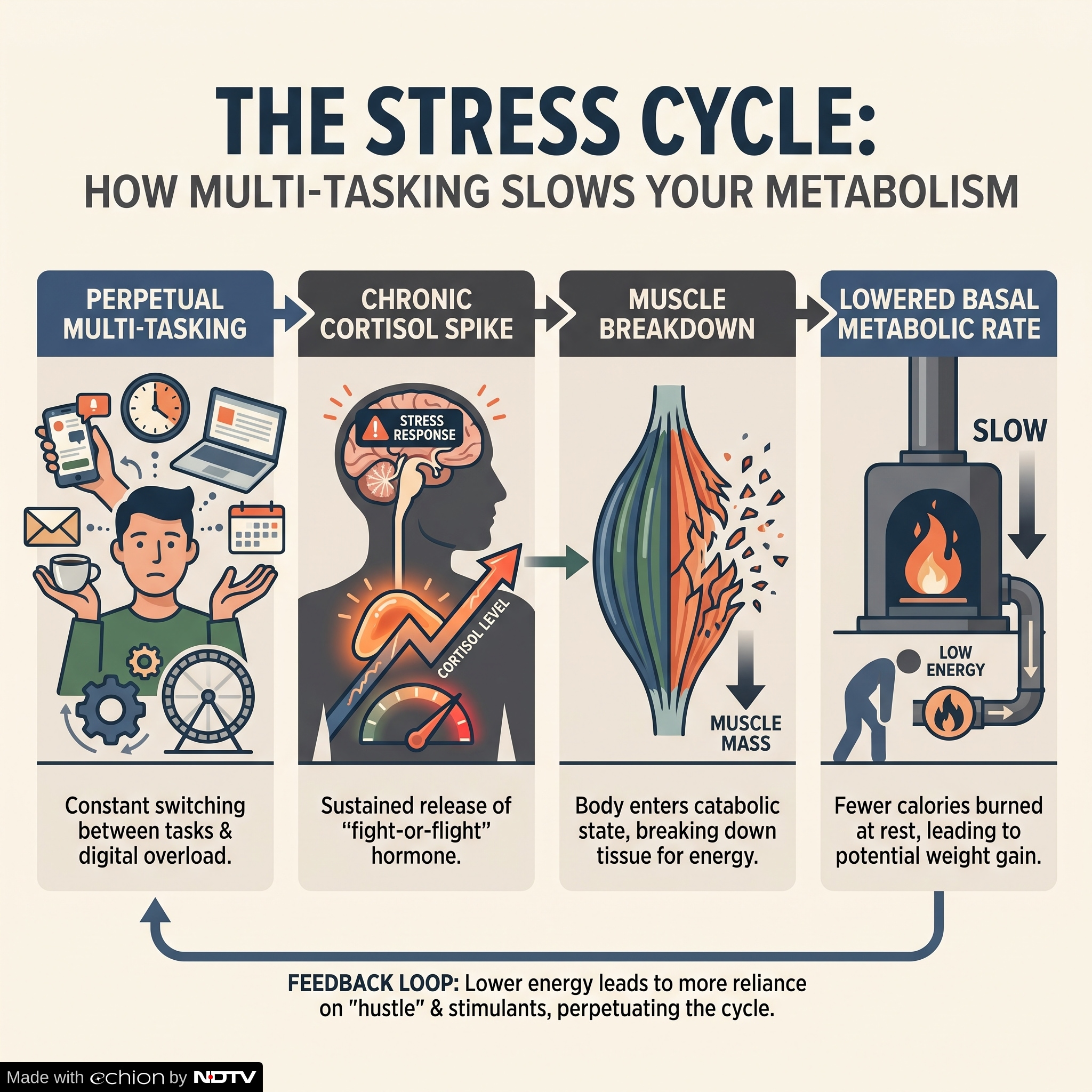
When an individual experiences time poverty, the brain perceives the constant rush as a state of perpetual environmental threat. This activates the hypothalamic-pituitary-adrenal (HPA) axis, keeping the body locked in a prolonged fight-or-flight response. The physiological consequence of this is the chronic overproduction of cortisol, the body's primary stress hormone.
The relationship between chronic stress and metabolism fundamentally changes how the body handles energy. Elevated cortisol levels systematically break down lean muscle tissue to quickly release glucose into the bloodstream for immediate survival energy. Over time, a reduction in lean muscle mass directly lowers the basal metabolic rate in women. A lower metabolic rate means the body burns fewer calories at rest, making weight management an uphill battle despite a controlled diet.
The Cortisol Trap: Visceral Fat and Insulin Resistance
The biological cascade does not stop at a slowed metabolism. Chronic hormonal imbalances completely alter how and where the body stores fat cells.
An extensive epidemiological analysis detailed in PMC Public Health Research reveals that time-poor individuals face an escalated risk of poor dietary habits and severe metabolic dysfunction. High cortisol levels act as a direct signal for visceral fat accumulation which is the dangerous storage of fat around internal organs such as the liver and stomach. This is why many women notice a stubborn increase in abdominal fat, often referred to as a "cortisol belly", even if their weight remains stable elsewhere.
Furthermore, a constant flood of stress-induced glucose forces the pancreas to pump out extra insulin. Over time, cells become desensitised to this hormone, giving rise to insulin resistance symptoms such as:
- Uncontrollable cravings for simple carbohydrates and processed sugars
- Persistent fatigue and energy crashes after meals
- Difficulty losing weight despite engaging in calorie deficits
These hormonal shifts directly accelerate the onset of women's health crises in India, particularly the rapid surge in Type-2 diabetes and hormonal issues such as (PMOS).
The Doctor's Insight
"We are witnessing an unprecedented rise in metabolic disorders among women who seemingly do everything right," says Dr Anjali Malhotra, Senior Consultant of Endocrinology and Metabolic Disorders.
"Patients often present with classic insulin resistance symptoms and severe fatigue. They feel guilty about their weight gain, assuming it is a personal failure of willpower. But when you look closely at their lives, they are suffering from profound temporal deprivation. How stress affects female metabolism is direct; when a woman is chronically rushed, her cortisol remains elevated, which slows her metabolic rate in women and promotes visceral fat accumulation. You cannot heal a metabolism that is constantly running on survival mode."
Also Read: Nutritionist Explains Why Strength Training Is Essential For Healthy Ageing
Breaking The Cycle Of Temporal Deprivation
To protect an Indian woman's metabolism, the medical community and families must stop looking at health through a narrow lens of diet and exercise alone. If a woman lacks the discretionary hours to sleep or cook a mindful meal, a standard lifestyle prescription becomes a source of deeper anxiety.
Addressing time poverty requires structural changes at home and in society:
- Redistribute Domestic Labour: Domestic tasks and family caregiving must be equitably shared within households to grant women essential rest windows.
- Shift Workout Paradigms: If time is scarce, women should avoid exhausting, high-intensity workouts that further increase cortisol. Instead, prioritise 20 minutes of resistance training or regular walking to build muscle mass safely.
- Guard Sleep At All Costs: Prioritise 7 to 8 hours of sleep. Sleep is the primary window where cortisol resets and metabolic function repairs itself.
The metabolic health of Indian women cannot be sustained on a foundation of chronic exhaustion. Reclaiming discretionary time is not a luxury; it is a vital medical necessity.
Disclaimer: This content including advice provides generic information only. It is in no way a substitute for a qualified medical opinion. Always consult a specialist or your own doctor for more information. NDTV does not claim responsibility for this information.