

)
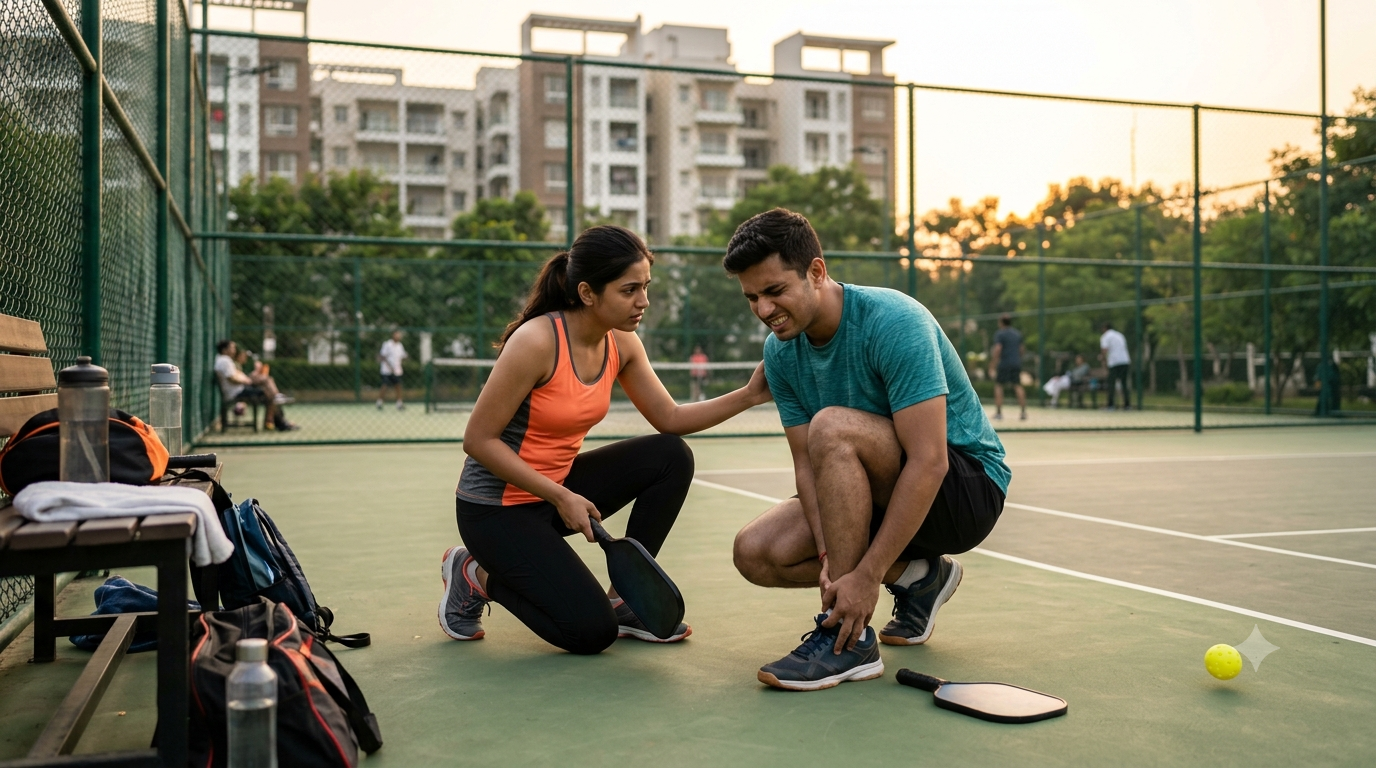
Every Monday, orthopaedic clinics fill up with football injuries, badminton shoulder strains, and sprained ankles from weekend treks. The common thread is not bad luck. It is a body asked to do a week's worth of physical work in a single weekend session.
The Six-Day Gap Problem
The people who walk into an orthopaedic clinic after a weekend game are often healthy, active professionals. The common factor is not a lack of fitness, but a lack of regular movement through the week. After spending long hours at a desk, the body is suddenly expected to sprint, jump, twist, and change direction at full speed. Muscles, tendons, ligaments and joints are less prepared for these demands without consistent conditioning.
The injuries themselves are familiar. Football and badminton are sports where ACL injuries are common as the sudden changes in direction put a lot of stress on the knee. Overhead sports such as badminton and tennis are also prone to rotator cuff strains. Running and trekking often lead to ankle sprains, especially on uneven surfaces. In many cases, these injuries do not require a major fall or collision. A sudden pivot, an awkward landing, or one movement too many after fatigue has set in is often enough to cause significant damage.
Age Changes the Injury, Not the Enthusiasm
A growing number of patients with sports injuries are now in their late thirties and forties. Many of them grew up playing cricket, badminton, or football, but stepped away from regular sport as work and family responsibilities took over. Years later, with more focus on fitness and wellbeing, they return to the same games with the same enthusiasm.
The challenge is that the body has changed. Muscle strength, flexibility, and joint resilience naturally decline with age unless they are maintained. Recovery also takes longer than it did in the twenties. As a result, the body is less forgiving of sudden, high-intensity activity after long periods of inactivity.
Returning to sport is always a positive step, but it should be matched with gradual conditioning. Giving the body time to rebuild strength, balance, and mobility makes it easier to enjoy the game while reducing the risk of injury.
Where the Preparation Goes Wrong
Three mistakes account for a large share of the injuries seen after weekend sport.
The first is skipping the warm-up. Many players head straight into the game to make the most of their booked court or playing time. But muscles and joints need a few minutes to prepare for sudden sprints, jumps and changes of direction. A short dynamic warm up before the game will help the body to respond better to such demands.
The second is a lack of strength training. Recreational sports place repeated stress on the knees, hips, ankles, and shoulders. General fitness is important but doesn't always translate to strength and stability in these joints. Third is the regular training to increase lower limb and core strength can improve balance, control and resilience during play.
Playing through pain
There are many who dismiss discomfort as part of the game and continue to play despite warning signs. Mild muscular soreness post activity is to be expected but pain that increases with movement, is accompanied by swelling or affects performance needs attention. Recognising these signals early often prevents a minor problem from becoming a more serious injury.
What Actually Prevents These Injuries
Preparing your body for weekend sport does not have to be complicated. A few short sessions of strength and mobility exercises during the week can make a significant difference. Simple exercises like squats, lunges, planks and resistance band exercises build the stability and control needed for recreational sports. A warm-up prepares the muscles and joints for sudden movements while a cool-down will allow your body to recover in a more comfortable way after the game. Another detail commonly ignored is footwear. Shoes can lose their grip and support over time, even if they still feel comfortable. Once the soles are visibly worn or the cushioning has flattened, the risk of ankle and knee injuries increases.
Finally, it is important to recognise the difference between fatigue and pain. Mild muscle soreness after activity is a normal part of exercise. Persistent pain, swelling, or difficulty moving a joint is a signal that the body needs attention before returning to the game.
The Fix Runs Through the Week, Not the Weekend
Most weekend sports injuries do not begin on the day of the match. They are often the result of a body that has had very little movement through the week and is suddenly expected to sprint, jump, twist, and stop at full intensity. A couple of days of sport cannot replace regular conditioning.
People who stay active during the week usually enjoy their sport with greater confidence because their muscles, joints, and ligaments are better prepared for the demands of the game. Even simple habits such as walking, stretching, strength training, or short workouts through the week make a noticeable difference.
Sport should leave you feeling stronger, fitter, and ready for the next game. That starts long before the weekend. The work you put in from Monday to Friday is what allows your body to perform well when it matters most.
(By Dr. Sachin Kumar, Senior Consultant - Orthopaedics, Prayag Hospitals)
Disclaimer: The opinions expressed within this article are the personal opinions of the author. NDTV is not responsible for the accuracy, completeness, suitability, or validity of any information on this article. All information is provided on an as-is basis. The information, facts or opinions appearing in the article do not reflect the views of NDTV and NDTV does not assume any responsibility or liability for the same.