
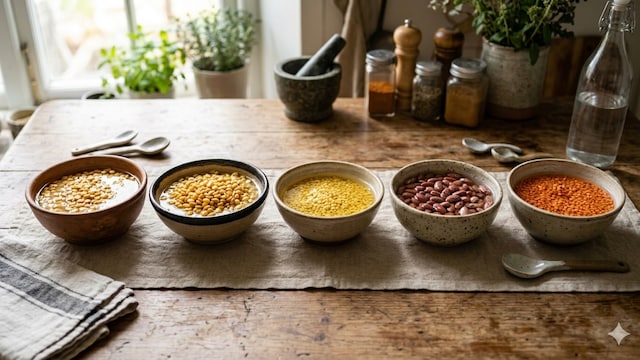
Dals are a staple in most Indian kitchens. They are packed with protein, fibre and essential nutrients, making them a go-to for everyday meals. But despite being healthy, many people still complain about bloating, heaviness, or discomfort after eating them. The reason is often not the dal itself – it is how it is prepared. One simple step that gets ignored? Soaking.
Nutritionist Deepsikha Jain talks about this in her Instagram post. She explains that soaking time is not one-size-fits-all. Different types of dals need different soaking durations, and getting this right can make a big difference to how your body digests them.
How Long You Should Soak Different Types Of Dals
1. Smaller Whole Dals (7-8 Hours)
These are easier on the gut compared to larger legumes. As Jain says, you can soak them overnight for about 7-8 hours, ideally with a pinch of salt. This helps soften them just enough, making cooking easier and digestion smoother.
2. Larger Legumes Like Rajma, Chole, Chana (10-12 Hours)
These need more attention. They have a tougher outer skin, which makes them harder to digest and more likely to cause bloating. She suggests soaking them for at least 10-12 hours overnight. This helps break down compounds that can otherwise lead to gas and discomfort.
3. Split Dals (4-5 Hours)
Split dals are lighter and easier to digest. Because they do not have the outer skin, they do not need as much soaking. Even 4-5 hours is enough to prep them for cooking and make them gut-friendly.
Deepsikha Jain stresses that soaking is not optional. "It's absolutely important to soak all your dals before you consume them for better digestion and easier gut health," she explains.
This small habit can reduce bloating, improve nutrient absorption and make your meals feel lighter overall. So if you have been blaming dals for digestive issues, it might be time to look at your soaking routine instead.
Disclaimer: This content including advice provides generic information only. It is in no way a substitute for a qualified medical opinion. Always consult a specialist or your own doctor for more information. NDTV does not claim responsibility for this information.