- Extended sitting causes vascular strain by shutting down calf muscle pumps and reducing blood flow
- Chronic ankle and foot swelling signals poor circulation due to fluid pooling in lower limbs
- Visible spider veins and varicose veins indicate structural vein damage from blood pooling
For the modern urban professional, the eight-hour workday is standard. Whether working intently at a laptop in an office chair, driving through long rush-hour traffic, or winding down on the couch scrolling through social media, the majority of waking hours are spent in a seated position. While this sedentary routine might feel physically relaxing, it forces the vascular system to work under extreme, unnatural duress. The human body is fundamentally structured for locomotion. When remaining seated for extended, uninterrupted periods, the mechanical pump that drives blood flow back to the heart, the calf muscles completely shut down.
Without these regular muscle contractions, blood must fight gravity entirely on its own to return up the legs. Over time, this stagnant pooling alters the normal function of blood vessels, rendering the lower limbs highly vulnerable to vascular disease.
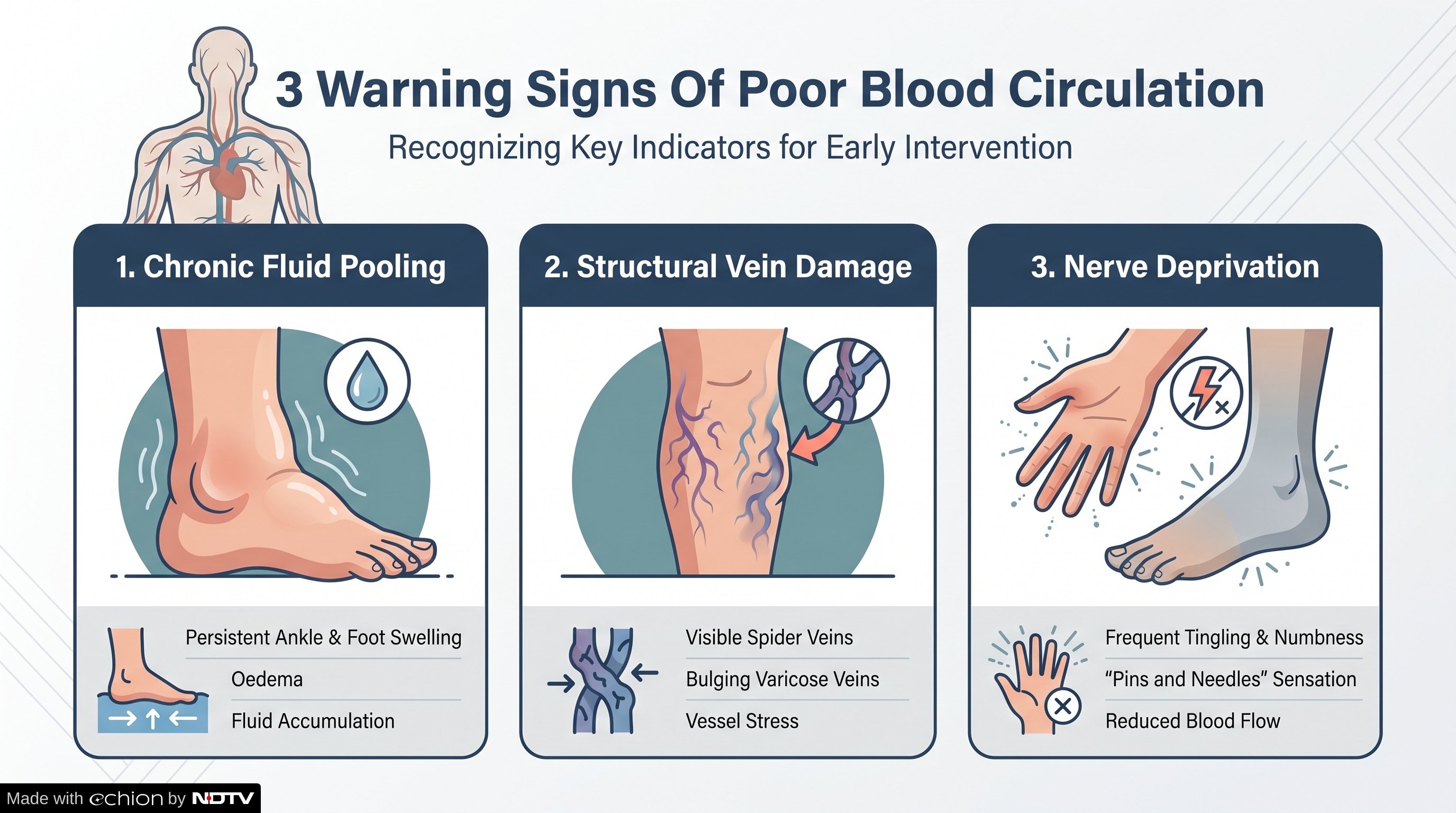
If a daily routine involves sitting for eight hours or more, it is critical to routinely inspect the lower body. These three key warning signs indicate compromised leg circulation and require immediate attention.
3 Warning Signs Of Poor Blood Circulation
1. Chronic Fluid Pooling: Persistent Ankle And Foot Swelling (Oedema)
One of the most immediate indicators of sluggish circulation is swelling around the ankles, feet, and lower calves, a condition clinically termed peripheral edema.
When sedentary for hours, the drop in gravity-defying blood pressure causes fluid to escape through the walls of the capillaries and collect in the surrounding tissues. By the end of a long working day, shoes may feel uncomfortably tight, or socks may leave deep, indented rings around the ankles.
A landmark study published in the journal Nature demonstrated that even in perfectly healthy individuals, just a few hours of uninterrupted sitting markedly reduces blood flow and vascular shear stress in the popliteal artery behind the knee. This reduction impairs endothelial function, causing blood to pool and fluid to leak into local tissues, laying the foundation for long-term vein weakness.
2. Structural Vein Damage: Visible Spider Veins And Bulging Varicose Veins
Poor circulation does not just happen beneath the surface; it eventually alters physical anatomy. Healthy veins contain tiny, one-way valves that prevent blood from flowing backward. When static sitting forces blood to pool continuously in the lower extremities, the pressure places an immense strain on these delicate structures.
Over time, these internal valves weaken, fail, and stretch out. Blood begins flowing backward and pooling permanently, leading to the development of:
- Spider Veins: Fine, web-like clusters of red, blue, or purple veins close to the skin's surface.
- Varicose Veins: Large, twisted, rope-like blue veins that bulge outward, often accompanied by a deep, throbbing ache or a sensation of heavy legs.
Epidemiological data analysed across multiple vascular lifestyle studies confirm that prolonged, static sitting without regular muscle engagement causes a structural weakening of vein walls. This chronic venous insufficiency transitions what many mistakenly label a "cosmetic issue" into a genuine medical complication.
3. Nerve Deprivation: Frequent Tingling, Numbness, Or "Pins And Needles"
Experiencing a sudden, sharp tingling sensation or a complete loss of feeling in the feet or lower calves after sitting for too long is a major red flag.
This sensation occurs because sluggish blood flow starves local peripheral nerves of the steady supply of oxygen and vital nutrients they require to fire correctly. Additionally, the physical posture of sitting, particularly crossing the legs or resting the thighs heavily against the edge of a poorly designed chair, creates a dual compression zone that simultaneously restricts local arterial blood flow and pinches the nerves.
The Ultimate Vascular Risk: Deep Vein Thrombosis (DVT)
While swelling, varicose veins, and tingling are uncomfortable, the single most dangerous consequence of prolonged circulatory stasis is deep vein thrombosis (DVT). When blood moves too slowly through deep leg veins, it can form a localised clot. If that clot breaks free, it can travel through the bloodstream to the lungs, triggering a life-threatening pulmonary embolism.
Clinical insights published by Yale Medicine stress that "stasis," being entirely still or sedentary, is one of the primary controllable risk factors for DVT. Regular movement is the single most effective defence to actively pump blood out of the calf muscles.
Also Read: 6 Best Yoga Poses To Strengthen Your Upper Body
Simple Habits To Revive Leg Circulation
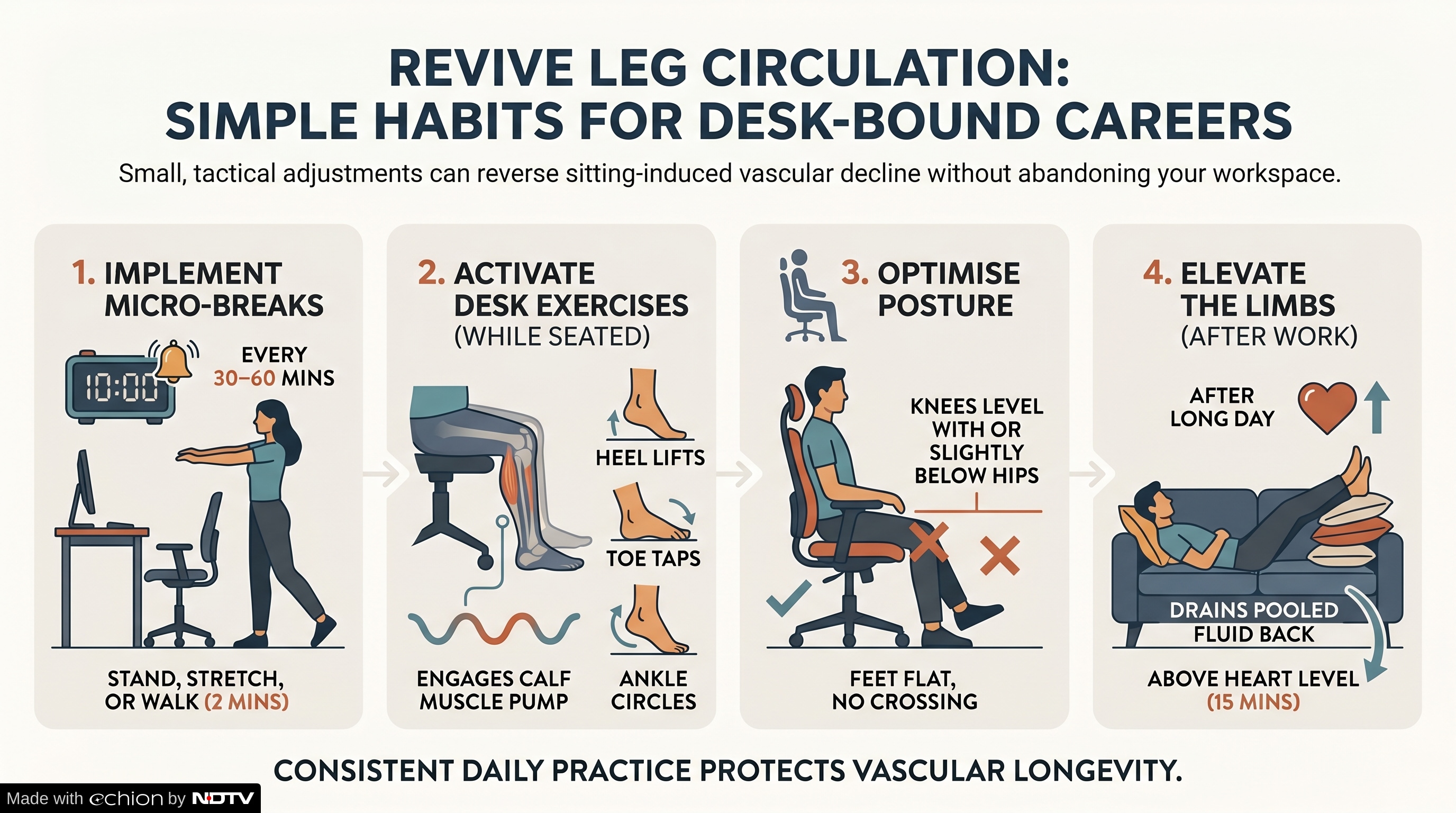
Protecting vascular longevity does not require abandoning a desk-bound career. Incorporating small, tactical adjustments into a daily workspace can entirely reverse sitting-induced vascular decline:
- Implement Micro-Breaks: Set a digital reminder to stand, stretch, or walk for two minutes every 30 to 60 minutes.
- Activate Desk Exercises: While seated, perform regular heel lifts, toe taps, and ankle circles to mechanically engage the calf muscle pump.
- Optimise Posture: Keep both feet flat on the floor, avoid crossing the legs at the knees or ankles, and ensure knees stay level with or slightly below the hips.
- Elevate the Limbs: After a long day of sitting, prop the legs up on a pillow above heart level for 15 minutes to allow pooled fluid to drain naturally back toward the central circulation.
Modern workspaces may demand hours in a chair, but leg health must not be compromised in the process. Paying close attention to swelling, structural vein changes, and sensory numbness allows for early intervention, ensuring that a sedentary day job does not escalate into a chronic vascular condition.
Disclaimer: This content, including advice, provides generic information only. It is in no way a substitute for a qualified medical opinion. Always consult a specialist or your own doctor for more information. NDTV does not claim responsibility for this information.