- Raita contains probiotics and live cultures that soothe the gut and aid digestion in summer
- Rasam includes tamarind and spices that stimulate digestion and boost gut immunity effectively
- Raita offers B vitamins and short-chain fatty acids supporting carbohydrate fiber breakdown
Your gut tends to struggle with its normal functioning during the summer months. Mainly because of heat stress, discomfort, dehydration, and cold, treats that tend to slow down the digestive process. To help with this digestive slowdown and nourish the gut, certain cooling foods such as raita and rasam can prove fruitful. These internally cooling foods are documented in research from the Nutrients journal, and Frontiers in Nutrition proves that raita and rasam are beneficial for the gut, especially in summer. When it comes to their individual components, raita is prepared from a curd base that has plenty of probiotics and has a cooling effect due to its fermented nature. On the other hand, rasam has tamarind and spices in a balanced manner that can improve overall immunity while cleansing the gut at the same time.
Gut Health Benefits Of Raita
There are various gut health benefits that consuming raita can provide due to a high dose of probiotics in it that can help with soothing the gut lining. The gut environment or microbiome requires a steady flow of beneficial bacterial strains that help make it better for the effective breakdown of food in the system. As mentioned in the research published in the Frontiers of Nutrition, raita can have a cooling effect, especially when your body temperature rises in summers. Here are the additional gut health benefits of raita:
- Fermented foods such as raita have B7, B11, and B12 that are produced in fermented dairy products by various beneficial bacterial strains such as Lactobacillaceae, Propionibacterium, Bifidobacterium, and Streptococcus species.
- Raita contains short-chain fatty acids that can improve carbohydrate fibres by introducing microbes developed by the process of fermentation.
- The curd used in raita adds live cultures that improve the digestive process and benefit the overall nutrient absorption in the gut.
- To boost the digestive properties of raita even further, you can try consuming variations such as cucumber raita, pineapple raita, and mint and coriander raita that can further multiply the digestive capabilities of these food combinations.
Also Read: Okra Water vs Lauki Juice: Which Is Better For Managing Cholesterol?
Gut Health Benefits Of Rasam
Rasam, when it is prepared in a balanced manner, has the health benefits of tamarind and spices added to it. In research published in Scientific Reports, Rasam also has the ability to function as an anticancer due to its bioactive compounds. The spices act as anti-inflammatories and stimulate digestion, which slows down during summers. Here are the ways rasam and its consumption can benefit your gut:
- A comprehensive review published in the Journal of Pharmacology details that rasam, when prepared with tamarind juice as a base, with the addition of Indian sesame oil, turmeric, tomato, chilli pepper, pepper, garlic, cumin, curry leaves, mustard, coriander, asafoetida, sea salt, and water, can nourish the gut and stimulate digestion.
- Another research piece published in the Polymer Journal indicates that rasam contains phytochemicals like alkaloids, tannins, saponins, and flavonoids that make it a digestive booster.
- Research published in the Journal of Natural Remedies confirms that rasam is a functional food that can provide gut health benefits.
Also Read: Good Gut Bacteria May Boost Muscle Strength And Improve Physical Strength, Finds Study
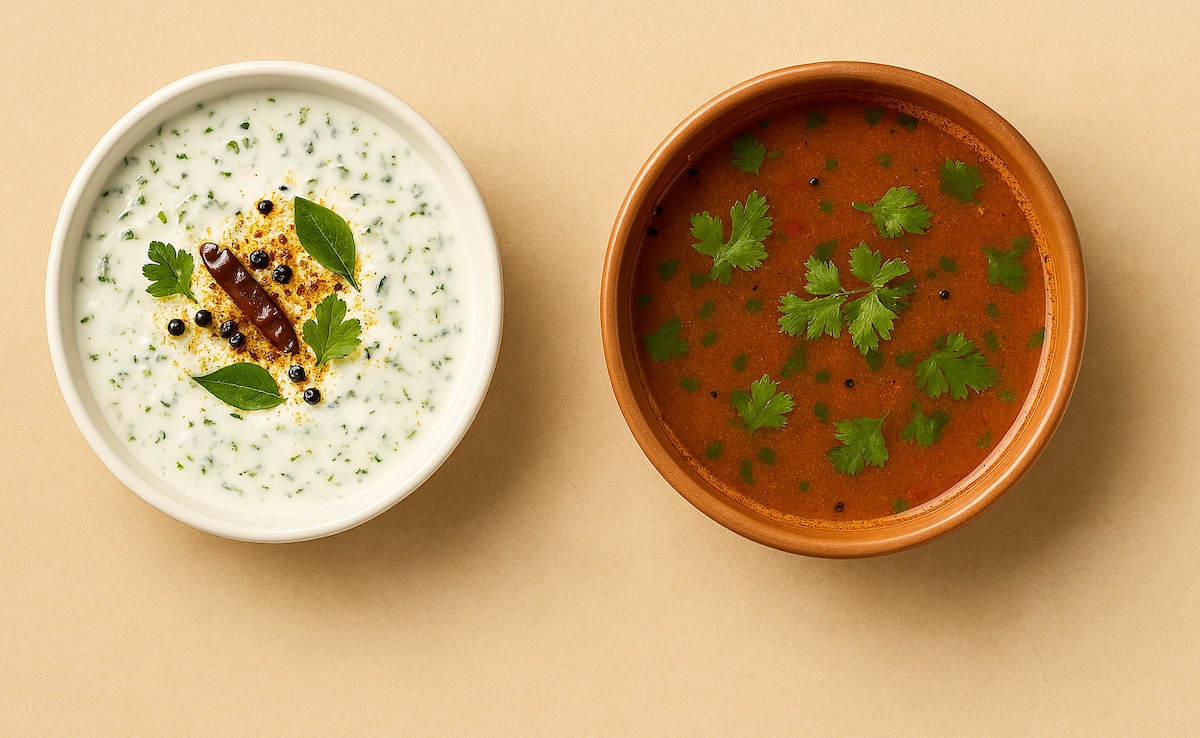
Raita and rasam (image is for representation purposes only)
Photo Credit: A.I generated image
Which One Is Better In Summers?
Both cooling foods are great in the summer months, while raita is great for cooling and hydration purposes. Rasam acts as a cleanser and boosts overall immune function, so a diet that contains both of these foods is essential to regulate your sluggish gut health in the summer months.
To effectively know when to choose raita as an accompaniment to your meal, you need to figure out how your body can absorb it at maximum capacity. For a deeper insight into this, you need to consult a nutritionist or dietician for a personalised approach. When your gut health is concerned, you need to include both in a controlled manner to get the maximum gut health benefits and cooling properties at the same time.
Note: Too much of any food item can have side effects, so you need to balance your intake accordingly to avoid dealing with an opposite effect on your system.
Both foods have unique roles in summer wellness, and their exact timings and quantities to be consumed can be determined by a nutritionist or a dietician. You can look at your current nutritional needs and suggest an approach that can help you in a much better manner.
Disclaimer: This content, including advice, provides generic information only. It is in no way a substitute for a qualified medical opinion. Always consult a specialist or your doctor for more information. NDTV does not claim responsibility for this information.