





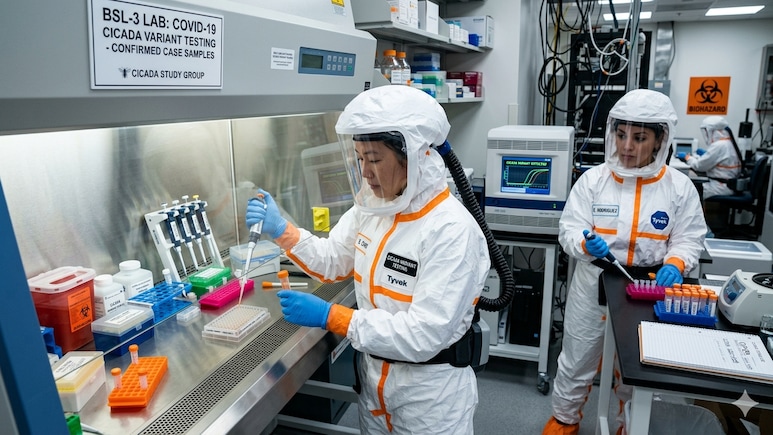
- BA.3.2, called Cicada variant, is a new Omicron subvariant with many mutations
- It was first found in South Africa in late 2024 and spread to the US, Europe, Australia in 2025-26
- WHO classifies BA.3.2 as a variant under monitoring, noting no major global threat yet
A newly identified Covid-19 subvariant, BA.3.2, informally dubbed the "Cicada" variant, is drawing global attention after being detected in the United States and other regions. Emerging from the Omicron lineage, BA.3.2 is being closely monitored by scientists and global health agencies due to its unusually high number of mutations and potential to partially evade immunity. First detected in South Africa in late 2024, the variant has since spread across multiple countries, including parts of Europe, Australia and the US. World Health Organization (WHO) has classified BA.3.2 as a "variant under monitoring," signalling that while it does not yet pose a major global threat, it warrants close observation.
Nicknamed Cicada due to its seemingly long, undetected evolution before re-emerging, the variant has sparked concern among virologists about how SARS-CoV-2 continues to mutate and adapt. However, early assessments suggest that while BA.3.2 may spread more easily or evade immunity to some extent, there is currently no evidence of increased severity compared to earlier Omicron subvariants.
Here's a detailed look at what BA.3.2 means, its symptoms, risks, and what global health agencies are saying so far.
What Is The BA.3.2 Cicada Variant of Covid-19?
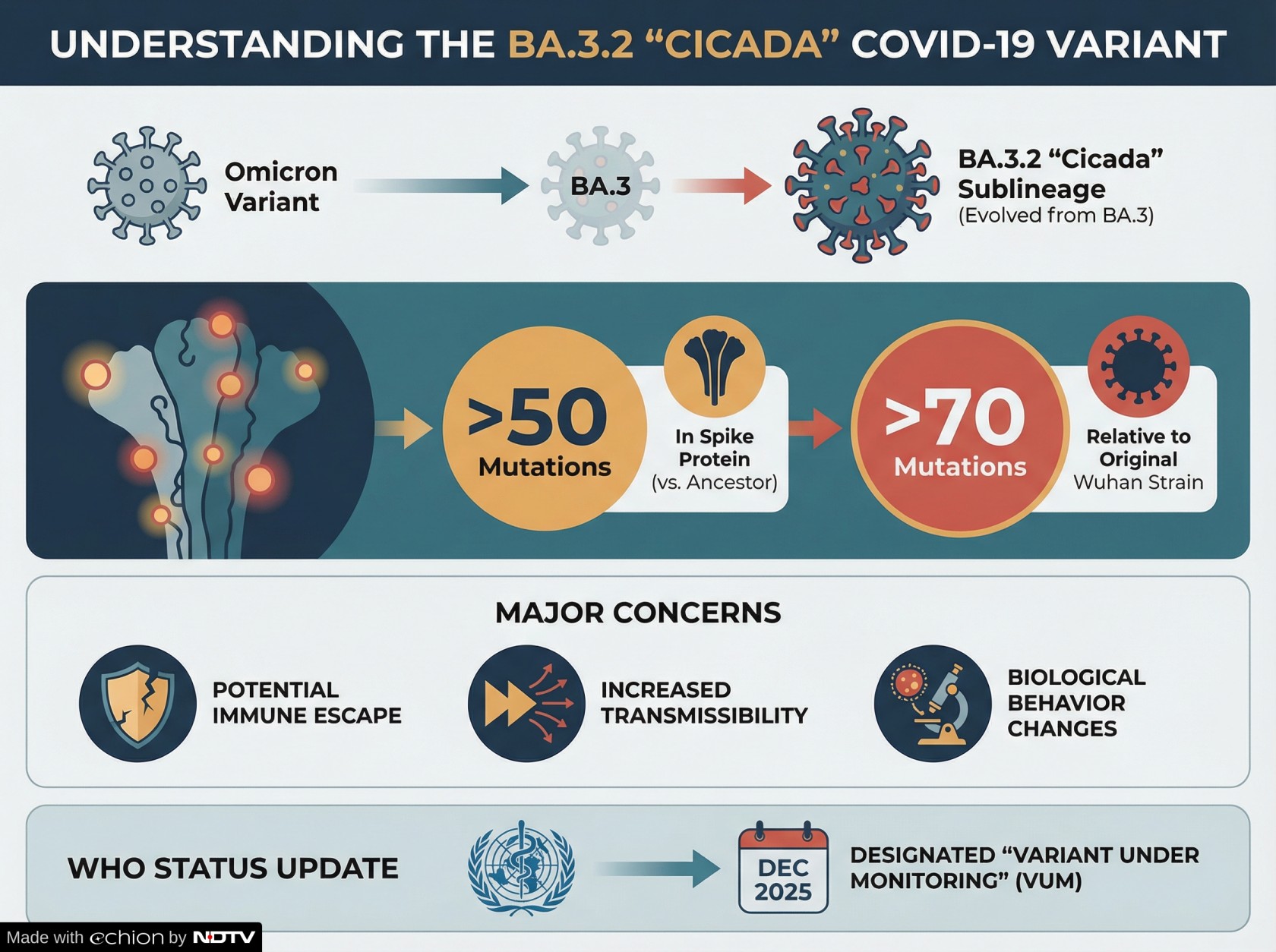
BA.3.2 is a sublineage of the Omicron variant of SARS-CoV-2, the virus that causes Covid -19. It evolved from an earlier BA.3 lineage that had largely disappeared after early 2022. What makes BA.3.2 notable is its extensive mutation profile. Studies suggest it carries over 50 mutations in the spike protein compared to its ancestor and more than 70 mutations relative to the original Wuhan strain.
This high number of mutations has raised concerns about:
- Potential immune escape
- Increased transmissibility
- Changes in how the virus behaves biologically
Because of these factors, the WHO designated BA.3.2 as a variant under monitoring (VUM) in December 2025.
Why Experts Are Watching BA.3.2 Covid-19 Closely
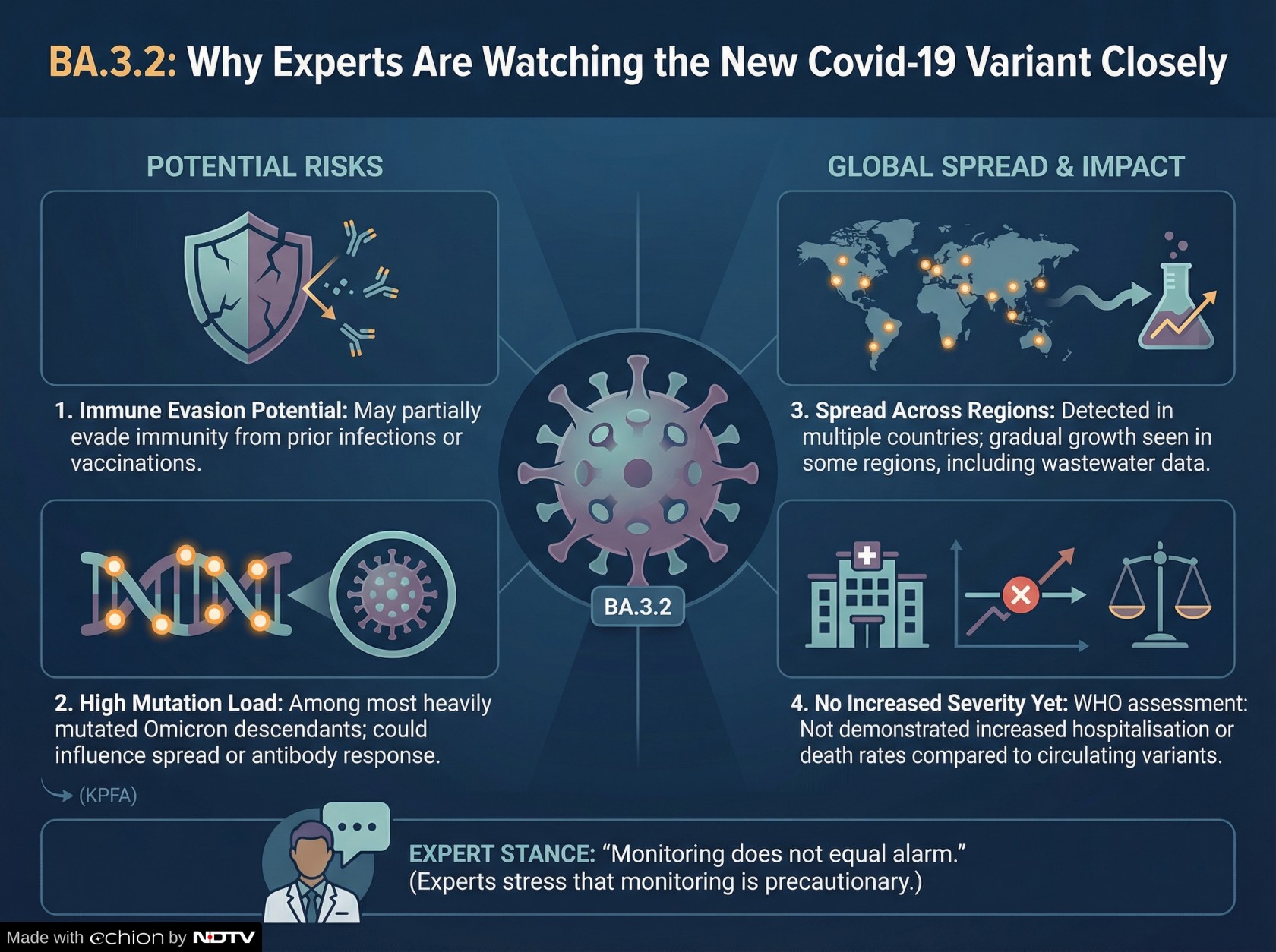
Public health experts are particularly interested in BA.3.2 for three reasons:
- Immune Evasion Potential: Preliminary assessments suggest the variant may partially evade immunity from prior infections or vaccinations.
- Mutation Load: BA.3.2 is among the most heavily mutated Omicron descendants identified so far, which could influence how it spreads or responds to antibodies. (KPFA)
- Spread Across Regions: The variant has already been detected in multiple countries and is showing gradual growth in some regions, including wastewater surveillance data.
However, experts stress that monitoring does not equal alarm. According to WHO assessments, BA.3.2 has not yet demonstrated increased hospitalisation or death rates compared to circulating variants.
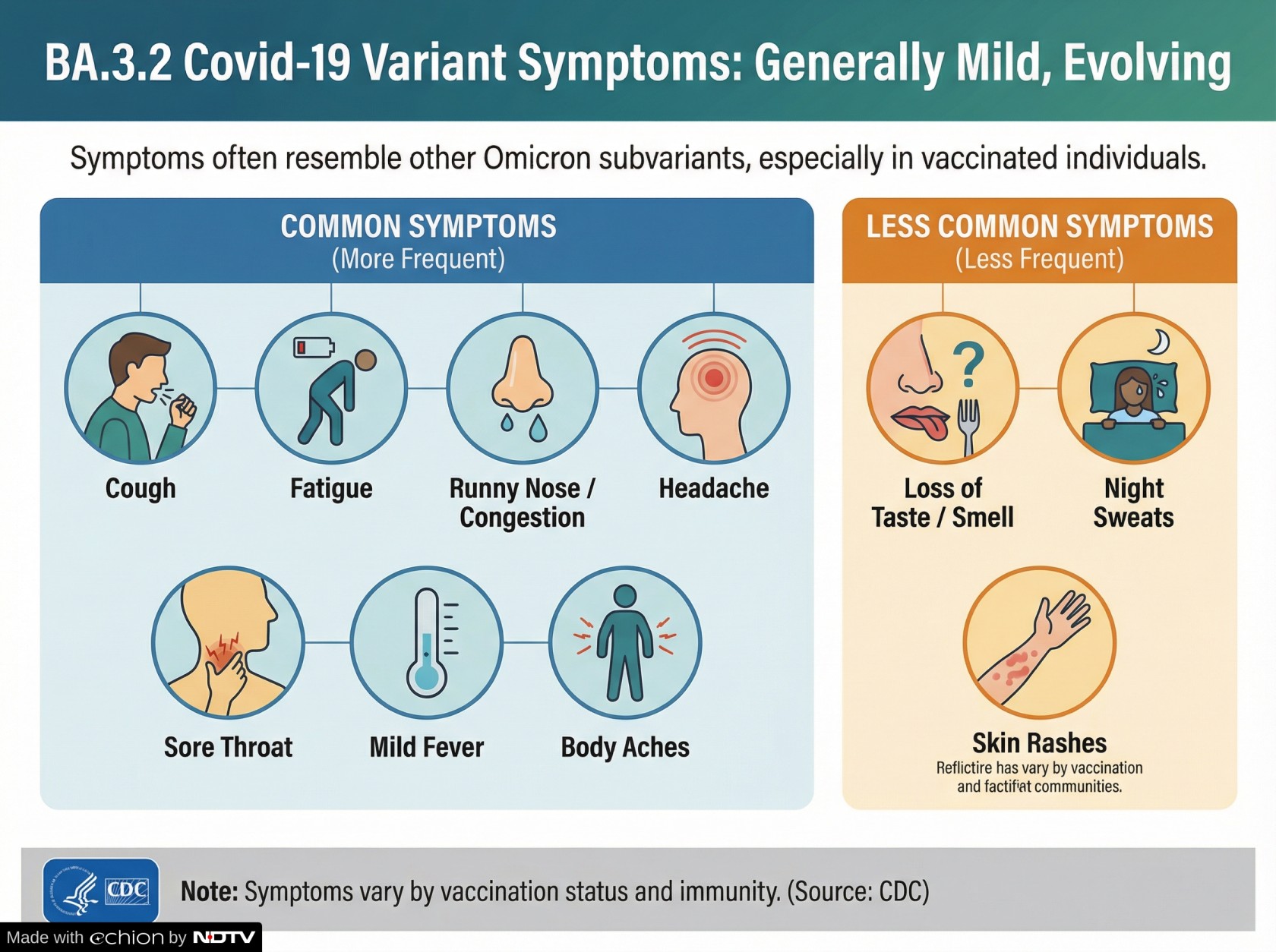
Symptoms Linked To BA.3.2 Covid-19 Variant
So far, symptoms associated with BA.3.2 appear similar to other Omicron subvariants and are generally mild in vaccinated individuals.
Common symptoms include:
- Cough
- Fatigue
- Runny nose or congestion
- Headache
- Sore throat
- Mild fever
- Body aches
Less common symptoms may include:
- Loss of taste or smell
- Night sweats
- Skin rashes
Health agencies like the Centers for Disease Control and Prevention (CDC) note that Covid-19 symptoms continue to evolve with variants and can vary depending on vaccination status and immunity levels.
Does It Cause More Severe Disease?
Current evidence suggests that BA.3.2 does not cause more severe illness than previous Omicron variants.
Global health data indicates:
- No significant increase in hospitalisation rates
- No clear rise in mortality
- Symptoms largely resemble mild upper respiratory infections
Additionally, experts believe that existing vaccines are still likely to protect against severe disease, even if protection against infection may be reduced.
What This Means For India And The World
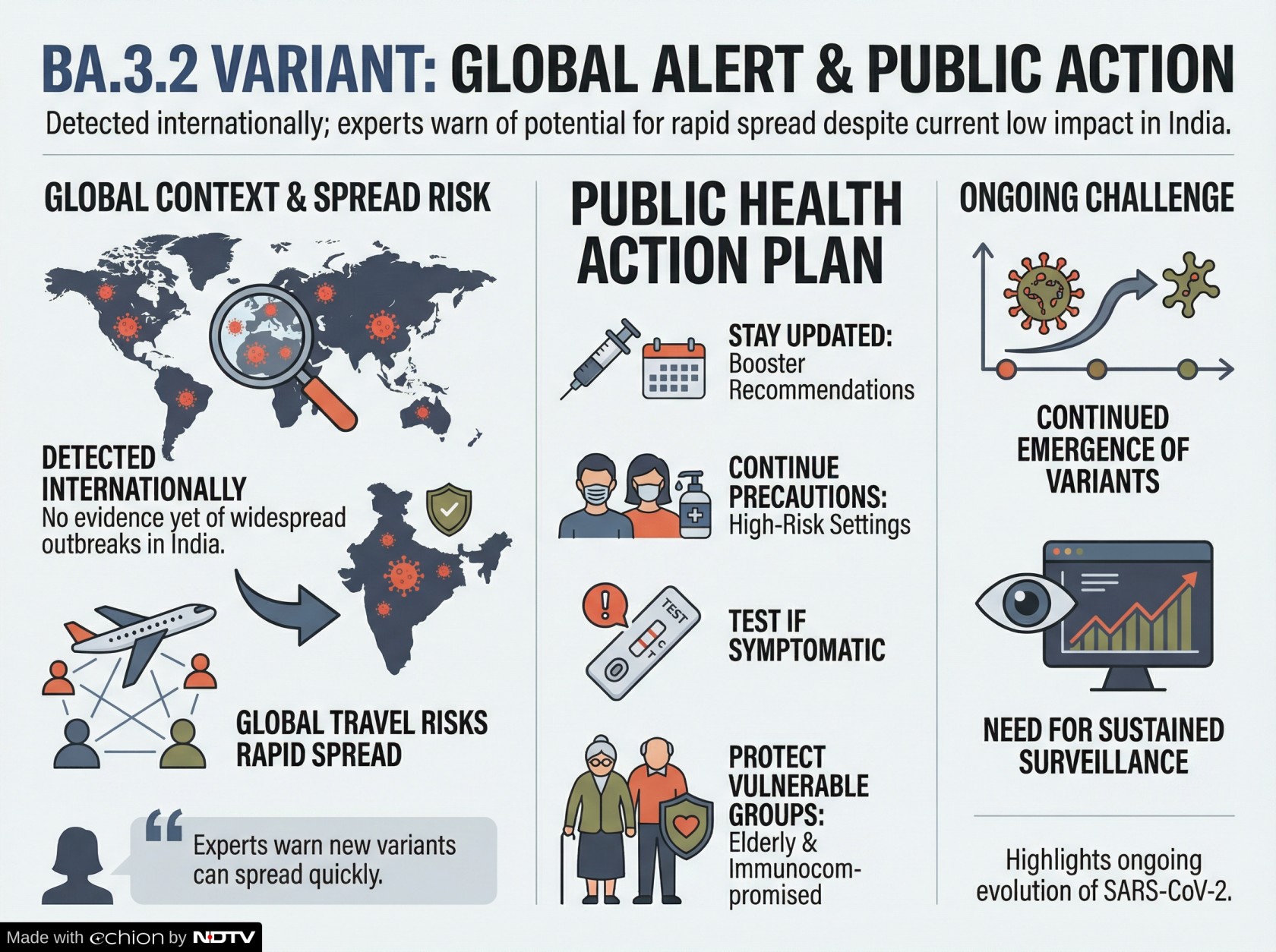
While BA.3.2 has been detected internationally, there is no evidence yet of widespread outbreaks in India. However, experts warn that global travel and interconnected populations mean new variants can spread quickly.
Key takeaways for the public:
- Stay updated with booster recommendations
- Continue basic precautions in high-risk settings
- Test if symptomatic
- Protect vulnerable groups such as the elderly and immunocompromised
The continued emergence of variants like BA.3.2 highlights the ongoing evolution of SARS-CoV-2 and the need for sustained surveillance.
The BA.3.2 Cicada variant is a reminder that COVID-19 has not disappeared, it is evolving. While its high mutation count and potential immune escape capabilities have caught scientists' attention, there is no current evidence of increased severity or a major global threat. For now, experts emphasise vigilance over panic. Vaccination, surveillance, and public awareness remain the most effective tools in managing emerging variants.
Disclaimer: This content including advice provides generic information only. It is in no way a substitute for a qualified medical opinion. Always consult a specialist or your own doctor for more information. NDTV does not claim responsibility for this information.
Track Latest News Live on NDTV.com and get news updates from India and around the world

