- Fatty liver affects nearly one in three adults in India due to rising obesity and lifestyle factors
- Fatty liver grades 1 to 3 indicate increasing fat accumulation and risk of metabolic diseases
- Grade 1 fatty liver signals early metabolic dysfunction but is often reversible with lifestyle changes
A routine health check-up or abdominal ultrasound often leaves many Indians with an unexpected diagnosis: fatty liver. For some, the finding is dismissed as harmless. For others, it sparks concerns about liver failure, cirrhosis or cancer. The reality lies somewhere in between.
Fatty liver disease occurs when excess fat accumulates in the liver. Today, experts consider it one of the most important markers of overall metabolic health. What many people do not realise is that the "grade" assigned to fatty liver on an ultrasound can offer valuable clues not only about liver health but also about a person's risk of obesity, Type 2 diabetes, heart disease, high blood pressure and chronic kidney disease.
According to estimates published in The Lancet Gastroenterology & Hepatology, nearly one in three adults in India may have fatty liver disease, reflecting rising rates of obesity, sedentary lifestyles and metabolic disorders. The condition is now formally known as Metabolic Dysfunction-Associated Steatotic Liver Disease (MASLD), replacing the older term Non-Alcoholic Fatty Liver Disease (NAFLD).
Understanding what your fatty liver grade means can help you take timely action before more serious complications develop.
What Is Fatty Liver Disease?
The liver normally contains small amounts of fat. However, when fat accounts for more than 5% of the liver's weight, it is considered fatty liver disease.
The condition develops when the body stores excess fat in liver cells due to factors such as:
- Overweight and obesity
- Type 2 diabetes
- Insulin resistance
- High cholesterol and triglycerides
- High blood pressure
- Sedentary lifestyle
- Poor dietary habits
According to the World Health Organization (WHO), fatty liver disease has become one of the fastest-growing causes of chronic liver disease globally.
What Do Fatty Liver Grades Mean?
Fatty liver is commonly classified into three grades based on ultrasound findings.
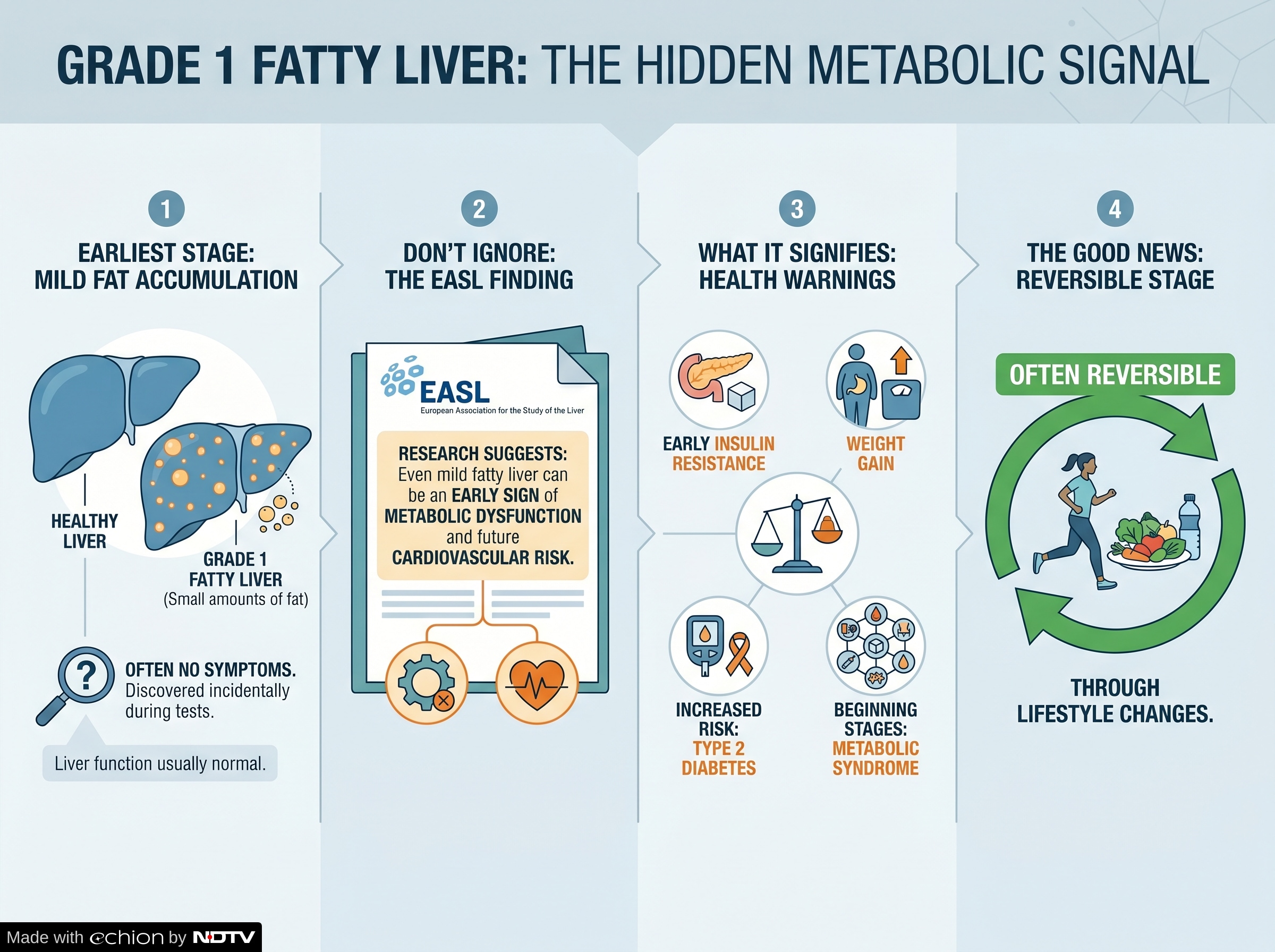
Grade 1 Fatty Liver: Mild Fat Accumulation
Grade 1 is the earliest and mildest form of fatty liver disease.
In this stage:
- Small amounts of fat accumulate in liver cells.
- Liver function is usually normal.
- Most people have no symptoms.
- The condition is often discovered incidentally during imaging tests.
Although considered mild, Grade 1 fatty liver should not be ignored. Research published by the European Association for the Study of the Liver (EASL) suggests that even mild fatty liver can be an early sign of metabolic dysfunction and future cardiovascular risk.
Also Read: Is The Craze Around Protein Harming Liver Health?
What It Says About Your Overall Health
Grade 1 fatty liver often indicates:
- Early insulin resistance
- Weight gain
- Increased risk of Type 2 diabetes
- Beginning stages of metabolic syndrome
The good news is that this stage is often reversible through lifestyle changes.
Grade 2 Fatty Liver: Moderate Disease
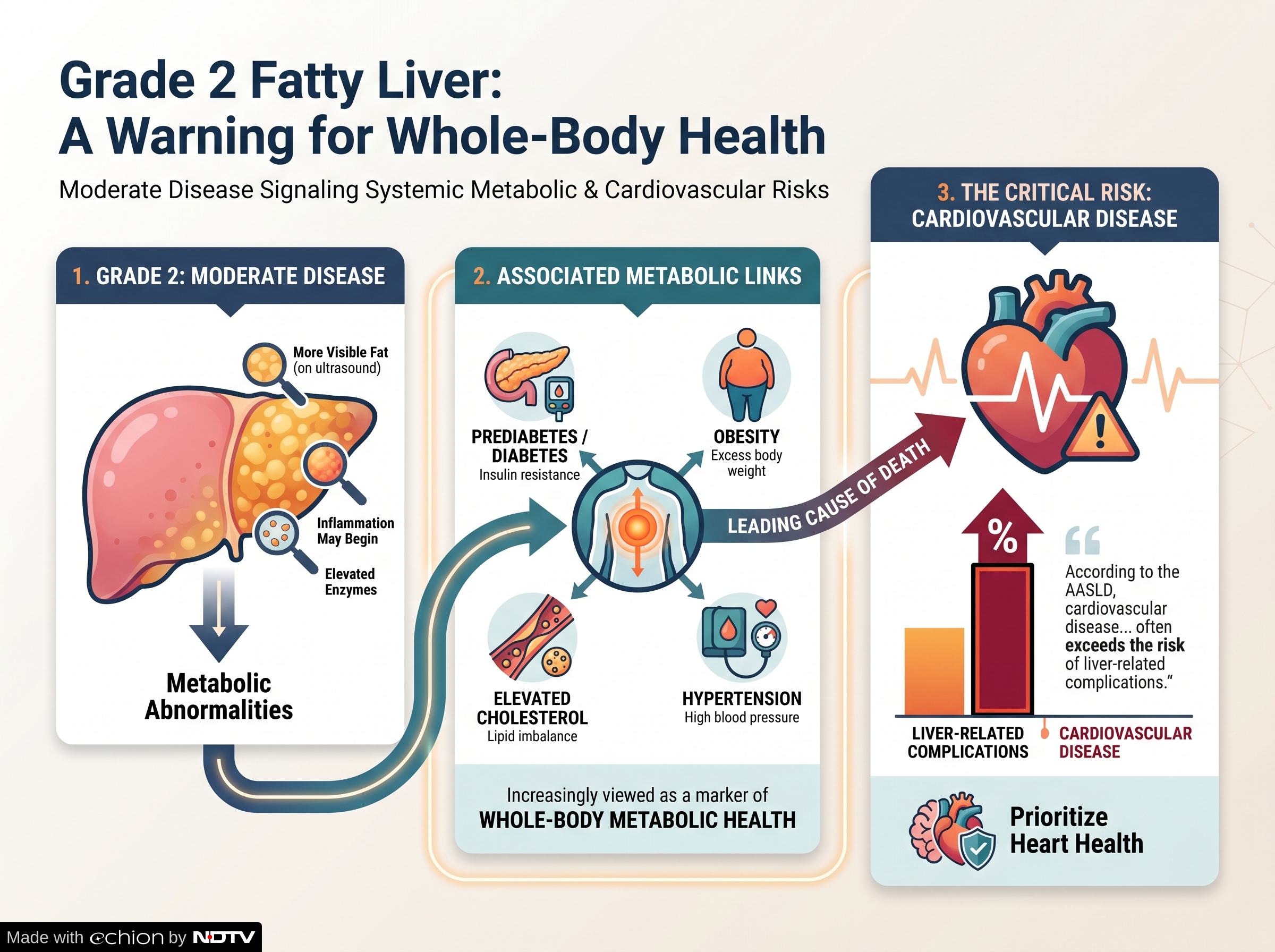
Grade 2 fatty liver indicates a greater accumulation of fat within the liver.
At this stage:
- Fat deposits become more visible on ultrasound.
- Inflammation may begin developing.
- Liver enzyme levels may become elevated.
- Metabolic abnormalities are often more pronounced.
What It Says About Your Overall Health
Grade 2 fatty liver is frequently associated with:
- Prediabetes or diabetes
- Obesity
- Elevated cholesterol levels
- Hypertension
- Increased cardiovascular risk
According to the American Association for the Study of Liver Diseases (AASLD), cardiovascular disease remains the leading cause of death among people with fatty liver disease, often exceeding the risk of liver-related complications. This is why doctors increasingly view fatty liver as a marker of whole-body metabolic health rather than an isolated liver condition.
Grade 3 Fatty Liver: Severe Fat Accumulation
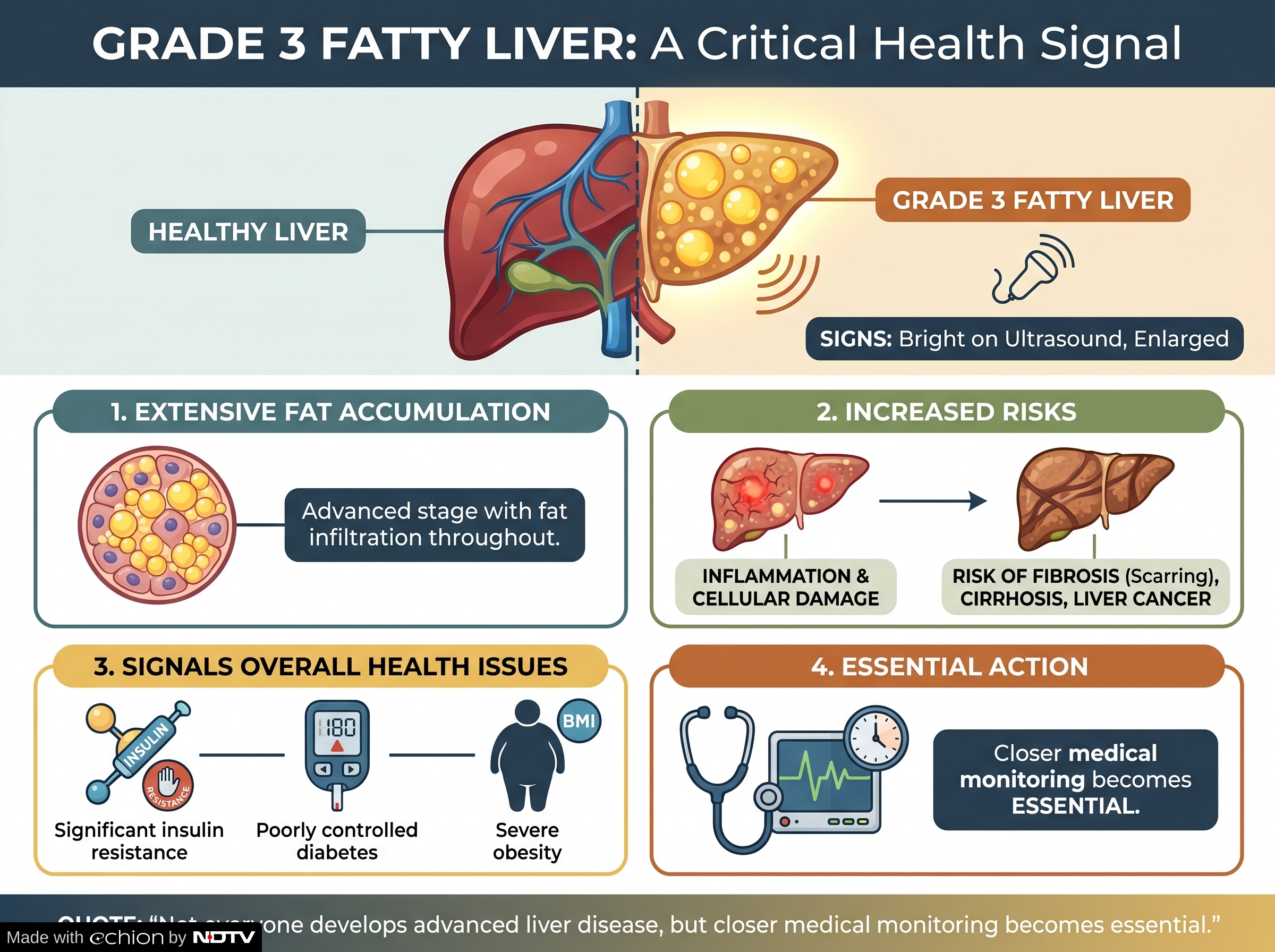
Grade 3 represents advanced fatty liver disease with extensive fat infiltration throughout the liver.
In this stage:
- Liver tissue appears significantly brighter on ultrasound.
- The liver may become enlarged.
- Inflammation and cellular damage are more likely.
- Risk of fibrosis (scarring) increases substantially.
What It Says About Your Overall Health
Grade 3 fatty liver often signals:
- Significant insulin resistance
- Poorly controlled diabetes
- Severe obesity
- Increased risk of liver fibrosis
- Higher risk of cirrhosis and liver cancer
Not everyone with Grade 3 fatty liver develops advanced liver disease, but closer medical monitoring becomes essential.
Also Read: Fatty Liver And Weight Gain: The Hidden Reason Your Metabolism Stalls (And How To Reverse It)
Why Fatty Liver Is More Than A Liver Problem
Experts increasingly describe fatty liver as the "hepatic manifestation of metabolic syndrome." Studies published in Nature Reviews Gastroenterology & Hepatology have shown that fatty liver is strongly associated with:
- Type 2 diabetes
- Coronary artery disease
- Stroke
- Chronic kidney disease
- Sleep apnea
- Polycystic ovary syndrome (PCOS)
In fact, many patients develop heart disease complications before experiencing serious liver-related symptoms.
Can Fatty Liver Be Reversed?
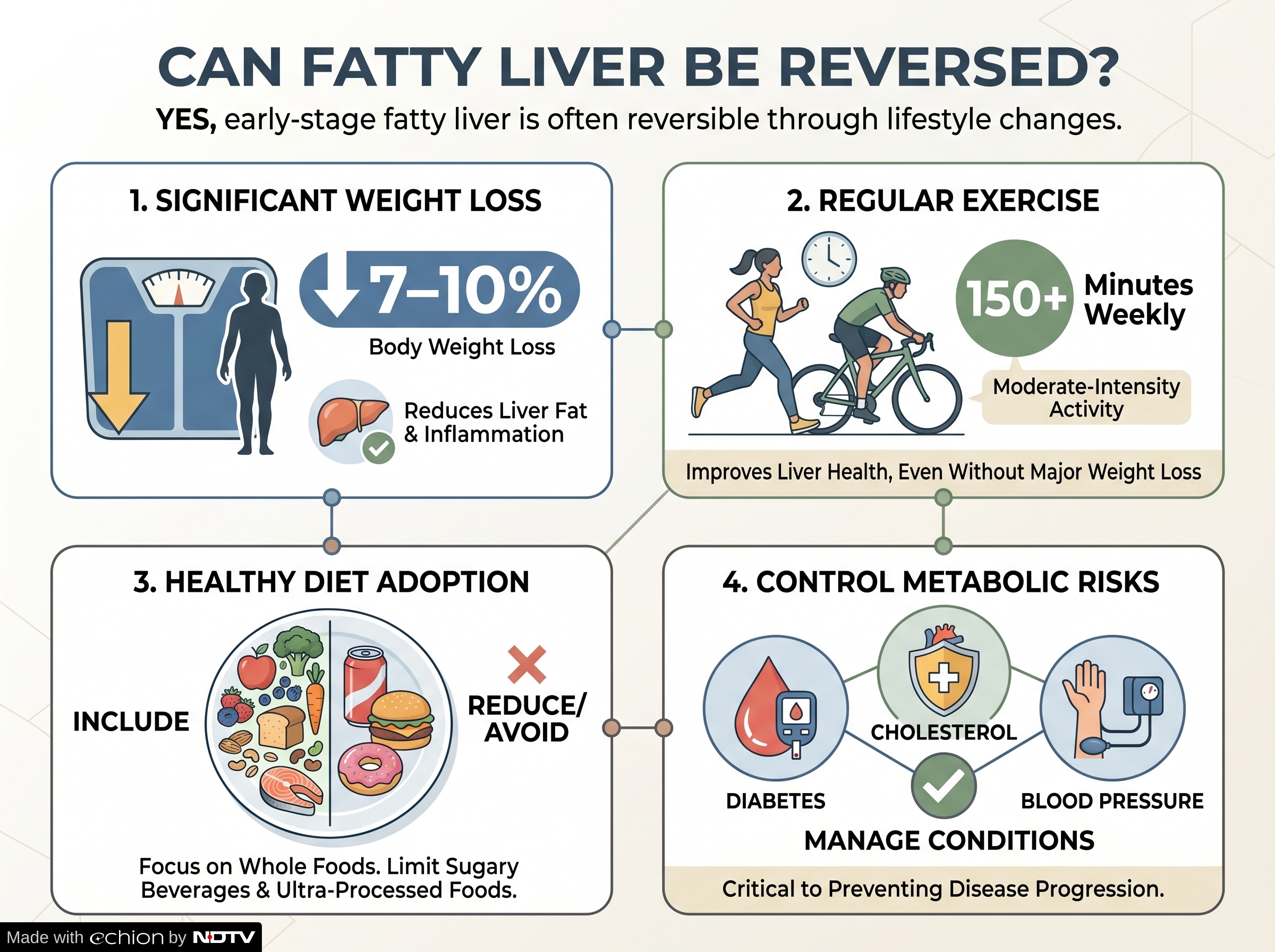
In many cases, yes. Early-stage fatty liver can often be reversed through lifestyle modifications.
Key strategies include:
- Weight Loss: Losing 7-10% of body weight has been shown to significantly reduce liver fat and inflammation.
- Regular Exercise: At least 150 minutes of moderate-intensity physical activity weekly can improve liver health even without major weight loss.
- Healthy Diet: Experts recommend the inclusion of fruits and vegetables, whole grains, legumes, nuts, lean protein, and reduced intake of sugary beverages and ultra-processed foods.
- Control Metabolic Risk Factors: Managing diabetes, cholesterol and blood pressure is critical to preventing disease progression.
What This Means For Indians
India faces a unique fatty liver challenge. Many Indians develop fatty liver despite having a relatively normal body weight due to increased abdominal fat, insulin resistance and genetic susceptibility. This phenomenon, often called the "thin-fat Indian" phenotype, means fatty liver can affect individuals who do not appear overweight.
Given India's rapidly rising burden of diabetes and cardiovascular disease, a fatty liver diagnosis should be viewed as an opportunity for early intervention rather than a minor incidental finding.
A fatty liver diagnosis is more than a liver report finding, it is a window into your overall metabolic health. While Grade 1 fatty liver may serve as an early warning sign, Grades 2 and 3 often indicate increasing risks for diabetes, heart disease and liver complications. The encouraging news is that fatty liver is often reversible, especially when detected early. Understanding your fatty liver grade can help you and your healthcare provider develop a plan to protect not only your liver but also your long-term health.
Disclaimer: This content including advice provides generic information only. It is in no way a substitute for a qualified medical opinion. Always consult a specialist or your own doctor for more information. NDTV does not claim responsibility for this information.