

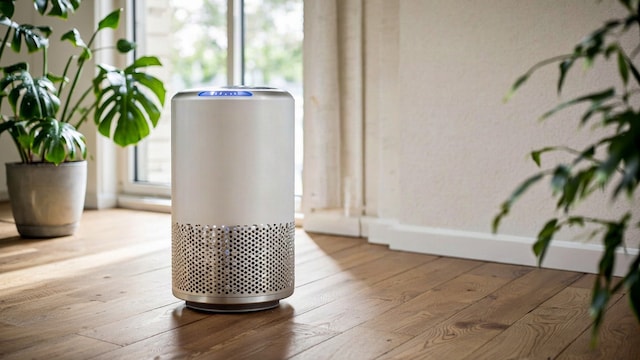
Every winter, smog settles over the Indo Gangetic plain and the air purifier becomes the most discussed appliance in North Indian homes. A purifier is a private purchase made against a public hazard, and treating the first as the answer to the second leaves most of the country unprotected.
A Purifier Cleans a Room, and the Room Is Where Its Power Ends
Trial evidence confirms that HEPA filtration works. The Home Air Filtration for Traffic Related Air Pollution trial recorded a 52 percent cut in indoor PM2.5 in monitored homes, and a 2025 randomized crossover trial in the Journal of the American College of Cardiology showed clinically important drops in systolic blood pressure among people with elevated readings, even where PM2.5 concentrations were relatively low. Both studies ran in the United States, where air is far cleaner than in Delhi, Kanpur or Patna. Indian households stand to gain more, and the country needs large trials of its own to prove it.
Delhi's own measurements show how much of that benefit gets lost in practice. Researchers at the University of Chicago's Energy Policy Institute, publishing in AEA Papers and Proceedings in 2021, recorded wintertime indoor PM2.5 more than 20 times WHO guidelines in both high and low-income households. High income households were 13 times more likely to own a purifier, yet their indoor air was only 10 percent cleaner than that of disadvantaged homes. Buying the machine delivered a small fraction of the protection its price promises.
Most of the shortfall traces back to practical gaps that policy can close. Indoor PM2.5 climbs in the mornings and evenings when households cook, which puts a pollution source inside the room the purifier guards. A unit sized for a bedroom struggles in a living room, filters clog quickly in heavy smog and doors stay open through the day. Buyers receive scant guidance on room size, runtime or filter life, so performance on the box and performance in the kitchen drift far apart. The same study found indoor levels running well above the reading from the nearest government monitor, which means the AQI on a phone understates what a family breathes during cooking hours.
A 2016 study published in PLOS ONE tested two of the most affordable HEPA purifiers in Delhi and found significant indoor improvement, while concluding that such devices complement public action and leave the larger task to it. Time exposure sharpens the point, since a purifier covers the hours spent in one room while the delivery rider, street vendor, traffic constable, sanitation worker and schoolchild in a packed classroom breathe the city's air through most of the day.
READ | Delhi Air Pollution: Doctor Explains The 'Definitive Link' Between Heart Attacks And Air Pollution
Clean Air Must Reach the Public Before It Reaches Only the Wealthy
Income decides who receives protection, and a 2025 study of 101 households across Delhi, Ghaziabad and Noida, presented through the ACM, puts a figure on the gap. Households spend, or state a willingness to pay, about Rs 205 per month for air purifiers, a budget far below the cost of buying, powering and maintaining a HEPA unit. Families closest to traffic, waste fires and smoky kitchens are priced out, so a health protection becomes a marker of income.
Health policy can close that gap by treating filtered air like vaccines and screening, a service delivered where risk is highest, starting with households that carry the greatest medical need. People living with hypertension, diabetes, asthma and chronic lung disease, along with pregnant women and older adults, gain the most from a clean bedroom. Public health schemes can supply purifiers to them by subsidy or rental, with free filter replacement built in.
Public institutions offer the second route, because government schools, anganwadis, primary health centres and bus depots fitted with certified filtration deliver protection to a child or patient regardless of family income. Municipal bodies and employers can extend the same logic with filtered rest rooms for sanitation workers, traffic police and delivery riders.
Market regulation forms the third requirement. Clean air delivery rate, recommended room size, filter life and running cost belong on every label, verified by independent testing, so a buyer in Lucknow or Ludhiana can compare units on measured performance. Guidance should also reflect research on New Delhi buildings showing that purifiers and ventilation work as interconnected systems, so advice on when to open windows, tied to outdoor PM2.5, improves results and cuts energy use.
READ | Using Air Purifiers During Sleep May Improve Blood Sugar Control In Prediabetics, Study Suggests
Source control anchors everything else, since cooking fuel, vehicle exhaust, construction dust, waste burning and diesel generators set the pollution load that every purifier works against. Each tonne of emissions prevented protects the rider, the vendor, the schoolchild and the household that owns a device, all at once.
The purifier earns a clear and valuable role as a targeted medical aid for high risk residents and a bridge while emissions fall. Sold as the answer to India's air, it asks families to buy their own protection from a shared hazard, and the families with the least to spend receive the least. A population breathes one atmosphere, and the responsibility for cleaning it belongs to the governments that regulate it.
(By Dr. Sabine Kapasi, CEO at Enira Consulting Pvt Ltd, Founder of ROPAN Healthcare Pvt Ltd, and a UN Advisor)
Disclaimer: The opinions expressed within this article are the personal opinions of the author. NDTV is not responsible for the accuracy, completeness, suitability, or validity of any information on this article. All information is provided on an as-is basis. The information, facts or opinions appearing in the article do not reflect the views of NDTV and NDTV does not assume any responsibility or liability for the same.