

)
Despite growing health consciousness across the country, India continues to deal with a widespread, under-reported nutritional issue: a severe protein gap. According to nationwide dietary surveys and data published in the National Family Health Survey (NFHS-5) alongside reports from the Indian Council of Medical Research (ICMR), over 70% of Indians are protein deficient, with up to 90% unaware of their specific daily protein requirements. Because conventional Indian thalis rely heavily on refined cereals like polished rice and wheat flour that provide low-digestibility protein diluted by high carbohydrate counts, it is all about finding affordable, complete, and accessible plant-based protein sources which is a pressing public health concern.
Among plant-based foods, whole soybeans are often celebrated as the ultimate protein powerhouse. But when you boil or steam a bowl of fresh whole soybeans, how much usable protein are you actually getting? And can a single serving realistically meet your daily physiological requirement? Let's analyse the exact numbers from national food databases and peer-reviewed scientific studies.
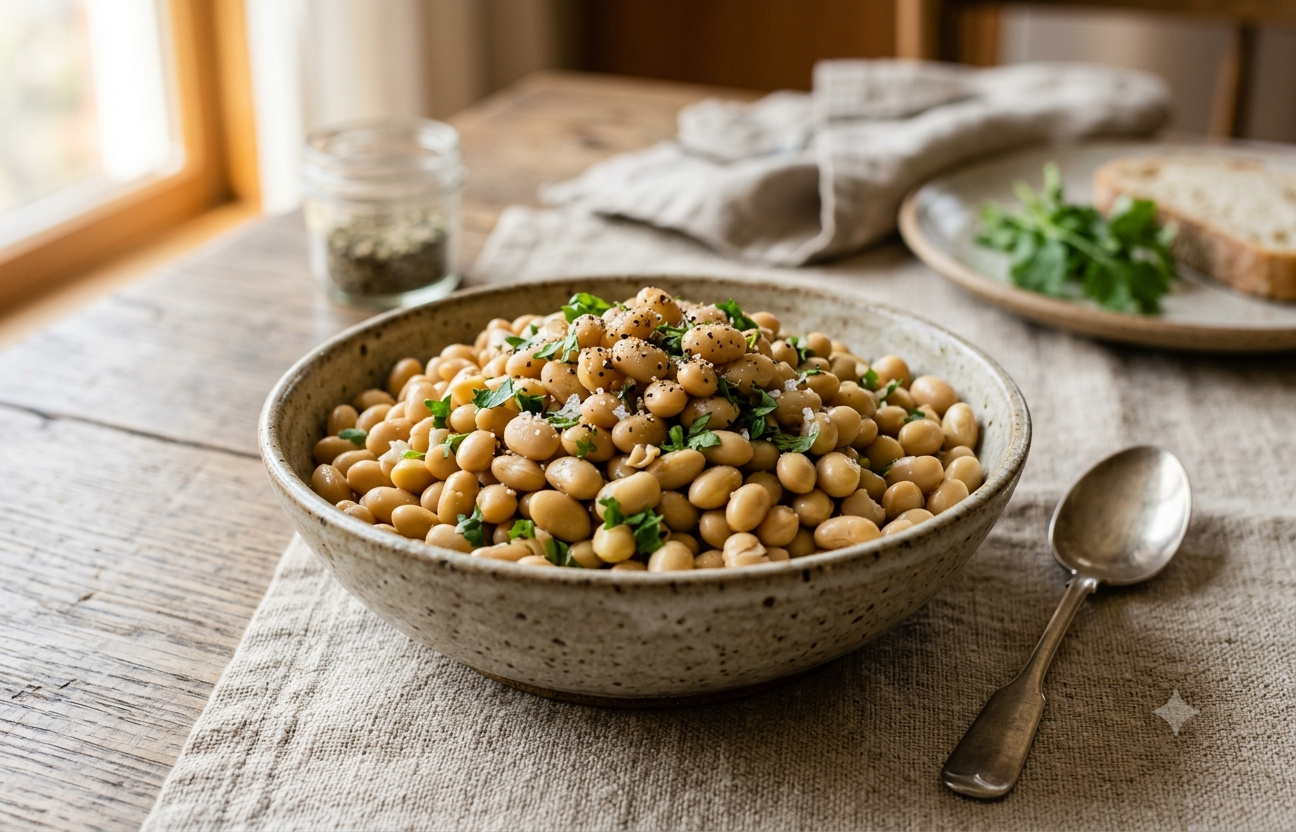
How Much Protein Is Present In Cooked Soyabeans
To understand the exact protein content of soybeans, we turn to the Indian Food Composition Tables (IFCT 2017), published by the ICMR - National Institute of Nutrition (NIN), Hyderabad. The IFCT 2017 serves as India's official, analytical baseline for national food supply composition.
According to the IFCT 2017 database:
- Raw Soybeans (Brown/White): Contain between 35.58 g and 37.80 g of protein per 100 grams (dry weight).
- Cooked or Boiled Soybeans: During the boiling process, soybeans absorb a significant amount of water, expanding in both weight and volume. Consequently, 1 cup of cooked whole soybeans (approx. 170 g) delivers roughly 28 to 31 grams of protein.
How Does This Align With Daily Requirements?
Under the Nutrient Requirements for Indians (ICMR-NIN 2020 Guidelines), the recommended Estimated Average Requirement (EAR) for protein is set at 0.66 g per kg of body weight, while the Recommended Dietary Allowance (RDA) stands at 0.83 g per kg of body weight.
For an average Indian adult weighing 60 kg, this means a daily requirement of approximately 50 grams of protein. Consuming just one cup of cooked whole soybeans provides over 55% to 60% of your total daily protein goal in a single meal.
What Science Says About Soy Quality
1. It Delivers a Complete Essential Amino Acid Profile
Unlike most legumes and cereals, which are often deficient in specific amino acids like methionine or lysine-soybean is one of the few plant foods categorised as a complete protein.
A seminal review in the Journal of Agricultural and Food Chemistry evaluated the Protein Digestibility-Corrected Amino Acid Score (PDCAAS) of soy protein, demonstrating that it supplies all nine essential amino acids in proportions that effectively support human growth and physiological maintenance, scoring on par with milk and egg protein (Hughes et al., 2011).
2. Thermal Cooking Unlocks Bioavailability
In their natural, raw state, soybeans contain naturally occurring antinutritional factors, primarily trypsin inhibitors, lectins, and phytates which bind to minerals and hinder enzyme action during digestion.
Research published in the Journal of Food Science and Technology confirms that moist heat treatment (such as pressure cooking or boiling after overnight soaking) significantly reduces trypsin inhibitor activity and breaks down complex phytates. This thermal processing directly improves protein digestibility and enhances amino acid bioavailability in the human digestive tract.
3. Supports Lean Muscle Mass Retention
Meeting daily protein targets through plant sources like soy supports muscle protein synthesis and metabolic function.
A clinical trial published in The Journal of Nutrition evaluated human muscle protein synthesis rates following the consumption of different protein sources. The findings indicated that high-quality soy protein effectively stimulates muscle tissue repair and synthesis in adults, providing structural benefits comparable to traditional dairy proteins when consumed in adequate quantities.
Can You Fulfil 100% of Your Daily Needs From Soybeans Alone?
While whole cooked soybeans are undeniably dense in nutrients, clinical dietitians and nutritionists advise against relying on them as your sole protein source throughout the day.
Digestive Load and Complex Fibres: Whole soybeans contain complex oligosaccharides (raffinose and stachyose) that are fermented by gut bacteria. Consuming excessive quantities (such as 2 to 3 cups daily) can lead to abdominal bloating, gas, or digestive discomfort for individuals with sensitive stomachs.
Micronutrient Balance: Combining different plant sources such as pairing soybeans with grains like rice, millets, or dairy products like curd and paneer, ensures a well-rounded intake of micronutrients, including vitamin B12, calcium, and bioavailable iron.
Soyabeans need to be a part of your healthy diet, but you need to pay attention to their quality and any potential side effects that they may cause to be safe.
Also Read: Normal Blood Sugar Levels Chart: How To Track Daily Spikes After High-Carb Meals
Disclaimer: This content including advice provides generic information only. It is in no way a substitute for a qualified medical opinion. Always consult a specialist or your own doctor for more information. NDTV does not claim responsibility for this information.