- The circadian rhythm influences how the body metabolizes carbohydrates throughout the day
- Carbohydrates consumed in the morning are broken down more efficiently than those eaten at night
- Insulin sensitivity decreases after 8 pm, causing higher blood sugar spikes from nighttime carb intake
The body operates on a clock that starts once you wake up in the morning. This is known as the circadian rhythm that needs to be awake in the morning and asleep once it is nighttime for recovery. Your body's metabolism is influenced by the circadian rhythm, which affects how your body breaks down carbohydrates. This is an important concept to understand, as it plays a role in the development of prediabetes. As per current data published in a major report on diabetes cases in India, details show that about 136 million Indians are in the prediabetes stage, which makes it a major public health concern.
The high risk of prediabetes and the rising number of cases each year make it important to look at the core causes influencing the disease. One such cause is when you consume carbohydrates during the day, and how your blood sugar response functions. The best time to consume carbs, as per research published in the Pharmacological Research journal indicates it is morning, as your body is able to break it down into nutrients easily. If you are looking for blood sugar control, then you need to know when to eat your carbohydrates.
How Your Body Clock Controls Carb Metabolism
Your body clock controls how your insulin is secreted after consuming a food source. Carbohydrates release a lot of blood glucose, which can be readily absorbed in the morning as the digestive processes need a boost to function throughout the day. But when the same carbohydrates are eaten at night, their blood sugar spike is significant, which influences your blood sugar levels and can even affect your sleep cycle.
Why Carbs Spike Blood Sugar More At 8 PM
The insulin becomes less sensitive at night, especially after 8pm, which is also why nutritional science recommends consuming an early dinner. The metabolism tends to naturally slow down during nighttime, and the body generally moves a lot less during the night, which can increase fat storage if too many carbs are consumed. An increase in fat storage and glucose spikes can take place if you consume too many carbs at night, which can also affect your energy levels due to blood sugar fluctuations.
What Research Says About Morning vs Evening Glucose Response
Research published in Pharmacological Research details that when carbs are consumed in the morning, their blood glucose response is better utilised in the morning. On the other hand, research published in Nutrition, Metabolism and Cardiovascular Diseases highlights that even if people consume the same meals in the morning and at night, during the night, the blood sugar response is higher.
What This Means For Prediabetes Risk
When carbs are repeatedly eaten at random times, it can lead to sustained high blood sugar. But it can even accelerate progression to type 2 diabetes, which means once you get diagnosed with prediabetes, you need to control your diet and timings on a strict basis. If you establish control over your carb consumption, then your blood sugar can be controlled, and so can the risk of prediabetes and eventually type 2 diabetes.
Also Read: Brain Fog To Improved Blood Sugar: What Happens To Your Body When You Cut Down Your Carb Intake
Best Time To Eat Carbs For Better Blood Sugar Control
As per the research published in the Nutrition, Metabolism, and Cardiovascular Diseases journal, the ideal window to sync your carb consumption to your circadian rhythm is early morning to early afternoon. But it should be avoided later in the evening and at night as it can worsen insulin sensitivity.
If you have had your dinner, then carb-heavy post-indulgence should be avoided. And you need to pair your carb consumption with protein and fibre for better nutritional absorption in the body.
Signs Your Carb Timing May Be Affecting Your Health
The time you consume carbs may be affecting your health, which needs to be kept in mind. Here is what you need to know:
- If you have nighttime cravings, then it can affect sleeping patterns due to blood sugar spikes and result in fatigue.
- Morning sluggishness is a common byproduct, as blood sugar affects your energy levels.
- Elevated fasting glucose can put stress on your pancreas in the long term.
Also Read: What Your Food Cravings Are Really Telling You About Your Health? Nutritionist Shares
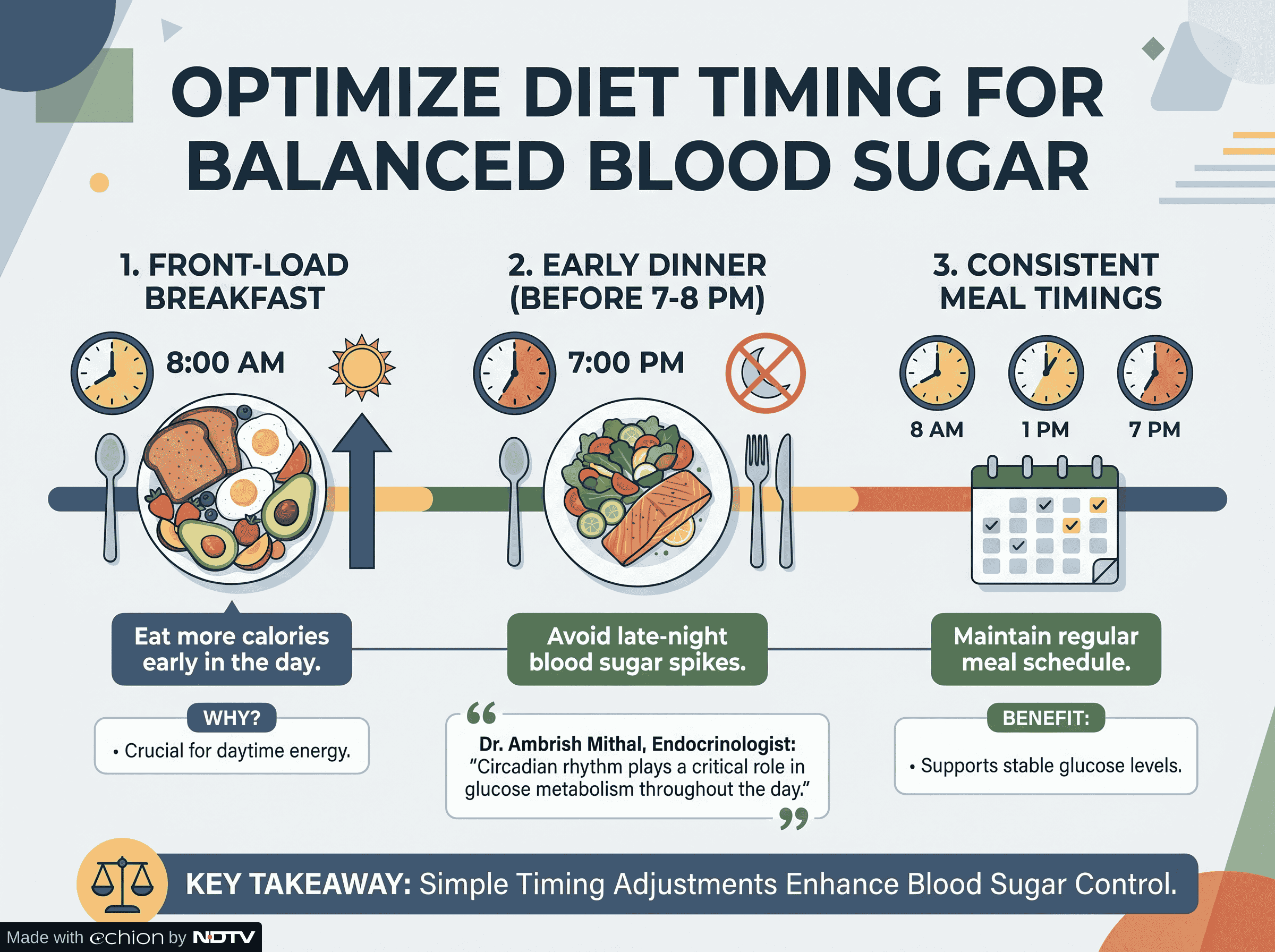
Simple Diet Timing Tips To Follow
Eating on time is necessary, and following simple dietary tips is necessary to make sure that your blood sugar is balanced. Here is what you need to consider to optimise your diet timings:
- Front-loading calories during breakfast time is necessary when compared to dinner.
- Consume an early dinner before 7-8 pm to avoid blood sugar spikes.
- Consistent meal timings are necessary to balance your blood sugar levels.
This has been explained by an endocrinology and diabetes doctor, Dr Ambrish Mithal who says, "Circadian rhythm plays a critical role in glucose metabolism throughout the day."
Who Should Be More Careful?
People who are:
- Prediabetes patients need to be careful with their meal timings.
- Obesity and metabolic syndrome make it important for meal timings to be according to the body clock.
- Night-shift workers should be especially careful.
Carbs need to be consumed in the right manner and at the right time in between the recommended window for controlling blood sugar spikes. It is beneficial to sync your meal timings according to the needs of the body to function.
Disclaimer: This content including advice provides generic information only. It is in no way a substitute for a qualified medical opinion. Always consult a specialist or your own doctor for more information. NDTV does not claim responsibility for this information.