Camel milk, often hailed as the white gold of the Rann of Kutch, is steadily gaining attention for its unique health benefits and growing market presence in India. According to a report by ANI, at the heart of this transformation is Sarhad Dairy, Gujarat's largest cooperative, which has pioneered India's first deodorising camel milk processing plant, functional since 2019. It also holds the distinction of being the only producer of camel milk rajbhog-flavoured ice cream in the country, along with around 70+ varieties of camel milk-based ice creams. Sarhad Dairy has positioned camel milk as both a nutritional powerhouse and a symbol of Kutch's remarkable revival.
As people seek alternative milks to replace regular milk and add variety to their daily routine, camel milk could become one such option. While camel milk has been certified organic, it is now receiving international recognition in modern nutritional studies. This is because camel milk has a high percentage of minerals and vitamins and a low-fat percentage when compared to cow milk. Another reason why camel milk became popular is its lactose-friendly nature for some individuals. But as always, the quality of the milk, where it has been sourced from, and the timing of its consumption matters.
5 Health Benefits Of Camel Milk
1. Boosts Immunity
Camel milk contains a high dose of vitamins and minerals, which make it a sought-after source of boosting immunity. The fast-paced lifestyle of modern individuals requires a cautious approach to building overall immunity. According to the Journal of Food Science and Technology, camel milk has therapeutic properties that extend from neuroprotection to anti-cancer. Another research and innovation in food science and technology documents that dairy products prepared from camel milk contain medicinal, nutritional, and microbial properties.
2. Supports Diabetes Management
Diabetes management remains a growing health concern amongst the Indian population due to the irregular dietary habits and high percentage of processed foods on the plate. One such alternative milk that can offer some relief is camel milk. It can regulate insulin sensitivity, as it contains specific properties that can help in controlling insulin production. According to a randomised controlled trial by Department of Medicine in Bikaner, Rajasthan that looked at diabetic patients who were given raw camel milk, in Type 1 Diabetic Patients. The exact dose of 500 ml/day of raw camel milk alongside standard insulin therapy showed significant reductions in their insulin levels.
Read More: Can Eating Bajra Roti Daily Help With Weight Loss? Millets Expert Shares Essential Tips
3. Improves Heart Health And Regulates Cholesterol
India has a high load of heart disease cases due to systemic inflammation being a persistent issue. A possible remedy that could be beneficial for improving overall heart health is camel milk. But solely consuming it will not result in lowering heart risk factors; people need to completely change their lifestyle habits and dietary choices and make heart-healthy habits second nature to get the best results. Camel milk has specific insulin-like proteins in it that help improve glucose metabolism, indirectly lowering heart disease risk. It also supplies the body with omega-3 fatty acids, as they are present in camel milk, which help reduce inflammation and regulate how the body processes natural sugars. Here are some other properties that camel milk provides for improving heart health, as per Complementary Medicine and Therapies (2024):
- Antioxidants and vitamins like C, zinc, and copper protect blood vessels from oxidative damage, which is exponentially increasing due to the presence of constant air and water pollution.
- Additionally, it also lowers LDL ("bad cholesterol") and raises HDL ("good cholesterol"), which balances heart function and ensures arterial strength.
4. Digestive Benefits For The Lactose-Intolerant
Proper digestion is the cornerstone of feeling your best and having enough energy to get through the day. Camel milk could offer digestive benefits, especially for people who can't drink cow milk every day because they are lactose intolerant. In the Research and Innovation in Food Science and Technology (2025), camel milk has been labelled as a functional food for lactose-intolerant people in India.
5. Skin And Hair Nourishment
Aesthetic appearances are the key to building self-esteem and self-confidence; people have been using camel milk to achieve them. According to Food Bioscience (2024), camel milk's antioxidant and antimicrobial properties are responsible for boosting overall skin and hair care. Another study in Frontiers in Immunology (2022) found that camel milk has plenty of antioxidant and anti-inflammatory properties that support dermatological (skin health) and hair health.
Read More: Still Using Home Remedies? These Dermatology-Approved Alternatives Work Better
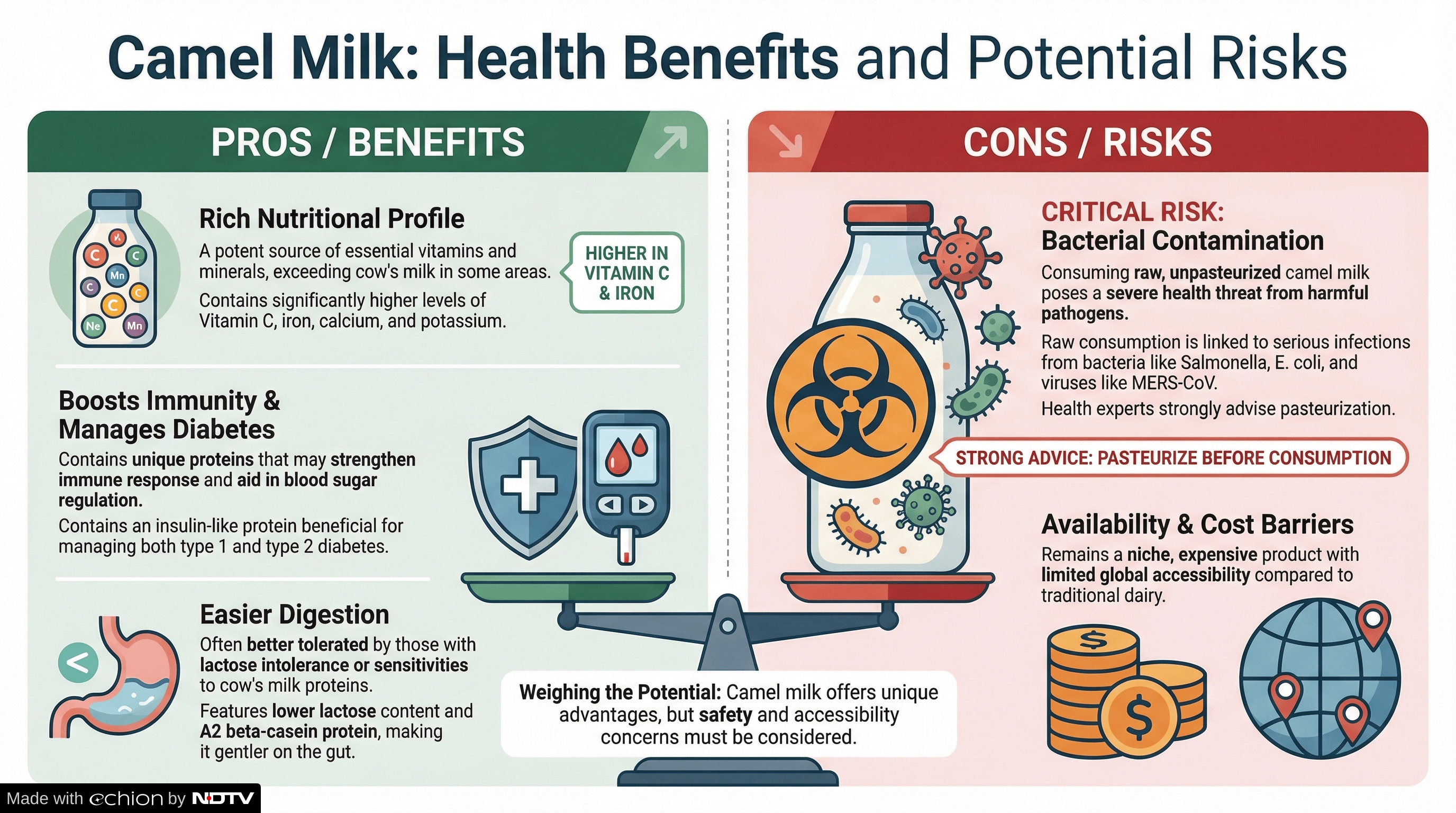
4 Potential Side Effects And Risks Of Camel Milk
Camel milk is a healthy alternative milk that needs to be consumed by people in a controlled quantity. Consumption of this type of milk involves the following risks and could lead to certain side effects:
- High cost and limited availability due to geographical restrictions, as people in urban cities would have to shell out extra money to get it on their doorstep.
- Possible allergic reactions, as camel milk comes from an animal source, and some people may be allergic to it.
- Overconsumption risks, as the high nutrient dose can lead to an imbalance in the body. This can happen because everybody has a different physiology and can only absorb certain nutrients effectively through physical exercise and daily movement.
- There are Food and Drug Administration restrictions in the U.S. due to erucic acid concerns.
Camel milk is a promising health food, but it is best consumed in moderation, as every individual has a different nutritional processing power. It is a culturally significant type of milk, and modern innovations are underway to sample it for the very first time. But do take medical advice on whether you can specifically try it and which form is suitable for your body.
Disclaimer: This content, including advice, provides generic information only. It is in no way a substitute for a qualified medical opinion. Always consult a specialist or your own doctor for more information. NDTV does not claim responsibility for this information.