

)
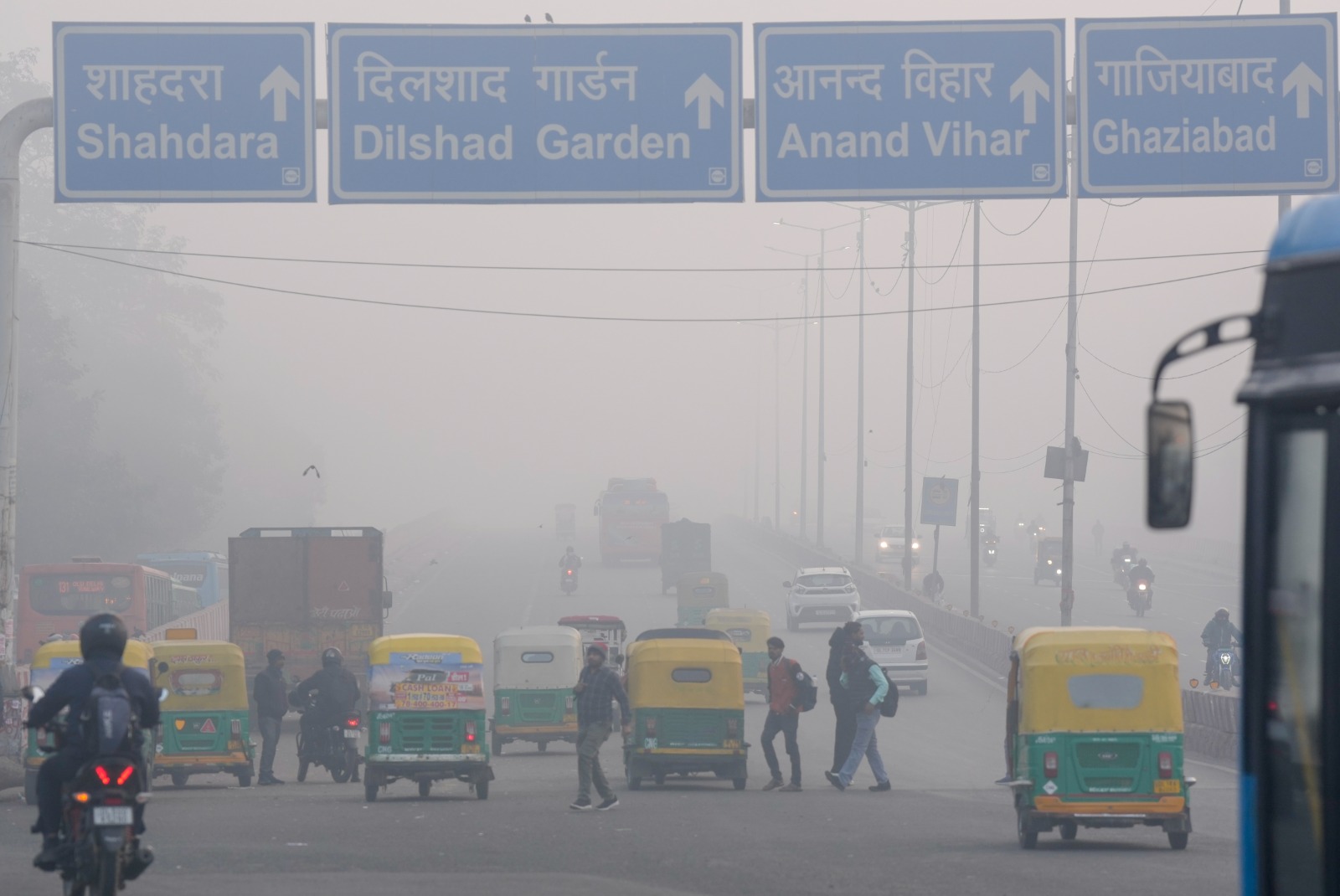
Delhi was the most polluted city during 2024-25, recording the highest annual PM2.5 levels and extended periods of "severe" air quality in winter while Patna was the second-most polluted city, according to a new analysis by Climate Trends. Climate Trends is a research-based consulting and capacity-building initiative that aims to bring greater focus on issues of environment, climate change and sustainable development. Based on Central Pollution Control Board (CPCB) air quality monitoring data, this report analysed how meteorological conditions influence the persistence of PM2.5 pollution across six major Indian cities such as Delhi, Patna, Kolkata, Mumbai, Chennai and Bengaluru. Using CPCB air quality data (2024-2025) combined with meteorological clustering, the study distinguished emission-driven pollution from weather-driven variability.
"Delhi continues to face the most severe pollution crisis nationally with the highest annual average PM2.5 levels and the longest stretches of 'severe' or 'emergency' category air days, driven by local emissions and regional factors.
"Patna is confirmed as the second-most polluted city after Delhi, with persistently high PM2.5 concentrations driven by strong atmospheric stagnation, highlighting an intensifying crisis in the eastern Indo-Gangetic Plain," the report said.
While historically less polluted, Bengaluru and Chennai showed signs of air quality deterioration during the winter months, a new vulnerability trend.
Both Mumbai and Chennai recorded an increase in their annual average pollution levels in 2025, signalling a growing year-round concern beyond just seasonal spikes.
Sagnik Dey, Head, Centre for Atmospheric Sciences, Indian Institute of Technology (IIT), Delhi, noted that persistence of PM2.5 exceedances is strongly associated with sub-1 m/s wind regimes and elevated relative humidity across northern cities, where stagnation episodes sustain disproportionately high exposure levels.
"Ventilation efficiency emerges as the dominant determinant of inter-city variability. However, current NCAP evaluation frameworks primarily assess observed concentration changes without explicitly accounting for meteorological modulation, potentially leading to distorted interpretations of policy effectiveness," he said.
The report proposed significant reform in NCAP Phase-III, including separate winter targets, meteorology-adjusted metrics, and dynamic weather-triggered action plans, alongside integrated airshed-based planning.
(Except for the headline, this story has not been edited by NDTV staff and is published from a syndicated feed.)