

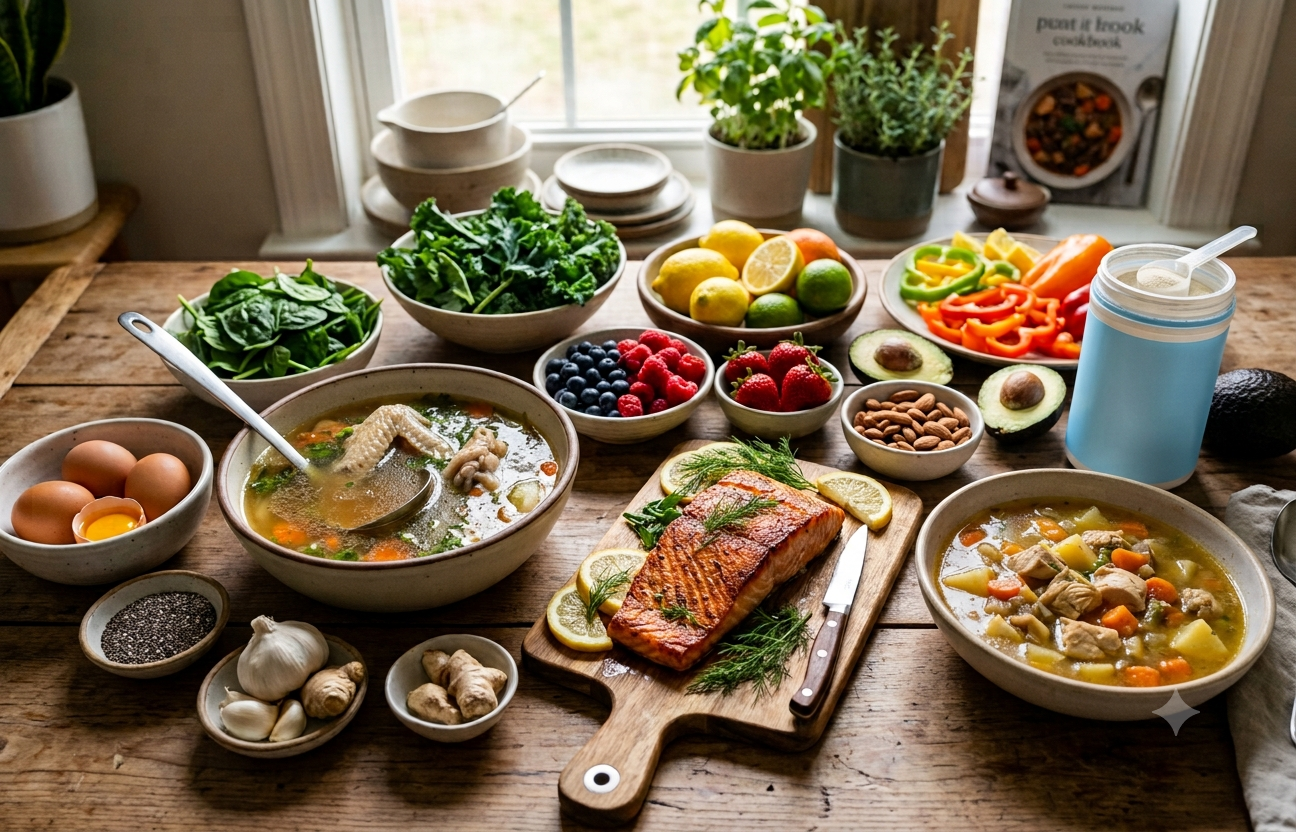
)
Collagen, in various forms, is becoming popular for its benefits to skin health. Particularly, skin hydration, elasticity, and overall skin appearance can be boosted with collagen intake. Besides collagen as a supplement, it can also be naturally created in the body from amino acids that are obtained from protein, but vitamin C is necessary for it. There are several Indian foods that can provide the necessary amino acids that form the components of collagen, whose intake should be balanced. The difference between collagen as a supplement and as a naturally occurring substance in the body depends on the body's ability to absorb its beneficial properties.
What Is Collagen And Why Does The Body Need It?
Collagen is a type of structural protein in the human body that is present in 25% to 30% of the body. It is responsible for strength, structure, and elasticity in skin tissue that includes the skin, bones, tendons, cartilage, and blood vessels, as well as connective tissues. The benefits of ample collagen in the body can be the following:
- Support for skin elasticity
- Maintains joint comfort
- Strengthens bones
- Helps wound healing
Does Eating Collagen Directly Matter More Than Supporting Collagen Production?
The Nutrients Journal documents that the body's own collagen production requires adequate intake of protein, vitamin C, and other nutrients. There is clinical evidence on the benefits of direct collagen consumption (supplements or collagen-rich foods), but it is not the only way to maintain collagen levels in the body.
The body needs an intake of the following:
- Protein
- Vitamin C
- Zinc
- Copper
- Amino acids (glycine, proline, lysine)
8 Everyday Indian Foods That May Help Support Natural Collagen Production
Natural collagen production in the body can be supported by intake of foods that can provide the essential nutrients for it to function properly. The intake of these foods needs to be adjusted according to the nutritional benefit each of them provides and their seasonal availability.
Amla (Indian Gooseberry)
Amla contains a high dose of vitamin C that supports the synthesis of vitamin C as enzymes, prolyl hydroxylase and lysyl hydroxylase, which can stabilise and strengthen collagen fibres.
Furthermore, amla is easy to consume as juice, chutney and murabba to boost daily vitamin C intake.
Guava
The Orthopedic Journal of Medicine suggests that guava contains a high concentration of vitamin C, which can support repair of skin and boost collagen formation.
Citrus Fruits
Other citrus fruits such as oranges, mosambi, and lemons contain high doses of vitamin C, which can activate collagen-building pathways.
Pulses
Legumes such as moong dal, masoor dal, and toor dal have benefits when it comes to supplying amino acids needed for collagen formation.
Milk, Curd And Paneer
Dairy products made from full-fat milk such as curd and paneer can provide a rich dose of protein.
They can even provide building blocks for connective tissues.
Nuts And Seeds
The abundance of zinc in nuts and seeds such as almonds, pumpkin seeds, and sesame seeds can benefit the body with ample doses of zinc and copper. It also supports collagen-producing enzymes that can actively support collagen production.
Eggs
Eggs are a food source that contains complete amino acids, which are necessary for collagen production. When collagen is adequate, tissue repair can happen properly.
Green Leafy Vegetables
Research published in the PLOS One Journal points to green leafy vegetables such as spinach, methi, and amaranth leaves being able to provide antioxidants that can protect existing collagen from oxidative damage.
What Nutrients Are Most Important For Collagen Production?
Natural production of collagen in the body needs a supply of nutrients that are provided by foods such as the following:
- Vitamin C-rich foods like amla, guava, citrus fruits and capsicum can boost collagen production.
- High-protein foods such as dal, dairy, eggs and soy products can improve collagen levels.
- Zinc-providing foods such as pumpkin seeds, legumes and nuts can increase collagen levels.
- Copper-rich salmon, seeds, cashews and whole grains can provide ample collagen.
- High-protein foods that can damage collagen.
Natural collagen production can be damaged if you practise any of these habits or consume any foods that can hinder its levels:
- Smoking
- Excess sugar consumption
- Ultra-processed foods
- Excessive alcohol
- Chronic sleep deprivation
- Excess UV exposure
Do You Really Need Collagen Supplements?
Collagen supplements are to be consumed only if their need has been medically determined by a specialist based on the blood report.
- When supplements may be useful.
- Whole foods should remain the foundation.
- A balanced diet supports collagen production naturally.
- Consult a healthcare professional before supplementation.
Sample One-Day Indian Collagen-Friendly Meal Plan
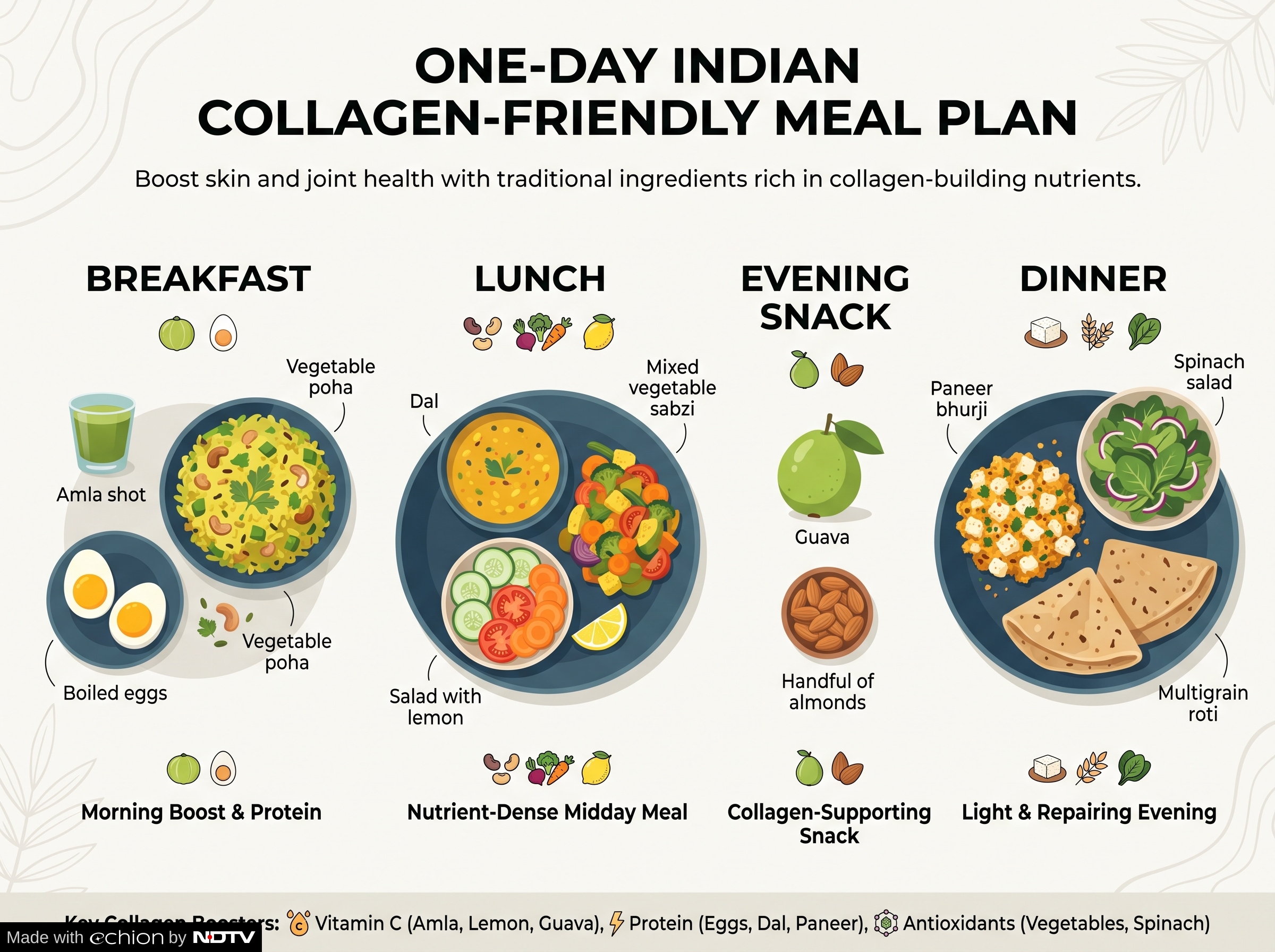
Collagen can be naturally supported by the intake of nutrient-dense foods, not just supplements.
Also Read: Soya Chunks Contain 4 Times More Protein Than Eggs, But There's A Catch
Disclaimer: This content including advice provides generic information only. It is in no way a substitute for a qualified medical opinion. Always consult a specialist or your own doctor for more information. NDTV does not claim responsibility for this information.