- A nine-year-old girl in Mumbai died of rabies after skipping vaccination post dog scratch
- Rabies is nearly always fatal once symptoms appear, making early prevention critical
- Minor scratches or licks from infected dogs can transmit rabies, not just deep bites
A case from Mumbai has once again highlighted the deadly consequences of ignoring even minor animal bites or scratches. A nine-year-old girl reportedly died of rabies nearly six months after being scratched by a dog, having skipped the recommended anti-rabies vaccination due to fear of injections. The incident underscores a critical public health message: Rabies is preventable, but once symptoms appear, it is almost always fatal. Rabies is a viral infection that spreads through the saliva of infected animals, most commonly dogs, and affects the brain and nervous system.
According to the World Health Organization (WHO) and the Indian National Centre for Disease Control (NCDC), rabies remains a significant health burden globally, with India accounting for a substantial proportion of deaths. Despite being entirely preventable through timely post-exposure prophylaxis (PEP), thousands of lives are still lost every year due to delayed or incomplete treatment. In India alone, rabies is estimated to cause between 18,000 and 20,000 deaths annually, many of them in children.
This case serves as a stark reminder that awareness, prompt medical care, and adherence to vaccination protocols are essential to prevent avoidable deaths from this deadly yet preventable disease.
Why Rabies Is Almost Always Fatal Once Symptoms Begin
Rabies is often described as one of the deadliest infectious diseases known to medicine. Once clinical symptoms, such as fever, agitation, confusion, or the classic fear of water (hydrophobia), appear, survival is extremely rare.
The virus travels through the nervous system to the brain, causing severe inflammation (encephalitis). According to a study of Indian rabies cases published in the American Journal of Tropical Medicine and Hygiene, the fatality rate of rabies after symptom onset is nearly 100%. This makes early prevention absolutely critical. Unlike many other infections, rabies does not offer a second chance once the disease progresses. The only effective window for intervention is immediately after exposure.
Also Read: 2 Year-Old Telangana Girl Dies After Anti-Rabies Injection: What Makes Rabies Vaccine Ineffective?
Dog Bites And Scratches: Why Even Minor Injuries Are Risky
A common misconception is that only deep bites pose a risk. In reality, even minor scratches or licks on broken skin can transmit the virus if the animal is infected. In India, dogs are responsible for more than 99% of human rabies cases. With millions of stray and unvaccinated dogs, the risk of exposure remains high.
A 2025 study in The Lancet Infectious Diseases estimated that over 9 million animal bites occur annually in India, highlighting the scale of the problem. Children are particularly vulnerable, accounting for up to 60% of rabies deaths in the country. Their smaller stature, frequent outdoor exposure, and inability to report minor injuries increase the risk of unnoticed infections.
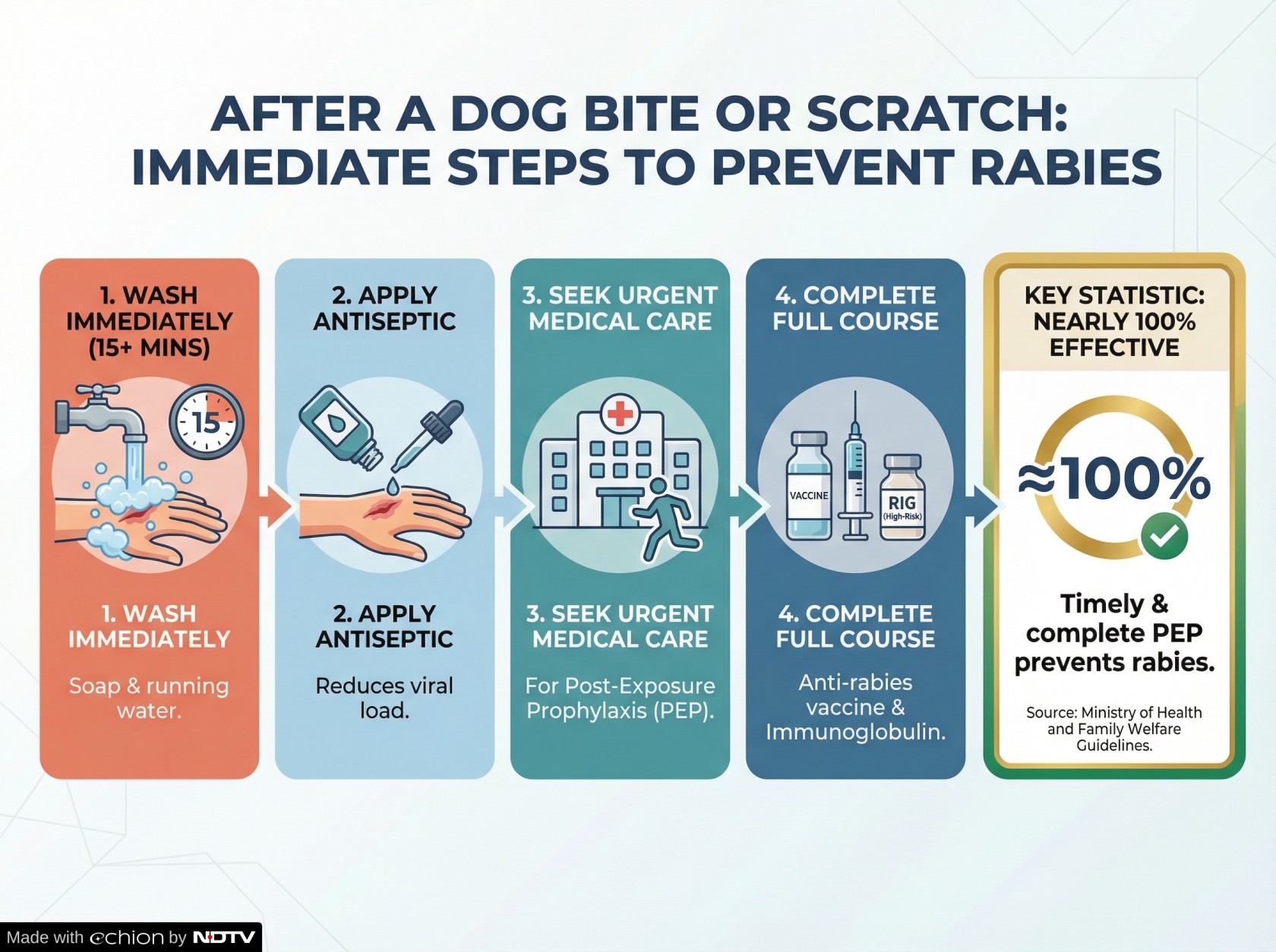
What Should Be Done After A Dog Bite Or Scratch?
Immediate action after a bite or scratch can mean the difference between life and death. Health authorities recommend the following steps:
- Wash the wound immediately with soap and running water for at least 15 minutes
- Apply antiseptic to reduce viral load
- Seek medical care urgently for post-exposure prophylaxis (PEP)
- Take the full course of anti-rabies vaccine as prescribed
- Receive rabies immunoglobulin (RIG) in high-risk cases
According to guidelines from the Ministry of Health and Family Welfare, timely and complete PEP is nearly 100% effective in preventing rabies if administered correctly.
No Shortage Of Vaccines: What Government Data Says
Amid concerns about access, the Union Health Minister JP Nadda has clarified just yesterday that there is no shortage of anti-rabies vaccines or immunoglobulin in India, and supplies are being strengthened under national programmes. Efforts under the National Rabies Control Programme include free vaccination, improved surveillance, and awareness campaigns. These measures aim to ensure that every bite victim has access to life-saving treatment.
However, experts stress that availability alone is not enough, as awareness and compliance remain major challenges.
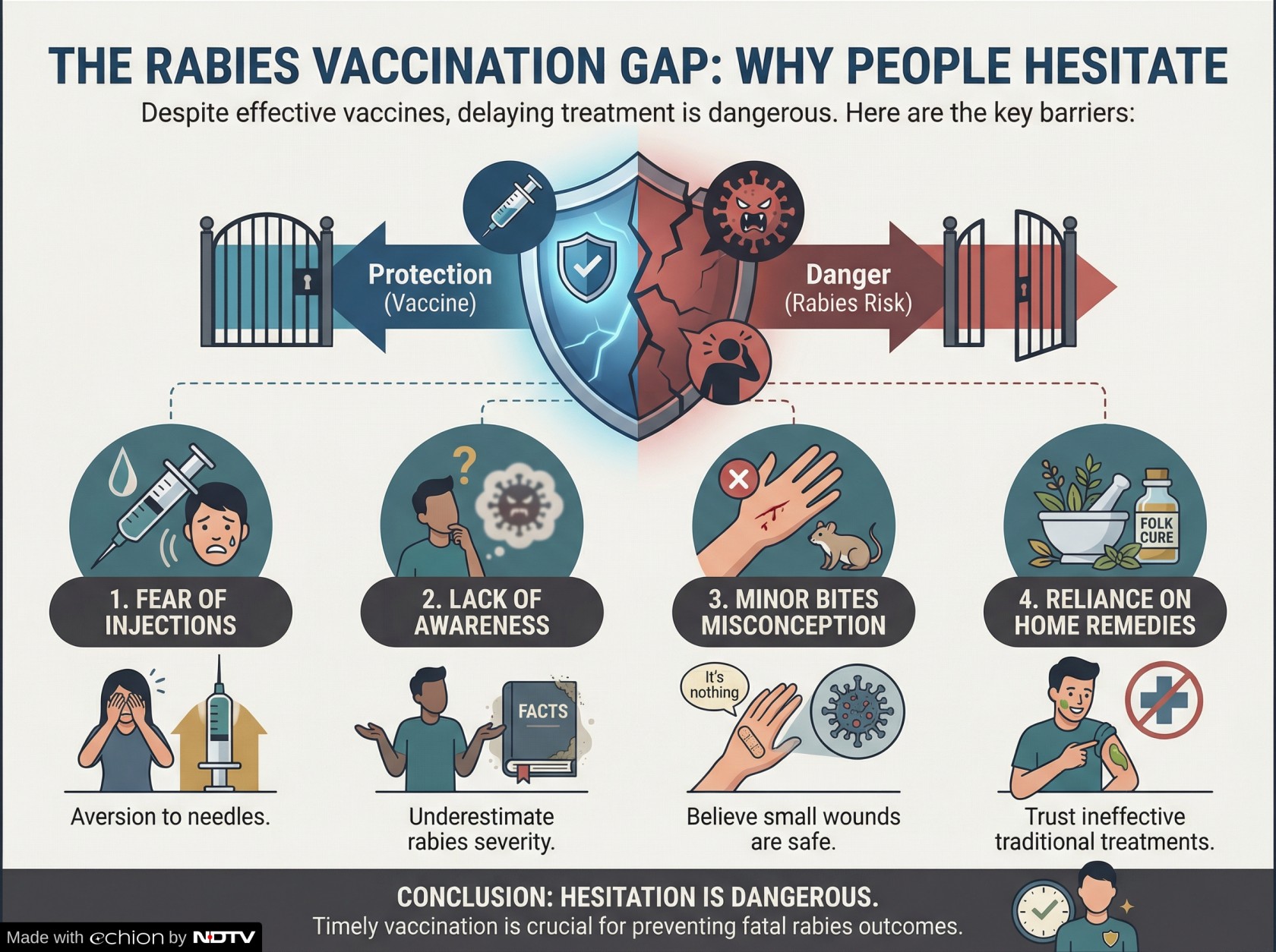
Why People Skip Vaccination, And Why That's Dangerous
Despite the availability of effective vaccines, many people delay or avoid treatment due to:
- Fear of injections
- Lack of awareness about rabies severity
- Misconception that minor bites are harmless
- Reliance on home remedies
Studies, like one published in the Journal of Global Health in 2012, have shown that only a fraction of people follow all recommended steps after a bite, including proper wound washing and completing the vaccine course. This gap between knowledge and action continues to cost lives.
India's Rabies Burden: A Persistent Public Health Challenge
India bears one of the highest burdens of rabies globally, accounting for roughly 35-36% of all rabies deaths worldwide. Despite progress in reducing mortality, the disease remains endemic, particularly in areas with high stray dog populations and limited awareness.
The government has set a target to eliminate dog-mediated human rabies by 2030, in line with global goals. Achieving this will require not just vaccination of humans, but also mass vaccination of dogs and stronger community awareness.
Also Read: No Shortage Of Anti-Rabies Vaccine, Rabies Immunoglobulin In India: Union Health Minister J P Nadda
Rabies Is Preventable, But Not Treatable
The Mumbai case highlights the crucial fact that rabies is entirely preventable with timely care, but virtually untreatable once symptoms begin. Even a seemingly minor scratch can turn fatal if ignored. The fear of injections, hesitation, or delay in seeking care can have irreversible consequences. The death of a young child from rabies months after a dog scratch is a heartbreaking reminder of the dangers of delayed or missed treatment. In a country where rabies continues to claim thousands of lives each year, awareness and timely action remain the strongest tools for prevention.
With vaccines and treatment widely available, no death from rabies should occur. The key lies in recognising the risk, acting immediately after exposure, and completing the full course of treatment.
In the fight against rabies, hesitation can be fatal, but prompt action can save lives.
Disclaimer: This content including advice provides generic information only. It is in no way a substitute for a qualified medical opinion. Always consult a specialist or your own doctor for more information. NDTV does not claim responsibility for this information.