- Bangladesh faces a severe measles outbreak with over 100 child deaths and thousands infected
- Disruptions in routine immunisation and political instability delayed key vaccination drives
- Infants under nine months are highly vulnerable due to delayed first measles vaccine doses
Bangladesh is currently facing one of its worst measles outbreaks in recent years, with more than 100 children reported dead and thousands of suspected infections in just weeks. The surge has triggered emergency vaccination drives and raised global concern about gaps in immunisation systems. According to recent reports, over 900 confirmed cases and more than 7,500 suspected infections have been recorded since March 2026, with the outbreak affecting a majority of districts across the country.
Health experts warn that this crisis is not an isolated event but part of a broader global trend, where even small disruptions in vaccination coverage can lead to deadly outbreaks of highly contagious diseases like measles. So, what caused this sudden and deadly surge in Bangladesh? Here are a few key factors driving the outbreak.
1. Falling Vaccination Coverage And Immunity Gaps
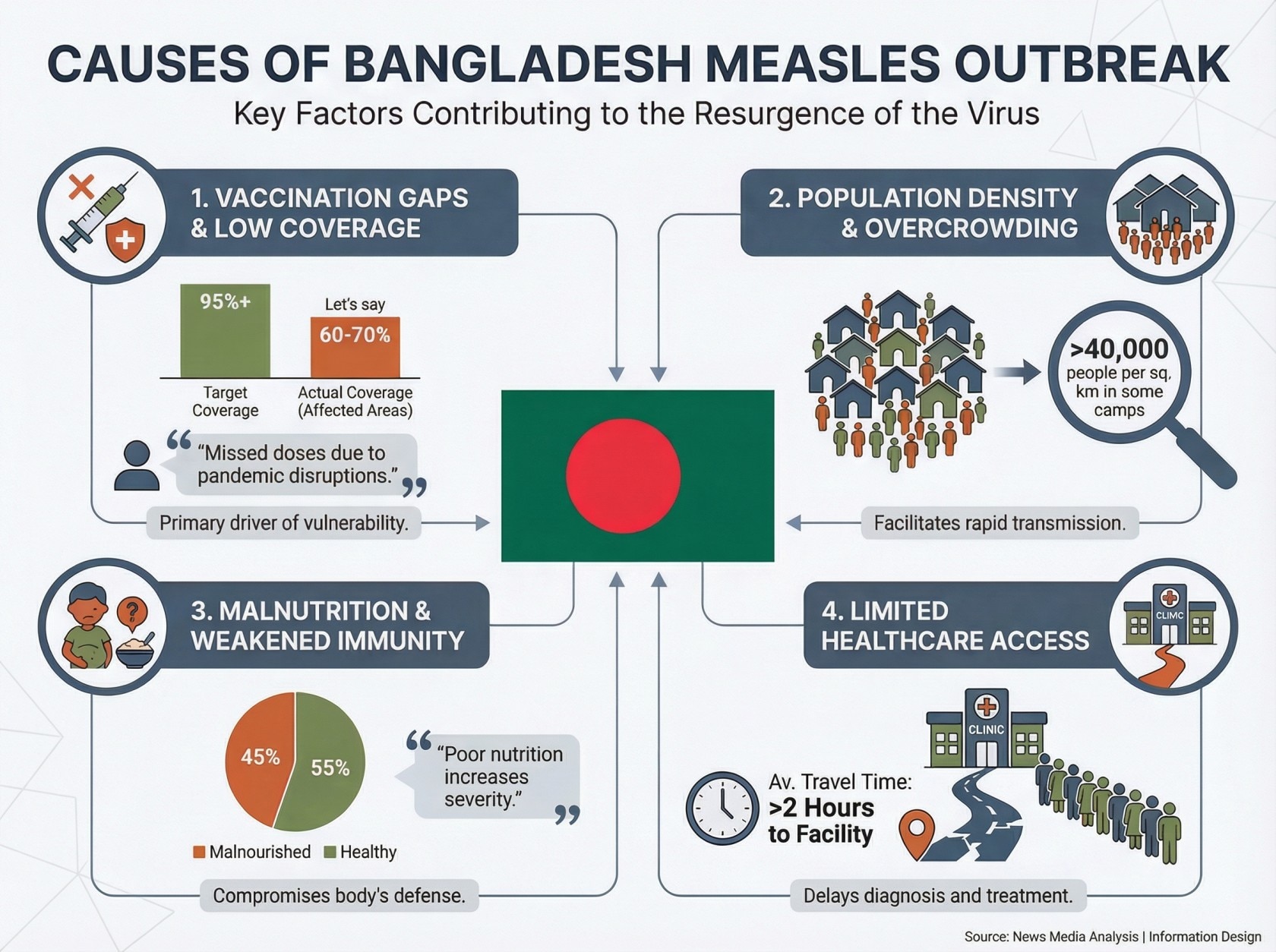
At the heart of the outbreak lies a critical issue, gaps in vaccination coverage. Health authorities say many affected children were either unvaccinated or had missed routine immunisation doses, leaving them vulnerable to infection. The WHO notes that at least 95% vaccination coverage with two doses is required to prevent measles outbreaks. Even small declines can allow the virus to spread rapidly. Globally, measles is often the first disease to resurge when immunisation systems weaken, exposing gaps in public health infrastructure.
2. Disruptions To Routine Immunisation
Bangladesh had made significant progress in vaccination over the decades, but recent disruptions have reversed some of these gains. Experts point to delays in immunisation programmes, including missed campaigns during periods of political instability and health system strain. Routine vaccination drives, especially those targeting infants, were interrupted, creating a cohort of children with little or no protection against measles.
3. Vulnerability Of Infants And Young Children
A significant proportion of cases has been reported among children under five, particularly infants. Many affected children are below nine months of age, when the first dose of the measles vaccine is typically administered, leaving them especially vulnerable. The UNICEF warns that immunity gaps due to low immunization in this age group can rapidly escalate into large outbreaks.
4. Vaccine Shortages And Supply Issues
Reports indicate that vaccine shortages and procurement delays have also contributed to the crisis. Public health experts have flagged lapses in vaccine stock management and distribution systems, which limited access in high-risk areas. This has been compounded by disparities in healthcare access across regions, leaving some communities significantly under-immunised.
5. Highly Contagious Nature Of Measles
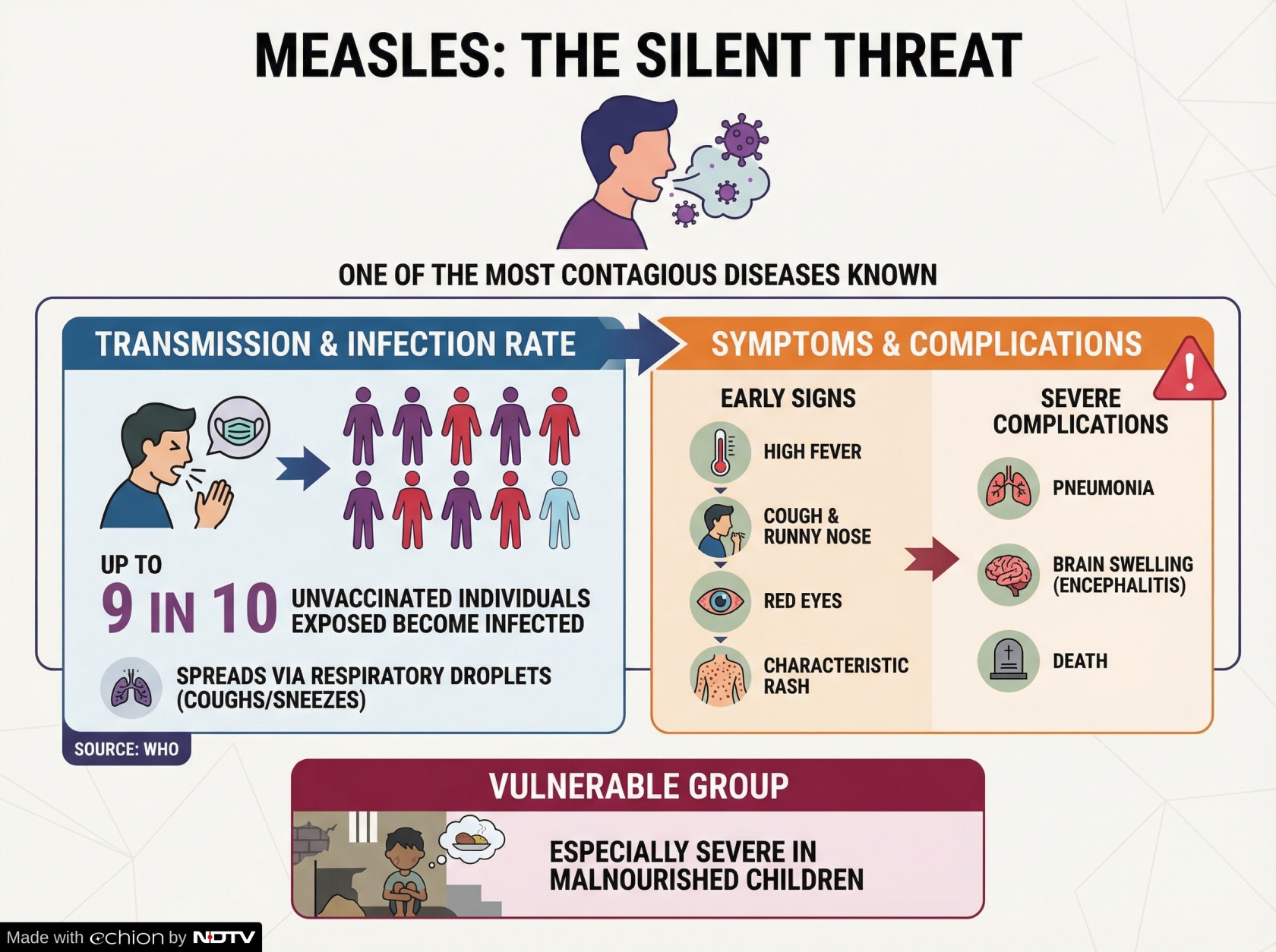
Measles is not just any viral infection, it is one of the most contagious diseases known. The WHO states that the virus spreads through respiratory droplets when an infected person coughs or sneezes, and can infect up to 9 out of 10 unvaccinated individuals exposed to it.
Symptoms include:
- High fever
- Cough and runny nose
- Red eyes
- Characteristic rash
In severe cases, complications such as pneumonia, brain swelling (encephalitis), and death can occur, especially in malnourished children.
Also Read: Bangladesh Measles Outbreak: Will It Affect Indian Border States? Tips To Keep Yourself Protected
6. Healthcare System Strain
Hospitals in affected regions have reported being overwhelmed, with limited capacity to manage the surge in cases. Delayed care, lack of early diagnosis, and reliance on informal treatment sources have further worsened outcomes. Experts have urged parents to seek immediate hospital care at the first sign of symptoms rather than relying on unverified treatments.
7. A Global Warning Sign
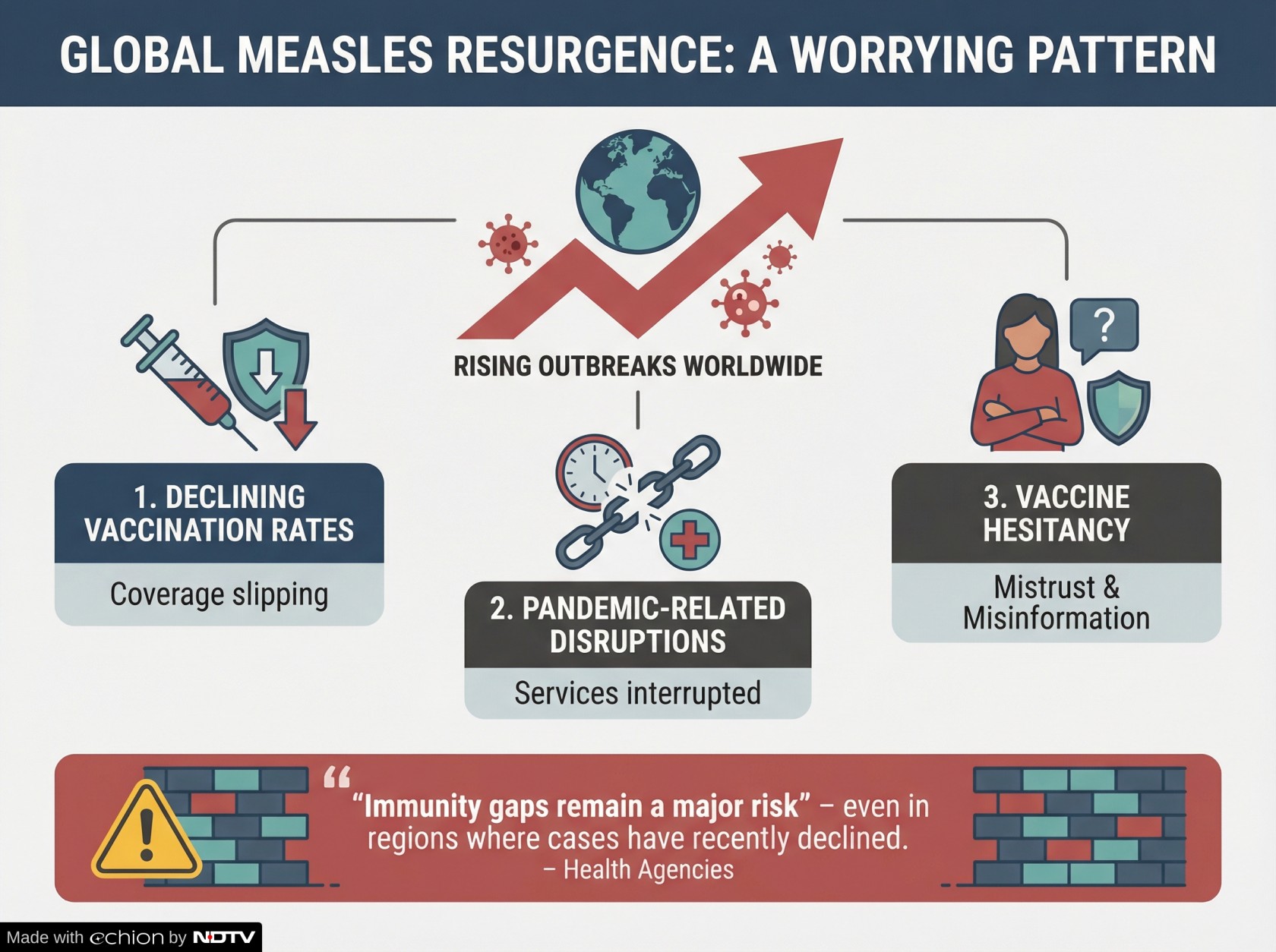
The Bangladesh outbreak reflects a worrying global pattern. Recent data shows that measles outbreaks are rising worldwide due to:
- Declining vaccination rates
- Pandemic-related disruptions
- Vaccine hesitancy
Even in regions where cases have declined, health agencies warn that immunity gaps remain a major risk.
Also Read: Measles Is Back: Why Outbreaks Are Rising Across The World Again
What Is Being Done Now?
In response, Bangladesh has launched a nationwide emergency measles-rubella vaccination campaign, targeting over a million children in high-risk districts. The goal is to quickly close immunity gaps and prevent further deaths.
The deadly measles outbreak in Bangladesh is a stark reminder of how fragile public health gains can be. At its core, the crisis has been driven by a combination of falling vaccination coverage, healthcare disruptions, and systemic gaps, factors that allowed a highly contagious virus to spread rapidly among vulnerable children.
The lesson is clear: Maintaining high vaccination coverage is not optional, it is essential. As global health experts emphasise, even brief lapses in immunisation can undo years of progress, and this is a real fear since many parts of the world are witnessing measles outbreaks more frequently now. Strengthening routine vaccination, improving access, and addressing misinformation will be critical to preventing similar outbreaks in the future.
Disclaimer: This content, including advice, provides generic information only. It is in no way a substitute for a qualified medical opinion. Always consult a specialist or your own doctor for more information. NDTV does not claim responsibility for this information.