





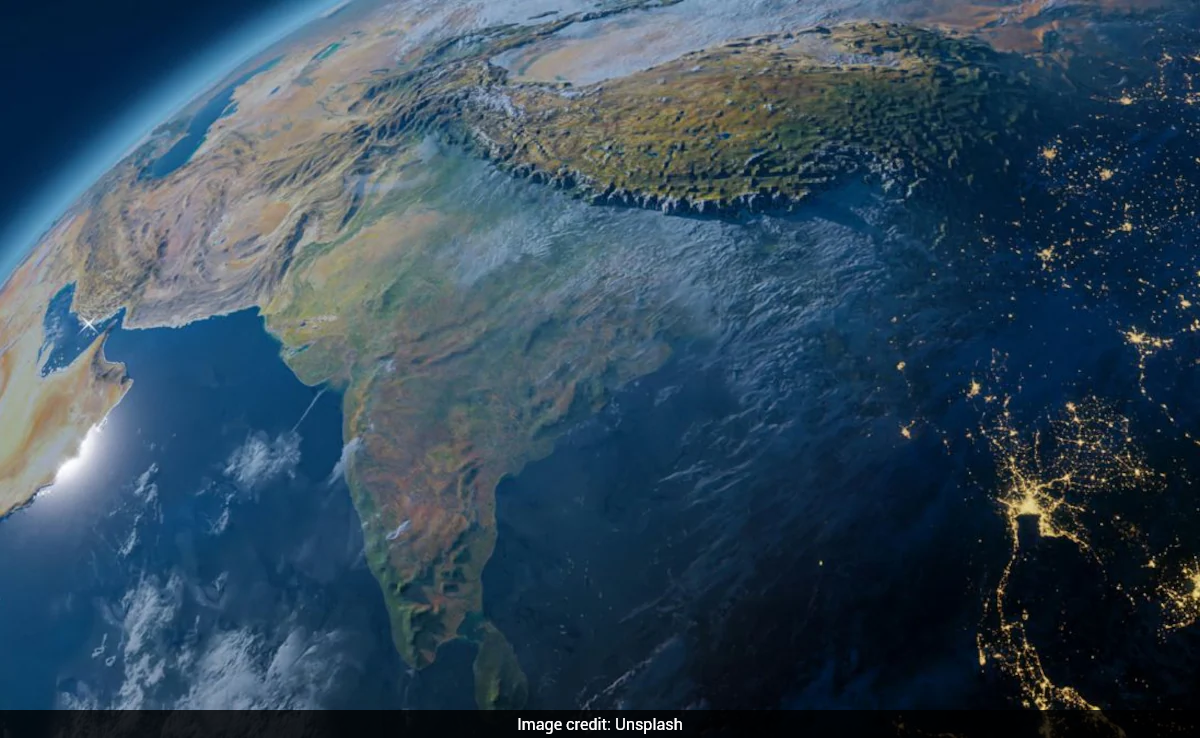
large landmass that is smaller than a continent but distinct from the surrounding landmass. And when it comes to India, the country has unique geographical and cultural characteristics.
The Indian subcontinent includes India, Pakistan, Bangladesh, Nepal, Bhutan and Sri Lanka, covering approximately 4.4 million square kilometres. Some broader definitions also include Afghanistan and the Maldives. It is situated on the Indian Plate, from the Himalayas stretching southwards into the Indian Ocean.
-

-
 NDTV World Summit 2026: AI, Chips, Warfare And The Future Of The World | Key Conversations
 -
 Kriti Sanon On Situationships, Open Relationships And Being Old-School
 -
 'AI Scares Me': Kriti Sanon On Personality Rights And Need For Laws
 -
 'This Time I Wanted Gold': Savita Punia Reflects On Historic Asiad Success
 -
 Favourite Bollywood Actor To 5-Year Plan, Kriti Sanon Interviews AI Actor Tilly Norwood
 -
 Neeru Dhanda Carried Homemade Churma To Asiad, Returned With Two Gold Medals
 -
 Inside The Mind Of Archer Kumkum Mohod, Who Dared To Challenge South Korea
 -
 India's Golden Girls: Asian Games Champions On Sacrifice, Success And LA 2028
 -
 RBI Governor Was Asked About Tata Sons' Listing. He Read The Rulebook
 -
 "High Inflation Is Like Tax On Everyone": RBI Governor At NDTV World Summit
Also read | Barack Obama Says Aliens Are "Real", But Denies Cover-Up At Area 51
But among these nations, India stands out. Its landmass, covering a staggering 3.8 million square kilometres, has naturally-marked boundaries - Arabian Sea on the west, Bay of Bengal on the east, Indian Ocean on the south, and a distinct separation from the rest of Asia by the Himalayan mountain range, which is the world's highest.
The term "subcontinent" also reflects India's diversity, with over 1.4 billion people and dozens of languages spoken. The region has a rich history, with ancient civilisations like the Indus Valley Civilisation and the Vedic period.
Also read | Seedance 2.0 vs Sora 2: How Two Big AI Tools Stack Against Each Other
Are there any other subcontinents?
Sometimes peninsulas are referred to as subcontinents, such as
1. Arabian Peninsula: Sometimes called a subcontinent in Southwest Asia, comprising Saudi Arabia, Yemen, Oman and other countries.
2. Korean Peninsula: It includes North and South Korea, and is sometimes called the subcontinent for reference.
3. Iberian Peninsula: It is in Southwest Europe, comprising Spain and Portugal.
4. Balkans: It is in Southeast Europe, including countries like Greece, Bulgaria, and Albania
Why China is Not Considered a Subcontinent?
China has a very diverse geography, with mountains, deserts, plateaus, and plains, but it isn't called a subcontinent. It is because it doesn't meet the geographical and cultural criteria that define a subcontinent. China is geographically part of the larger Eurasian landmass, and it does not sit on a separate tectonic plate like the Indian Plate.
Track Latest News Live on NDTV.com and get news updates from India and around the world

