





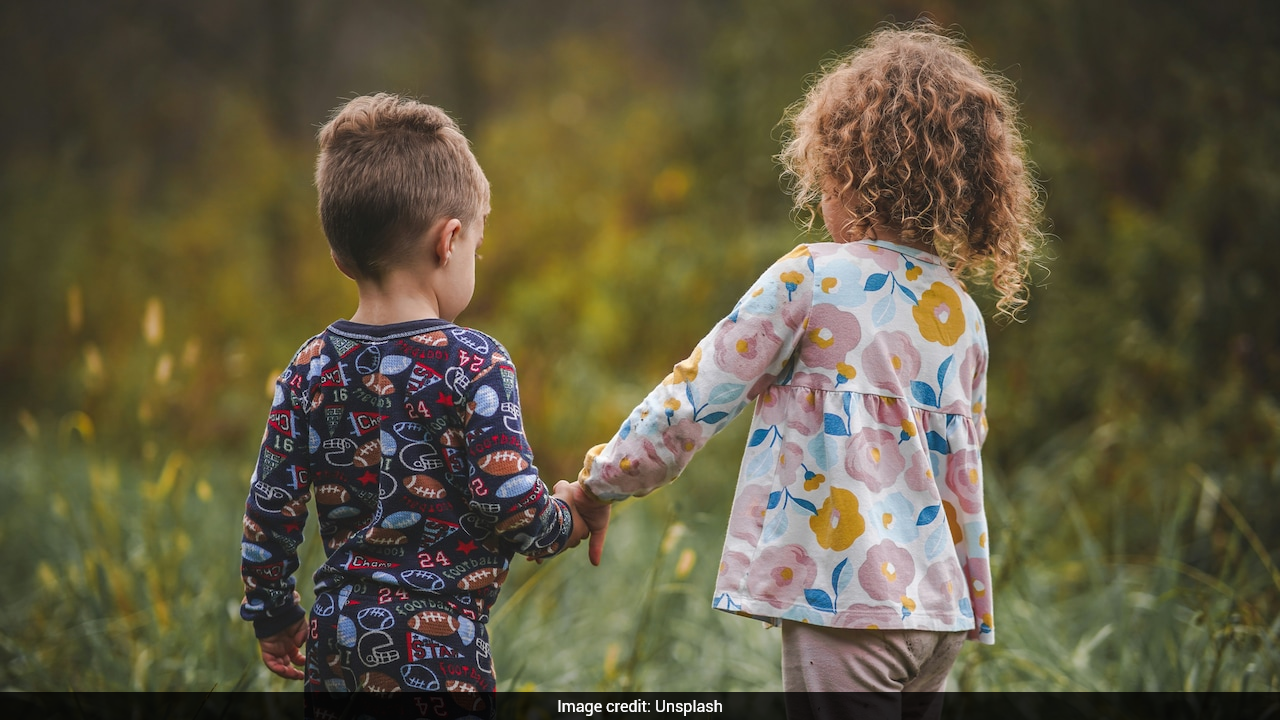
Many adults struggle to complete their 10,000 steps in a day. Meanwhile, children aged three and four take more than 18,500 steps a day on average, with the most active ones clocking close to 30,000 steps. Can you believe it? For this major international study aimed at understanding early childhood activity, researchers tracked more than 3,500 preschoolers across 44 countries. The findings were published in The Lancet Child & Adolescent Health.
While the average sat at around 18,500 steps, researchers noticed huge variations driven by location, lifestyle, and environment.
Children living in low-to middle-income countries and rural communities consistently logged higher step totals than those in wealthy urban centres. In Europe alone, daily counts ranged from 5,500 steps to well over 20,000.
Also read | Video: 4 Sailors Survive 17 Hours At Sea After Massive Sperm Whale Sinks Yacht
The study also found that boys tended to record more steps, as four-year-old boys took 19,447 steps a day on average compared with 18,321 for girls. Meanwhile, the median was 18,064 compared with 16,426 for girls among three-year-olds.
According to the scientists, these numbers are meant to serve as a baseline for understanding childhood behaviour, not a strict daily goal that parents should enforce.
Unlike adults who go out of their way to exercise, a young child's movement is built almost entirely around unstructured play, family routines, and outdoor access.
Also read | Viral Video Shows School Principal Sleeping During School Hours In Rajasthan
Public health experts hope simple step metrics can help track physical activity patterns in early childhood, making it easier to encourage healthy habits right from the start.
As reported by The Telegraph, the researchers have highlighted the "importance of considering socioeconomic, environmental and geographical contexts when interpreting physical activity levels in young children".
"Because step count measurements are simple and potentially scalable, they could represent a practical complementary metric for translating physical activity research into public health messages and surveillance systems," they added.
"However, unlike in older children and adults, movement behaviours in preschool-aged children are strongly influenced by parents and caregivers, who play a central role in shaping opportunities and routines for daily activity."
Track Latest News Live on NDTV.com and get news updates from India and around the world

