





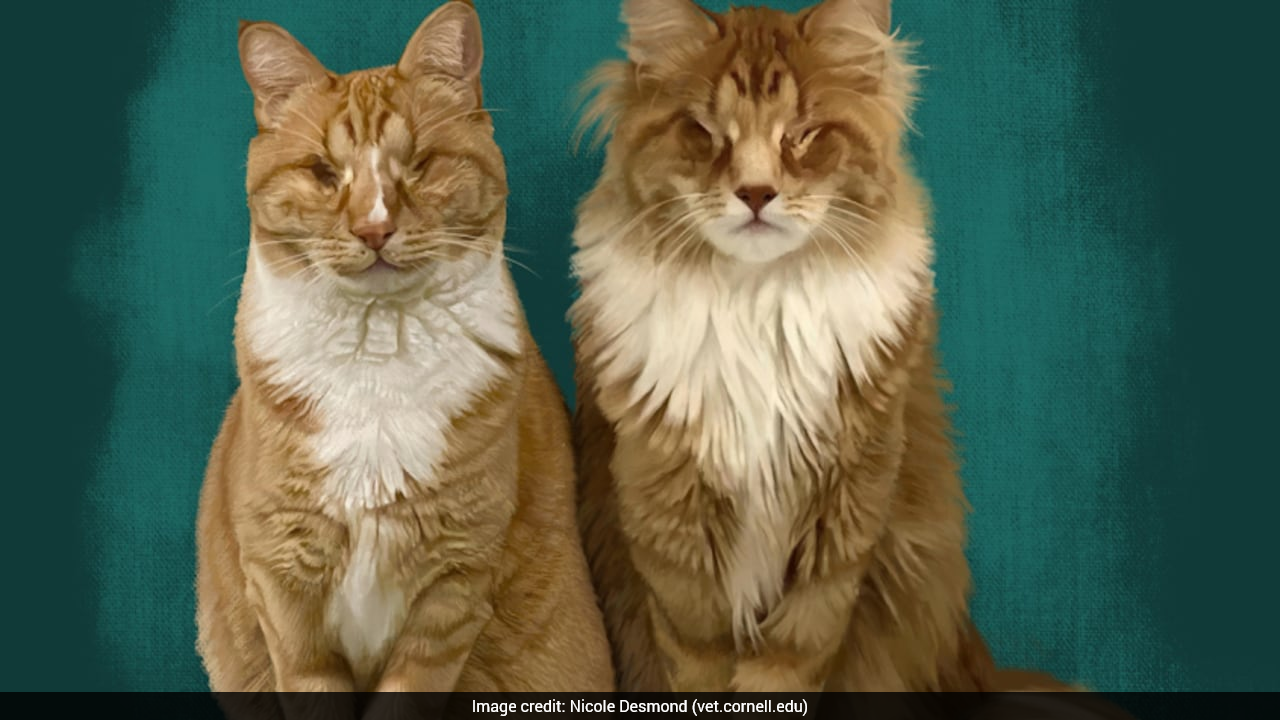
Researchers have confirmed the first known cases of Marfan syndrome in domestic cats in a groundbreaking discovery. According to People Magazine, the diagnosis was made in two littermate brothers, named Gary and Shaggy, whose unusually long legs as kittens initially set them apart from ordinary felines. The study was led by scientists at the Cornell University College of Veterinary Medicine and the findings were published in Scientific Reports, mark a major milestone in understanding rare genetic conditions in pets. The scientists released a press release, confirming that this condition affects about 1 in 4,000 people and has never been found in cats before.
Also read | "Very Emotional Moment": Hospice Patient's Final Wish Fulfilled As Ponies Visit Bedside
What is Marfan Syndrome?
Marfan syndrome is a rare genetic disorder known in human medicine. It weakens the body's connective tissues, the biological "glue" that supports organs, bones, blood vessels, and muscles.
In humans, the condition is caused by a mutation in the FBN1 gene, which provides instructions for producing fibrillin-1, a crucial structural protein. Common signs in humans include unusually tall stature, long limbs, joint problems, vision complications, and dangerous swelling of the main heart artery.
Also read | NASA Backs Project To Explore Mysterious Hole On The Moon
The researchers also revealed that as young kittens, Gary and Shaggy stood out to their owners due to their extra-long legs and distinct posture. However, as they grew, veterinary exams revealed deeper structural issues typical of Marfan syndrome.
Both cats developed abnormally elongated leg bones. And they also experienced dislocation of the lenses in both eyes, requiring eye removal surgeries during their lives. Tests showed dilation of the aortic root, an enlargement of the main blood vessel carrying oxygenated blood from the heart.
Researcher noted that genetic sequencing confirmed that both cats carried two altered copies of the mutated FBN1 gene, one inherited from each parent.
"This discovery is a great example of how pet parents can collaborate with veterinary and genetic experts to learn something that could help other animals in the future," senior author Dr Jacquelyn Evans, assistant professor in the Department of Biomedical and Translational Sciences and at the Baker Institute for Animal Health, said in press release.
"It also showcases the comparative approach that has long been central to research at the Baker Institute for Animal Health."
Track Latest News Live on NDTV.com and get news updates from India and around the world

