





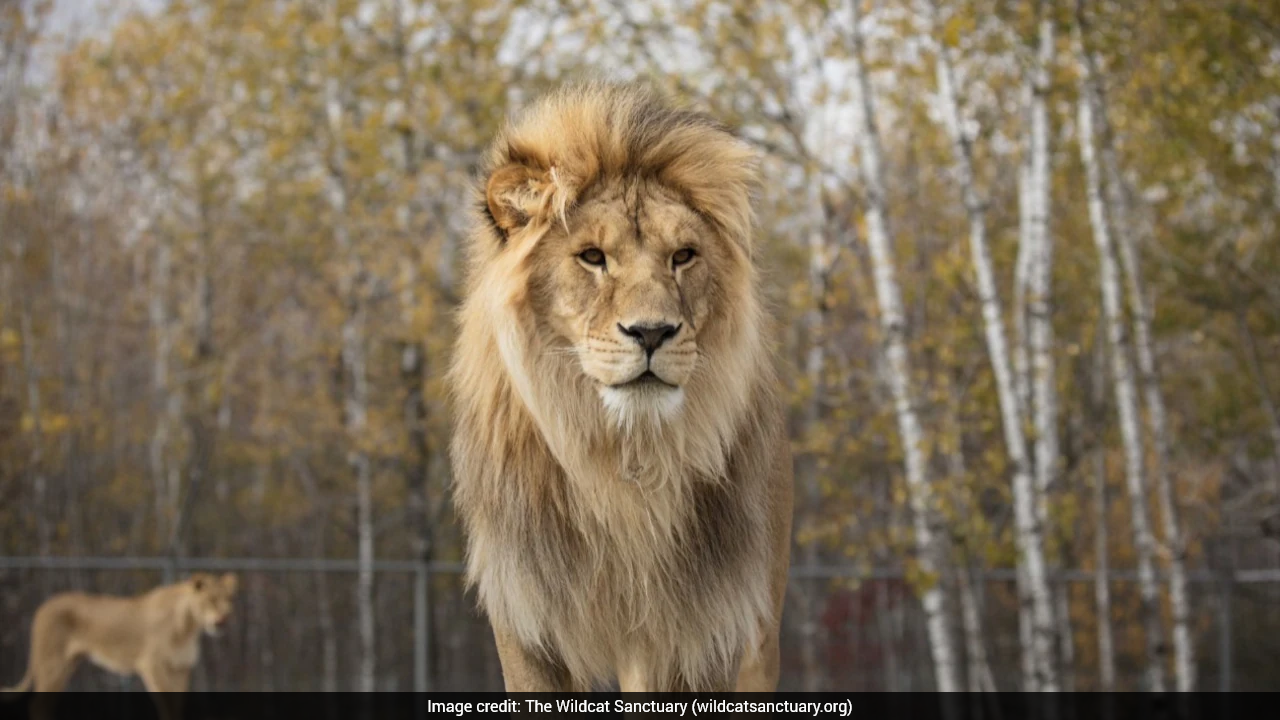
A four-year-old lion named Taras, who survived the war in Ukraine after being rescued as a tiny cub, is now recovering from a serious and potentially fatal fungal disease at a wildlife sanctuary in Minnesota, The Guardian reported. Taras first captured international attention in late 2022. Rescuers originally discovered the four-month-old cub stuffed inside a duffel bag at a train station in Odesa.
With the help of animal welfare groups and an American veterinarian, Taras, along with his two sisters, Lesya and Stefania, and another rescued cub, was evacuated through Poland and relocated to the Wildcat Sanctuary in Sandstone, Minnesota.
After years of living as the energetic leader of his pride, Taras suddenly fell ill. Sanctuary caretakers noticed he had grown unusually sluggish and lost his appetite.
Also read | "Emails Didn't Look Fake": Startup Founder Reveals How Scammers Tricked His Employees In Gift Card Scam
Detailed exams, including a lung biopsy, revealed that Taras was suffering from blastomycosis, which is a rare, non-contagious fungal infection typically contracted from moist soil.
Because it attacks the lungs and often goes unnoticed until late stages, the disease carries a high mortality rate in big cats.
Veterinarians immediately started Taras on intensive treatment, administering strong intravenous antifungal medications twice a day.
Thanks to early detection and constant care, the young lion made remarkable progress, prompting his caretakers to call his recovery a "second miracle" after surviving the conflict in Ukraine.
Also read | UK Theatres, Clubs Ban Meta Smart Glasses Due To Privacy Concerns
According to Tammy Thies, who is the sanctuary's founder and chief executive, Taras "was in a fight for his life".
"Usually when big cats are diagnosed with blastomycosis, it's when they're showing respiratory distress, and by that time the disease is so advanced that even the aggressive antifungal medication can be life-threatening. There's a very low chance of survival," said as quoted by the media outlet.
"The specialist told us he had a guarded prognosis, and when I asked: 'Does he have a 30% chance?', they all just looked at me and looked at their feet. We knew this was going to be an uphill battle, and we might not be able to save him."
Taras has since been reunited with his family, greeting his sisters with affection upon his return. While he must still be separated twice daily to receive oral medication, staff members remain hopeful about his long-term recovery as he continues his journey back to full health.
"He wanted to be with his family, so we started with one play date with a sister at a time," she said as quoted.
"We were concerned that after being away for weeks they could pick on him [but] there was so much nuzzling going on, and so much rolling around on each other, the pride welcomed him with open arms, and they've been inseparable ever since."
Track Latest News Live on NDTV.com and get news updates from India and around the world

