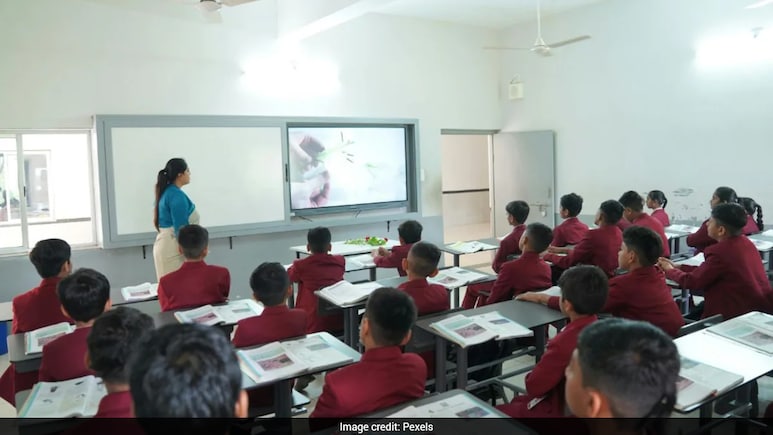

The Sikkim government has launched an AI-powered learning programme in 71 government schools to help students improve their basic skills in reading, language and Mathematics. The Education department said the programme, called AI-FunZone, is being introduced in schools in the Khamdong, Nandok and Martam blocks of Gangtok district.
The programme covers students from Classes 3 to 5 and provides learning support in English, Nepali and Mathematics. It is being implemented with the EkStep Foundation under an MoU signed in April.
AI-FunZone To Offer Daily Practice
As part of the programme, students will have a 60-minute AI-FunZone class during the regular school day. Students will use computers or shared devices for short daily practice sessions. The AI system can listen to children reading and identify areas where they are facing difficulties. It can then provide activities based on their learning level. For Mathematics, the system can identify specific mistakes made by students and provide practice based on those areas.
Teachers Will Continue To Lead Classes
The Education department said teachers will remain central to the programme, while AI will be used to support classroom teaching. A real-time dashboard will help teachers track the progress of individual students and identify areas where they need more support. Around 300 resource persons from the three blocks have already been trained for the programme, according to the department.
Programme Focuses On Learning Gaps
- AI-FunZone uses computers, graphics, audio and interactive activities to give students more opportunities to practise and improve their skills.
- The programme does not involve examinations, rankings or comparisons between students. AI-based assessments will instead help teachers identify learning gaps and work on them during regular classroom teaching.
- The department said some schools, however, have reported shortages of computers or tablets, headsets and high-speed internet, which are needed to run the programme.
According to the Education department, students and teachers have responded positively to the initiative. School heads have also found it relatively easy to implement without adding much administrative work.
