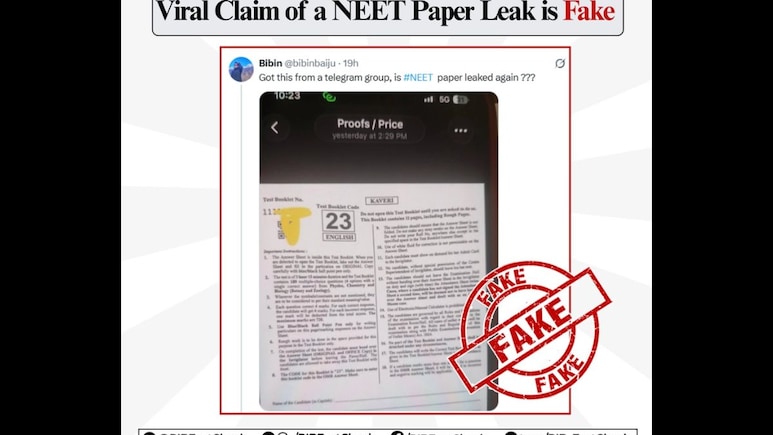
The Press Information Bureau's (PIB) Fact Check unit today debunked a viral social media claim alleging that the NEET question paper had been leaked again and advised candidates not to trust or circulate unverified examination-related content.
The claim surfaced on X after a user named Bibin shared a screenshot purportedly received from a Telegram group and questioned whether the National Eligibility cum Entrance Test (NEET) paper had been leaked once again.
The screenshot attached to the post showed what appeared to be a question paper booklet with the word "KAVERI" printed at the top. The image also displayed the text "Proofs / Price" along with a timestamp of 2:29 pm from the previous day. The booklet visible in the screenshot carried the code "23" and was marked "English".
Responding to the claim, PIB Fact Check stated that the allegation of a fresh NEET paper leak was false.
The fact-checking unit said that a question paper was being circulated on social media with claims that the NEET paper had been leaked again, but clarified that the claim was fake. It advised candidates not to trust, share, or rely on any unverified examination-related content.
Claim: A question paper is being circulated on social media claiming that the NEET paper has been leaked again.
— PIB Fact Check (@PIBFactCheck) June 13, 2026
⚠️This Claim is #fake.
🚨 Candidates are advised not to trust, share, or rely on any unverified examination-related content.
✅ For authentic updates and official… pic.twitter.com/W1F3yRJUhp
PIB Fact Check further urged students to obtain examination-related information only from official sources and directed them to visit the official NEET website for authentic updates. It also asked users to report any suspicious content related to the Government of India to PIB Fact Check.
The clarification comes amid heightened efforts to counter misinformation ahead of the NEET UG 2026 re-examination scheduled for June 21. Authorities have advised candidates to rely on official sources for updates and avoid sharing or acting on unverified claims related to the examination.
