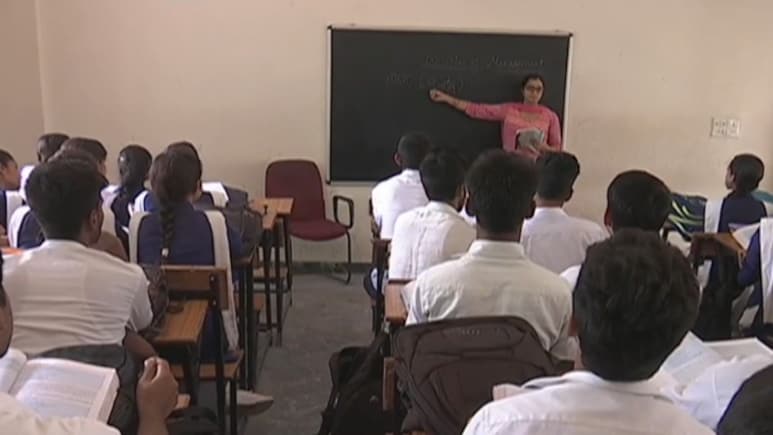

India's higher education network continued to expand in 2023-24, with the country recording 1,289 universities, 48,246 colleges and more than 17.3 lakh teachers, according to the latest All India Survey on Higher Education (AISHE) released by the Ministry of Education. Women accounted for 44.9 per cent of the teaching workforce.
The report showed India had over 17.3 lakh teachers in higher education institutions during 2023-24. Overall, 55.1 per cent of teachers were men and 44.9 per cent were women, translating to 82 female teachers for every 100 male teachers, up from 79 women per 100 men in the previous year.
Of the 1,289 registered universities, 1,278 participated in the survey, recording a response rate of nearly 99 per cent. Government-run institutions accounted for the majority, with 733 universities, including 254 under the Central government and 479 under state governments. The report also recorded 546 private unaided universities, and 10 private deemed aided universities.
The number of registered colleges increased to 48,246 in 2023-24 from 38,498 in 2014-15, an addition of nearly 9,750 colleges over the past decade. The report said 1,622 colleges were added during the 2023-24 survey year.
Of the 46,468 colleges that responded to the survey, 17.1 per cent were government-run, 12.9 per cent were private aided and 70.0 per cent were private unaided. Despite accounting for only 17.1 per cent of colleges, government institutions enrolled 88.9 lakh students, or 28.6 per cent of total college enrolment, indicating that government colleges continue to serve a larger number of students on average than private institutions.
The gender ratio among teachers varied across social groups. Among Other Backward Class (OBC) teachers, there were 79 women for every 100 men, while among Scheduled Tribe (ST) teachers the figure stood at 87 women per 100 men. The ratio was lower among Scheduled Caste (SC) teachers, at 66 women per 100 men, and among Muslim minority teachers, at 65 women per 100 men. Women, however, outnumbered men among teachers classified under the "other minority" category, with 166 women for every 100 men.
The survey also showed significant variation across states and Union Territories. Kerala recorded the highest ratio, with 182 female teachers for every 100 male teachers, followed by Punjab at 162 and Chandigarh at 143.
Most teachers in higher education were employed as Lecturers or Assistant Professors, accounting for 67.2 per cent of the teaching workforce. Professors made up 9.7 per cent, while Readers and Associate Professors accounted for 9.8 per cent.
The Pupil-Teacher Ratio (PTR) for universities and colleges in regular mode stood at 23. Including distance education students, the ratio increased to 26. Tamil Nadu, Kerala and Goa recorded the lowest PTR at 14, indicating comparatively lower student-to-teacher ratios.
The report also highlighted wide differences in the size of affiliating universities. A total of 151 universities had 100 or more affiliated colleges, including 21 with more than 500 affiliated colleges. Around 55 per cent of universities had fewer than 100 affiliated colleges.
General and multidisciplinary institutions made up the largest share of universities at 59.9 per cent. Technical universities accounted for 13.5 per cent, followed by medical universities at 7.7 per cent and agricultural universities at 4.1 per cent.
The survey also recorded 15,221 standalone institutions, including polytechnics, nursing colleges and teacher education institutes. Of these, 11,787 responded to the survey, reporting a combined enrolment of nearly 23 lakh students. Technical and polytechnic institutions accounted for 60.7 per cent of enrolment in standalone institutions, followed by nursing institutions at 20.0 per cent.
The report also recorded 15.8 lakh non-teaching staff in higher education institutions. Of these, 58.6 per cent were men and 41.4 per cent were women.
