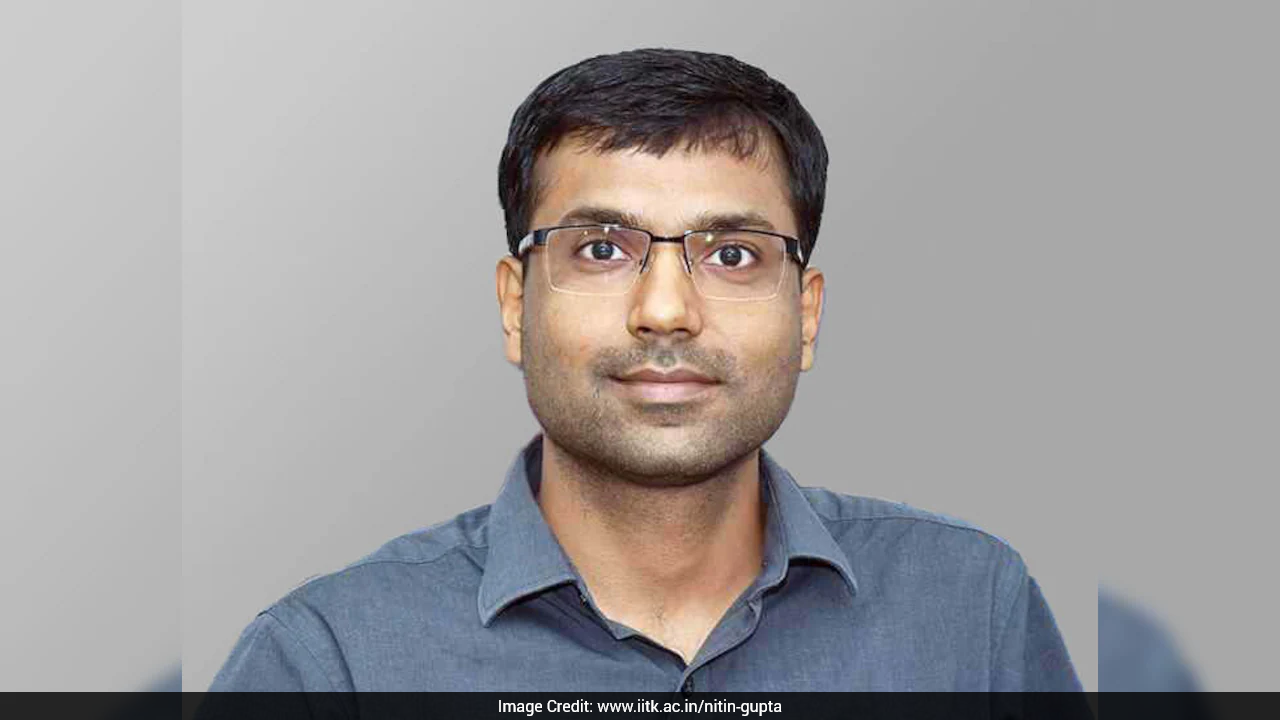

Nitin Gupta, who secured All India Rank 1 in IIT-JEE in 2000, took a career path that was very different from what many IIT graduates choose. After studying Computer Science at IIT Kanpur and completing a PhD in Bioinformatics and Systems Biology at the University of California, San Diego, Gupta returned to India in 2014.
Today, he is a professor at IIT Kanpur, where his research focuses on neuroscience and how the brain processes information and turns it into behaviour. One of the subjects his laboratory studies is the mosquito brain.
From Computer Science to neuroscience
Gupta completed his BTech in Computer Science from IIT Kanpur in 2004. His growing interest in biology later took him to the US, where he completed his PhD in 2009.
He then worked as a postdoctoral researcher at the National Institutes of Health, studying the electrical activity of neurons. His work gradually moved from computers and bioinformatics towards neuroscience.
In 2014, Gupta returned to India and joined IIT Kanpur's Department of Biological Sciences and Bioengineering as a faculty member.
Why does he study mosquito brains?
Gupta's research looks at how the nervous system receives information and decides how to respond to it. His laboratory studies how insects, including mosquitoes, process smells and use that information to guide their behaviour.
Mosquitoes are particularly useful for this research because they rely heavily on smell to find hosts. By studying their olfactory system, researchers can understand how neural signals are converted into specific actions.
Gupta's work has earned him several awards, including the Innovative Young Biotechnologist Award, Swarnajayanti Fellowship and CNR Rao Faculty Award.
His journey from being the country's top IIT-JEE ranker to becoming a researcher studying the brain of a mosquito shows how an IIT education can lead to careers far beyond conventional technology jobs.
