

New Delhi: The collapse of a five-storey student accommodation building in Delhi's Satya Niketan, which killed seven people including five Delhi University students, has brought the city's student housing crisis sharply into focus.
In an exclusive conversation with NDTV, Miranda House Principal Bijayalaxmi Nanda spoke about the responsibility of educational institutions to ensure that students have a safe place to live. 'A hostel room is their only home in this city'
"The Satya Niketan incident has shocked us, and it is difficult to put into words what has happened. These students come from every corner of the country, leaving their families and homes behind. For many of them, their hostel room becomes their only home in this city. If even that space is not safe, we have to ask ourselves what more needs to be done," Nanda told NDTV.
Delhi University has more than 2.6 lakh students, while its university and college hostels currently offer only around 7,200 beds. The university has announced plans to add 5,544 more beds, taking the combined capacity to 12,754 once the proposed projects are completed.
The shortage has pushed large numbers of students towards private paying guest accommodations, rented rooms and shared housing in neighbourhoods such as Satya Niketan, which has evolved into a major student hub around DU's South Campus. "About 4,000 of our students are from outside Delhi, so the need for hostel accommodation is very significant," she said.
Miranda House conducts structural audit
The principal told NDTV that the college has conducted an internal structural audit of its hostel buildings.
The college, established in 1948 under Delhi University's then Vice-Chancellor Sir Maurice Gwyer, itself offers a glimpse into the complicated question of maintaining old institutional buildings while meeting the needs of a growing student population.
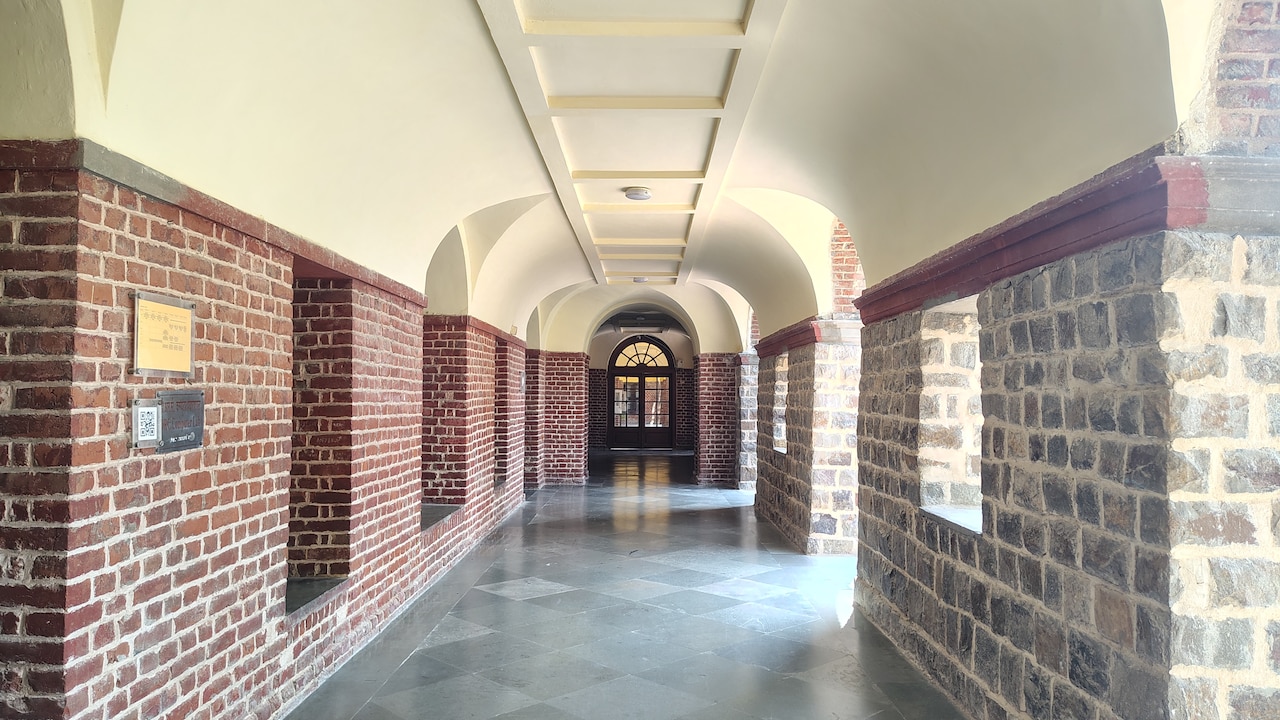
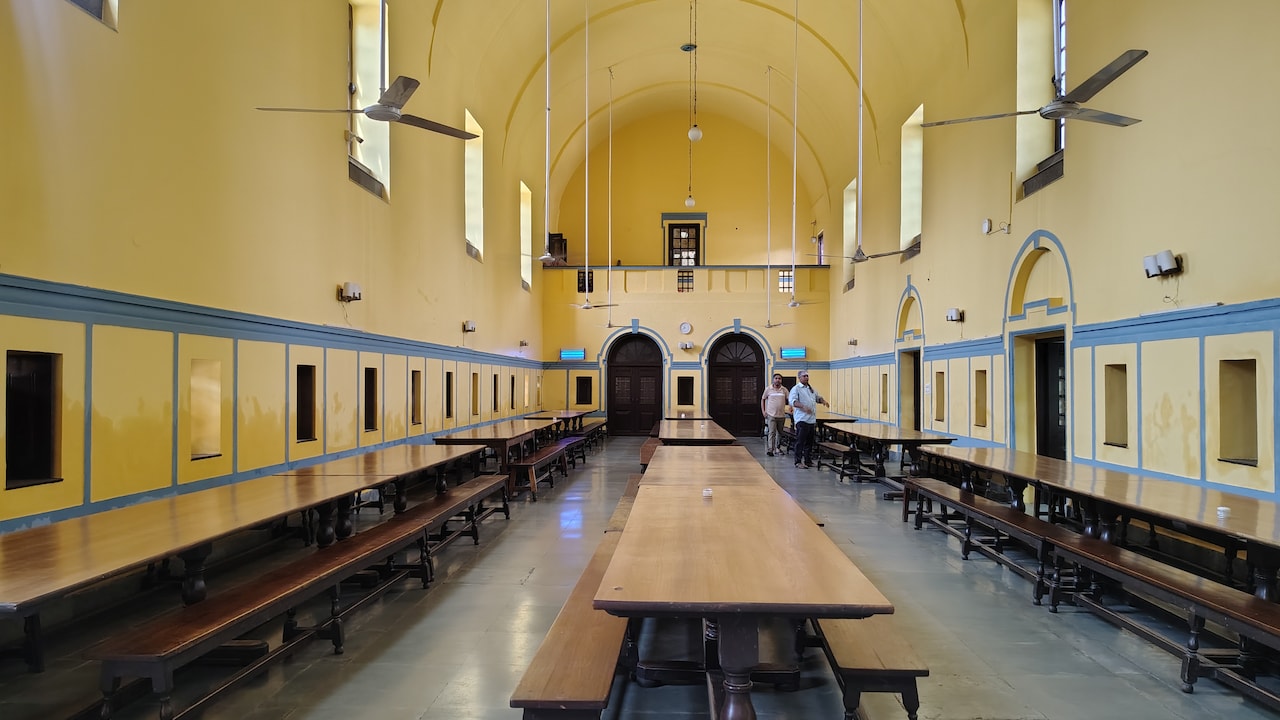
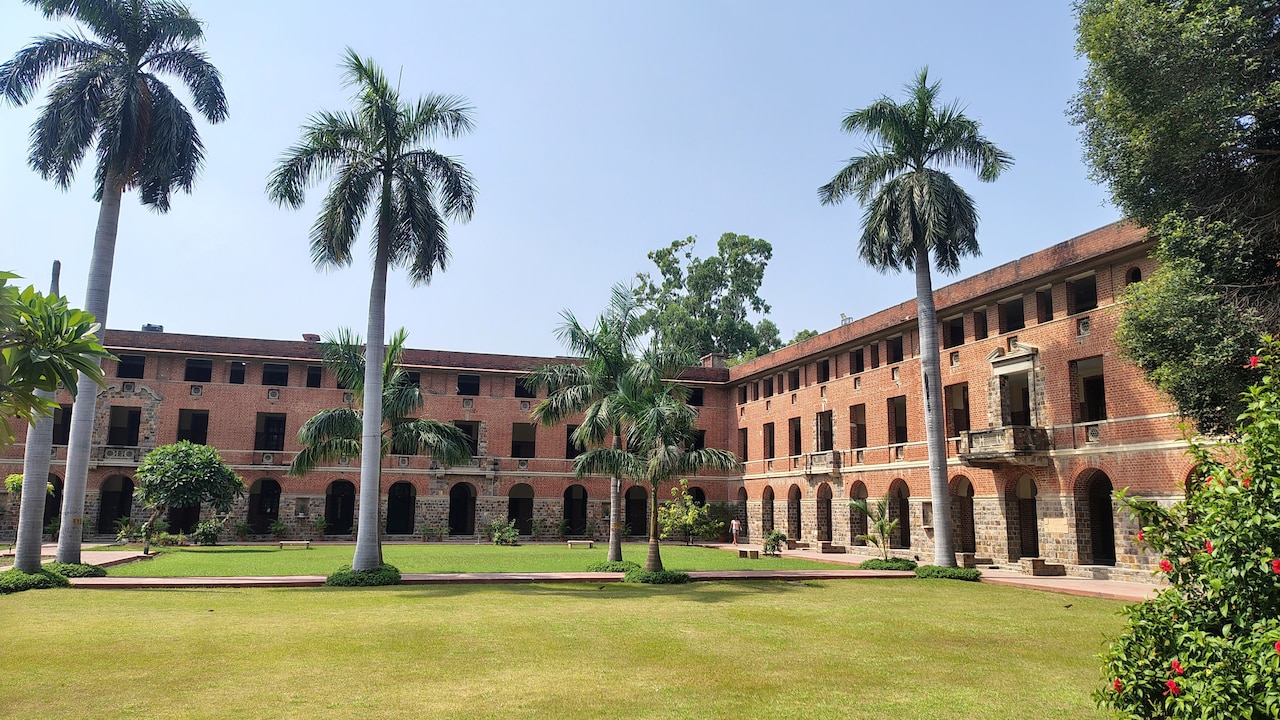
The hostel came first and was designed by renowned architect Walter George. The original red-brick structure, with its long corridors, stone balconies, high-arched dining hall and quadrangular layout around gardens, has become an integral part of Miranda House's architectural identity. The building is now recognised as a heritage structure, with restoration and refurbishment work undertaken to preserve its original character.
"Interestingly, the older buildings constructed in 1948 under Sir Walter George's design have emerged as structurally strong and are in good condition. Even the hostel buildings constructed in 2012 are structurally fine, although they require routine maintenance," the principal noted
The buildings constructed in 1975, however, require greater attention.
"The structures from 1975 need proper repair and regular maintenance. We have identified issues such as water seepage and termite infestation. Roof treatment is also required, but that involves considerable expenditure and we need the necessary resources for it," she said.
A newer hostel block was added in 2012, creating a campus where heritage structures and newer infrastructure now function alongside each other.
Why old hostels cannot simply be modernised like new buildings?
Nanda said the college cannot simply install air-conditioning across its hostel buildings because of the limitations of the existing infrastructure.
"These are old buildings and they were not designed for air-conditioning. Installing ACs across the hostels would require major structural and electrical intervention. The existing earthing, wiring and other infrastructure cannot simply take that additional load," she told NDTV.
She said the college is instead working on improving other essential facilities, including internet connectivity.
"We are working on improving Wi-Fi connectivity because the area has significant network problems. For students today, connectivity is not a luxury; it is an essential part of their academic life," she said.
She stressed that maintenance cannot be treated as a one-time exercise.
"Regular maintenance has to be an ongoing process. Structural safety is not only about the age of a building; it is also about how consistently it is inspected, maintained and repaired," she said.
The cost of a safe hostel
For students who do secure a place in an institutional hostel, affordability remains another part of the equation. At Miranda House, the hostel fee for first-year students is around Rs 58,940, payable in two instalments, according to the college.
The college is also looking at safety beyond the physical structure. The Miranda House hostel mess is currently undergoing the process for FSSAI certification. An FSSAI team has already visited the mess, and water samples have been tested.
"The FSSAI team has already visited the mess, and the water has been tested as well. We are now awaiting their report," Nanda mentioned.
The Satya Niketan building collapse has put a spotlight on the consequences of a shortage of safe student accommodation. DU is now seeking to expand its institutional hostel capacity, while also examining ways to identify reliable private accommodation near its campuses. The question of safety therefore extends beyond the walls of the hostel.
