





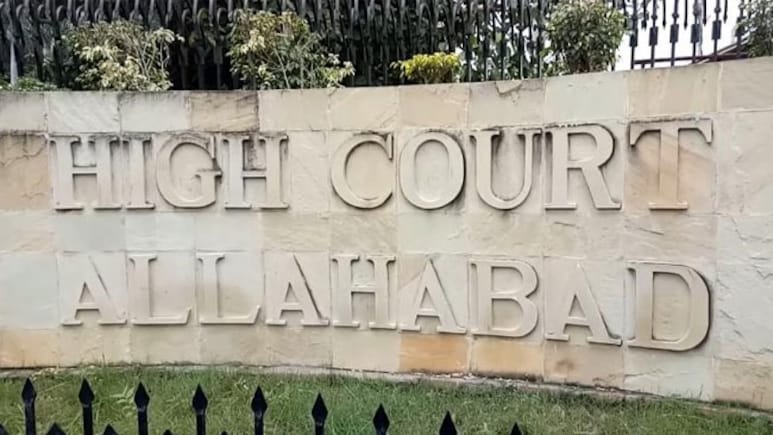
While hearing a criminal appeal in a matter related to the Scheduled Castes and the Scheduled Tribes (Prevention of Atrocities) Act, the Allahabad High Court in a significant verdict has held that merely addressing a person by their caste - without any intent to humiliate or intimidate - should not be considered an offence under this law, or the SC/ST Act.
The court said addressing someone by their caste in the absence of any intent to insult does not constitute an offence under the law. Consequently, continuing criminal proceedings under the SC/ST Act would amount to an abuse of the law.
The court scrapped the summons order issued by the trial court against the appellants; however, it said proceedings for offences under the Indian Penal Code (IPC) would continue. The order came from a single-judge bench comprising Justice Madan Pal Singh, while partially allowing a criminal appeal filed by Amay Pandey and three others.
According to the case details, the appellants filed a criminal appeal before the Allahabad High Court challenging the proceedings initiated against them under the SC/ST Act. They sought to scrap both the summons order issued by the trial court in July 2025, and the entire ongoing proceedings before the trial court.
A first information report (FIR) was filed against Amay Pandey and the three other appellants in 2019 under the SC/ST Act.
The appellants' lawyer said the entire prosecution case was inherently contradictory and had been falsely fabricated with malicious intent. The lawyer said the FIR was initially filed against unidentified people, alleging a vague assault stemming from an argument that happened during a wedding and contained no mention of any caste-based verbal abuse.
However, subsequently, in a recorded statement the complainant presented a new narrative alleging caste-related abuse and assault, and claimed to have identified the appellants through CCTV footage.
The lawyer said this significant discrepancy between the FIR and the subsequent statements clearly undermines the credibility of the prosecution's case. It was further contended that the medical evidence does not corroborate the prosecution's version, as the injuries reported by the complainant are minor, suggesting that the alleged incident has been exaggerated and misrepresented.
The essential evidence needed for the applicability of the provisions of the SC/ST Act are not met in this case, as there is no evidence to indicate that the alleged offence was committed because the complainant belonged to the Scheduled Castes community.
The government's lawyer appearing on behalf of the state opposed the appeal, arguing that on seeing the chargesheet and the summoning order, it cannot be asserted that no offence under the SC/ST Act is made out against the appellants.
After hearing arguments from all sides, the court observed that prima facie there appears to be substantial discrepancies and improvements in the prosecution's case. The FIR contains no allegation of caste-based abuse, nor does it attribute any specific role to the appellants. The medical evidence merely indicates minor injuries.
These factors, when considered alongside the perceived background of a personal dispute between the parties, cast serious doubt upon the veracity of the prosecution's case particularly insofar as the alleged offences under the SC/ST Act are concerned.
The court held that the material gathered during the investigation does not establish that the alleged acts were committed because of the complainant's caste, or that they were perpetrated solely with the intent to humiliate or intimidate him on account of his belonging to the Scheduled Castes community.
The court said it is well-settled that for the provisions of the SC/ST Act to be applicable, the prosecution must prima facie establish that the accused intentionally insulted or intimidated the victim on the specific ground that the victim belonged to the Scheduled Castes or Scheduled Tribes community, and that such an act was committed in a place within public view.
The Court said mere verbal abuse or involvement in a physical altercation without the fundamental requirement of a caste-based intent does not fall within the ambit of the stringent provisions of the SC/ST Act.
Track Latest News Live on NDTV.com and get news updates from India and around the world

