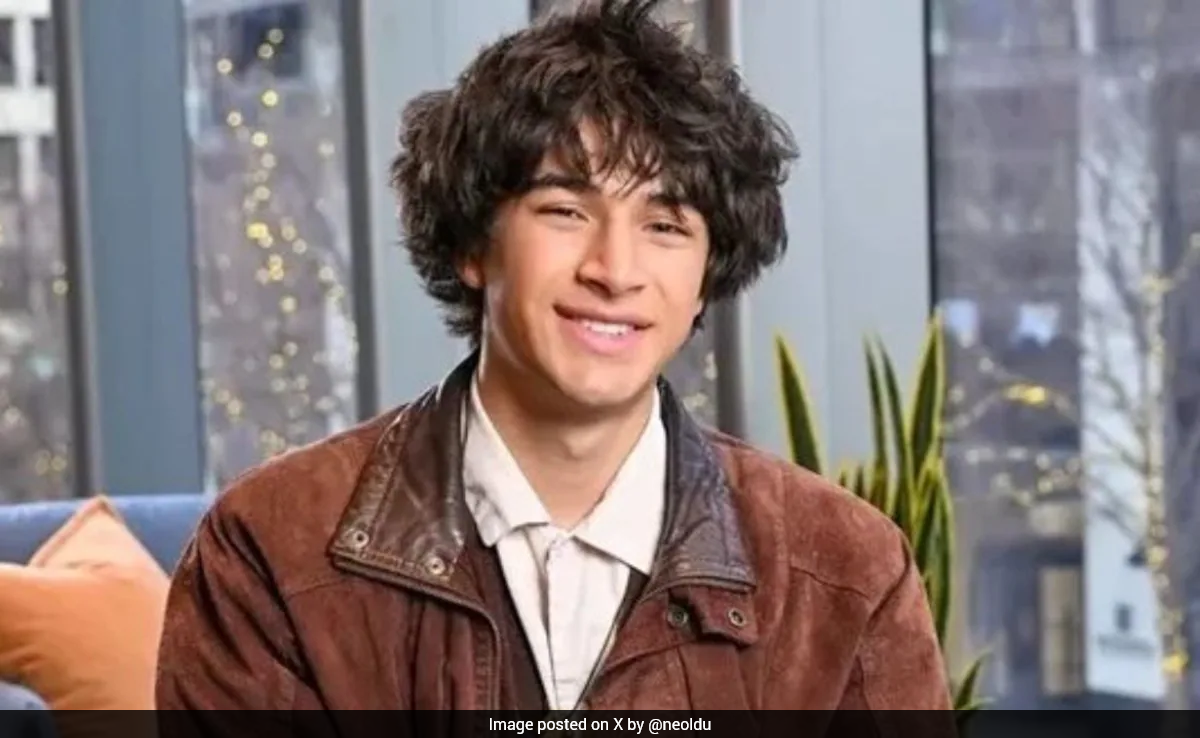
What began as a summer learning project has turned into a scientific discovery. An American high school student has identified nearly 1.5 million previously unknown objects in space. He made this discovery by studying old data collected by NASA.
Matteo Paz, a student at Pasadena High School, worked with scientists at the California Institute of Technology's Infrared Processing and Analysis Center as part of the Planet Finder Academy in 2022.
Under Caltech scientist Davy Kirkpatrick's guidance, he analysed archived data from NASA's NEOWISE telescope, which was launched in 2009 to look for asteroids coming closer to Earth. The telescope had collected over 200 billion rows of measurements, including countless objects in space, over the next decade.
As the data was huge and was simply extraordinary for humans to analyse manually, the research team planned to study only a small part of it. Paz, however, designed an automated system that could analyse the entire dataset.
Other scientists also reviewed his work, and it was later published in The Astronomical Journal.
Here's how he did it
Using his knowledge of mathematics, computer coding, and data analysis, Paz created an automated computer system, which analysed the entire archive on its own. In just six weeks, he built a machine-learning program that could spot very faint and changing light signals in space.
Space objects don't always shine steadily; some flicker, pulse, or slowly fade. He created a computer system that could scan the entire dataset at once and track how the brightness of objects changed over time.
Kirkpatrick said, "The model started showing promise almost right away. As Paz fine tuned it, the results only got more exciting. The system identified flickering, pulsing, and fading objects that served as signatures of quasars, binary stars, and supernovae."
Paz won massive prize
Paz won the first prize of $250,000 at the 2025 Regeneron Science Talent Search. His program was able to process 200 billion pieces of information.
This competition is widely known as the oldest and most prestigious science research competition for high school students in the US.
Each year, around 2,500 students participate in the competition, where they submit original research in critically important scientific fields of study.
Track Latest News Live on NDTV.com and get news updates from India and around the world


