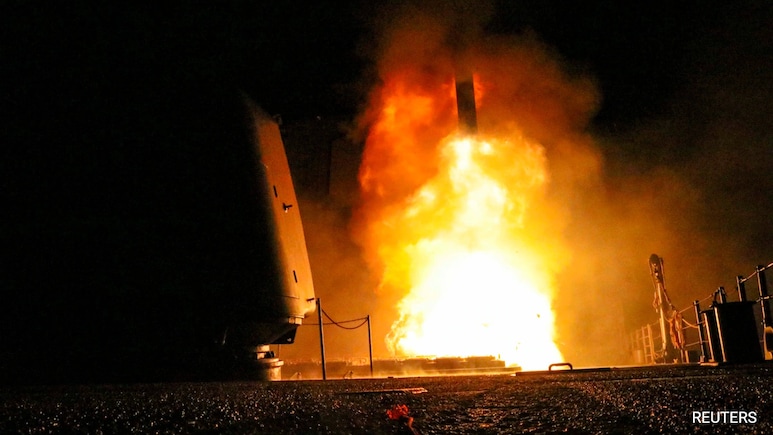
Three weeks into the US military campaign against Iran, Washington is confronting a bill far larger than the opening phase of the Iraq War, despite the absence of ground troops and the promise that this conflict would remain limited.
The Pentagon has asked the US Congress for $200 billion to sustain operations and rebuild depleted weapons inventories. The request is meant to cover past strikes, expected future missions, and an urgent restocking of precision-guided munitions burned through at an unprecedented pace, according to media reports.
In scale alone, the sum eclipses the early spending of 2003. Adjusted for inflation, the initial Iraq allocation would be worth significantly less today. That war launched with more than 1.5 lakh US soldiers, armoured brigades, and a large coalition. The current conflict has none of that. But the price of high-intensity air and naval warfare dominated by long-range missiles and smart bombs has burned cash far faster than traditional ground campaigns.

Military planners say the tempo of strikes explains the spike in expenditure. More than 7,000 targets across Iran have been hit in the opening weeks. Many of those strikes relied on expensive stand-off weapons designed to avoid Iranian air defences. Each Tomahawk cruise missile runs into several million dollars. Even cheaper guided bombs, used heavily after the first wave of strikes, add up quickly when expended by the thousands.
By the second week, US commanders shifted to lower-cost munitions once air dominance was established. That reduced the daily burn rate but did little to alter the broader funding picture. The Pentagon's concern now is that the stockpiles of advanced weapons, built up over years, have been drawn down in a matter of days.
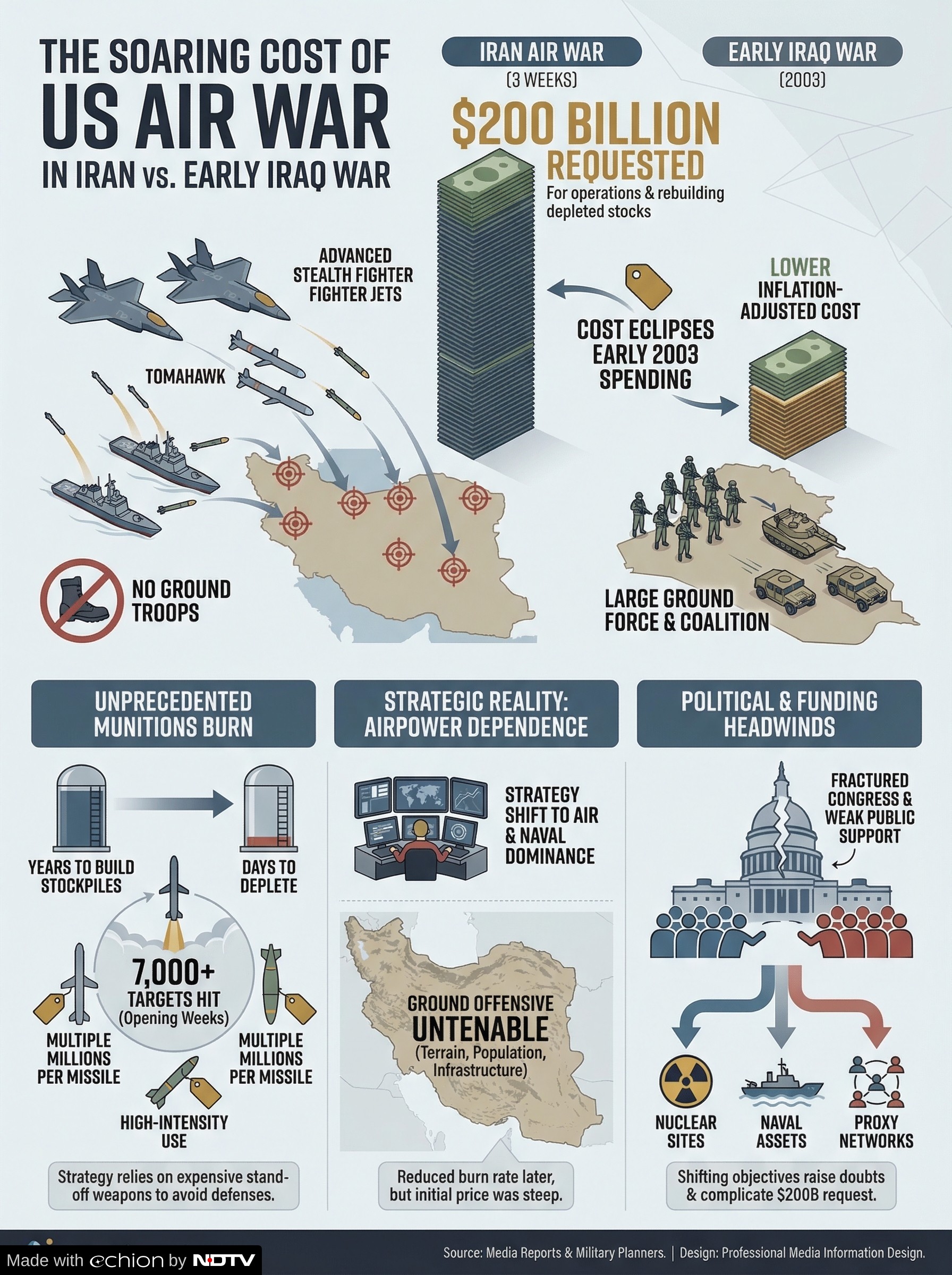
The financial comparison with Iraq obscures a deeper structural difference. Iran's terrain, population, and dispersed military infrastructure make any ground offensive politically and logistically untenable, an assessment long shared across defense circles. That reality has forced Washington into a strategy that depends overwhelmingly on airpower. The upfront bill for that strategy has proved steep.
The funding request faces a difficult path on Capitol Hill. Unlike the early Iraq period when the US Congress backed the White House with minimal resistance, today's political environment is fractured. Public support for a long conflict is weak, and the Trump administration's shifting explanations for its objectives have raised doubts even among some traditional supporters. The US' stated objectives has swung from nuclear sites to naval assets to proxy networks.
Track Latest News Live on NDTV.com and get news updates from India and around the world


