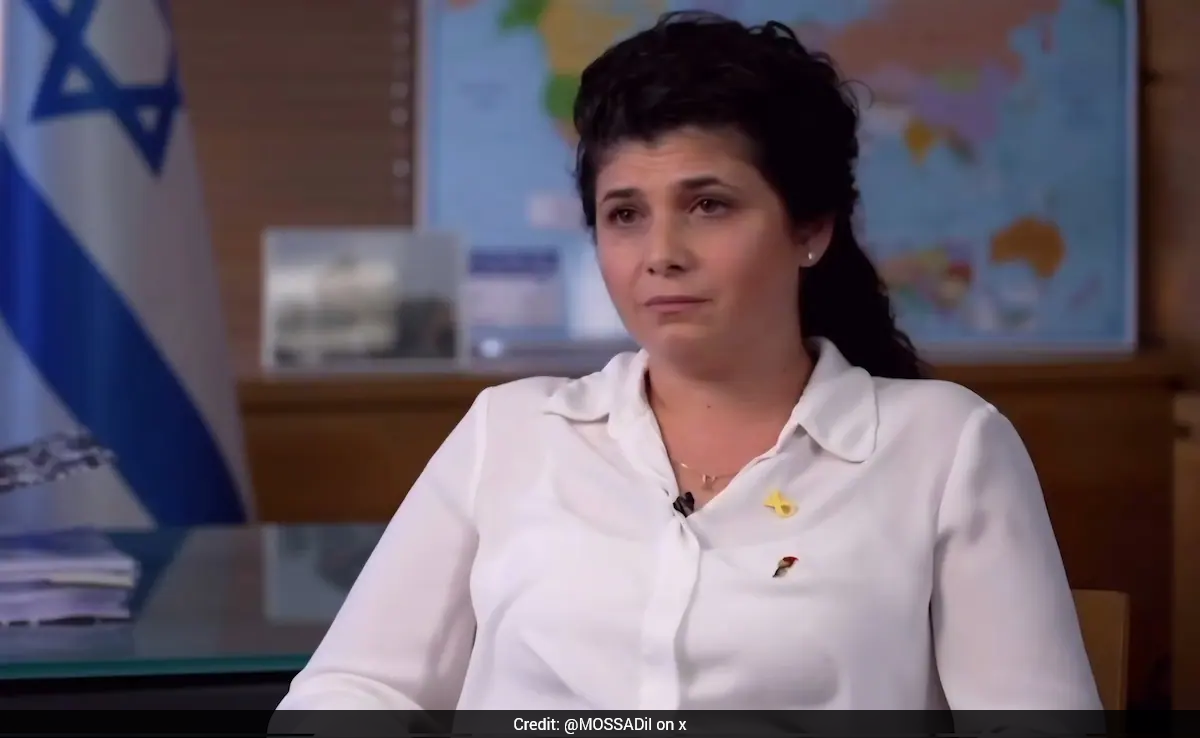
A day before Israel and Lebanon agreed to a 10-day ceasefire, Israel's Deputy Foreign Minister Sharren Haskel indicated that there's a possibility of long-term peace between the neighbouring nations, provided Iranian influence in the region is curtailed. Speaking in an exclusive interview with NDTV, Haskel framed the ongoing war as part of a broader regional confrontation involving Iran, while strongly rejecting allegations of Israeli territorial ambitions in Lebanon.
"Peace Is Possible, But Iran Is the Obstacle," Haskel said, asserting that Israel's ultimate objective remains stability. She also accused Iran of being the principal destabilising force in the Middle East.
According to the Israeli minister, Hezbollah, an Iranian proxy, has continued rocket attacks despite the Lebanese government's opposition, highlighting what she called Tehran's overriding control over militant groups in the region. She suggested that for the first time in decades, meaningful discussions on peace are underway.
"The result of weakening Iran's influence could actually be peace and stability," Haskel said, adding that negotiations aim to remove what she described as "fanatical regimes" from Israel's northern border.
Rejects Claims of Israeli Expansionism
Responding to allegations that Israel is attempting to create a buffer zone inside Lebanon, Haskel dismissed such claims as "propaganda" driven by Hezbollah and Iran. She cited historical precedents, including Israel's withdrawal from territories in exchange for peace, to argue that Israel is not expansionist. Instead, she emphasised that military actions are defensive responses to sustained attacks.
"If you seek to destroy us, we will defend ourselves," she said, framing Israel's operations as necessary for civilian protection.
Iran Talks and US Role: "Huge Gaps Remain"
On broader geopolitical developments, Haskel downplayed the relevance of reported negotiations involving Iran in Islamabad, stating they were unrelated to the Israel-Lebanon situation. She revealed that discussions between Washington and Tehran remain deeply divided, citing communication between US officials and Israeli Prime Minister Benjamin Netanyahu indicating a "huge gap" between positions.
Haskel suggested that economic pressure, rather than diplomacy alone, could force Iran to reconsider its stance, hinting at a strategy of intensifying sanctions and regional isolation.
Sharp Words For Pakistan Amid Diplomatic Tensions
The interview also touched on a rare public diplomatic spat between Israel and Pakistan, following remarks by Pakistani officials that Israel described as anti-Semitic.
Haskel criticised Pakistan's record, alleging support for extremist groups and echoing concerns often raised by India. She emphasised growing India-Israel ties, noting strong public sentiment in Israel towards India.
At the same time, she avoided directly commenting on reports that Pakistan could play a role in future peacekeeping efforts in Gaza, saying differences with the US are handled privately.
Concerns Over Iran's Nuclear Programme
Haskel reiterated Israeli concerns over Iran's nuclear ambitions, claiming that Tehran may be attempting to move nuclear materials underground.
She argued that Iran's leadership has yet to fully grasp the consequences of escalating tensions, warning that continued defiance could invite stronger measures.
While addressing speculation about regime change in Iran, she clarified that the goal is not direct intervention but enabling the Iranian people to "liberate themselves" from what she described as a repressive system.
Civilian Casualties: "Blame Lies with Militants"
On the issue of civilian casualties reported on both sides of the conflict Haskel strongly defended Israel's military conduct.
She insisted that Israel does not target civilians and takes extensive precautions, including advance warnings, to minimise harm. Civilian deaths, she argued, are the result of militant groups like Hezbollah and Hamas operating within populated areas and using human shields.
"The responsibility lies with those who embed themselves among civilians," she said, rejecting international criticism of Israeli strikes.
Endgame Still Unclear
Despite hints of diplomatic movement, the path forward remains uncertain. While Israel signals openness to ceasefire talks with Lebanon, it continues to link any lasting resolution to the rollback of Iranian influence in the region.
With no confirmed timeline for further negotiations and military operations ongoing, the conflict appears far from over even as diplomatic channels cautiously reopen.
Track Latest News Live on NDTV.com and get news updates from India and around the world


