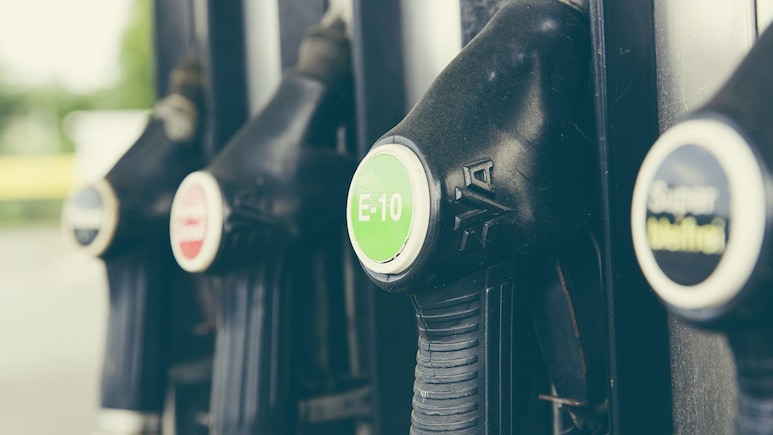
In the first post-Iran war economic shock, Pakistan government in an overnight decision has increased petrol and high-speed diesel prices by PKR 55 per litre each, the highest-ever hike.
Addressing a press conference just before midnight, Petroleum Minister Ali Pervaiz Malik, Deputy Prime Minister and Foreign Minister Ishaq Dar and Finance Minister Muhammad Aurangzeb announced the hike with the consolation that the country has sufficient petroleum reserves.
As a result of the hike, the ex-depot price of high-speed diesel was fixed at PKR 335.86 per litre for the coming week, up by about 20 per cent from PKR 280.86 per litre.
Likewise, the ex-depot price of petrol was revised to PKR 321.17 per litre from PKR 266.17 per litre, reflecting an increase of around 17 per cent.
Malik said at the presser that the conflict in the Middle East created uncertainty in the entire region, offsetting global energy supply and prices, the Dawn newspaper reported.
“The fire that started in a neighbouring country has spread across the entire region. We do not know how long this crisis will continue, and there is no clear timeline for its end,” he said.
He added that Pakistan was dependent on oil supplies passing through the Strait of Hormuz, which were affected by the ongoing conflict.
The minister said that the government was monitoring the supply side and warned of strict action against hoarding and artificial shortages of petroleum products in the country.
He also shared that two Pakistani oil vessels were coming through alternative routes.
Malik said the government would now review petroleum prices on a weekly basis in view of the volatile international market.
“As soon as the situation improves internationally, we will reduce prices at the same speed,” he added.
Earlier, Dar said global oil prices had increased by 50 to 70 per cent due to the crisis. “In many countries, prices increase automatically, but we tried to pass on the minimum possible impact to consumers and find a balanced solution,” he said.
Finance Minister Aurangzeb reiterated that Pakistan currently has “comfortable” petroleum reserves, and that the country's economic situation remains stable. However, he stressed that policymakers would remain vigilant.
The Dawn also reported that the measure came after the government on Friday shelved a proposed national action plan that envisaged work from home and distance learning measures in response to a potential fuel crisis, and instead decided to keep normal activities unchanged for at least a week.
Ahead of the price hike, long queues formed at petrol stations across several cities as motorists rushed to fill their tanks to avail cheaper fuels.
Earlier, the decision to defer a proposed national action plan, including work from home and distance learning measures, was taken at a high-level meeting on petroleum product reserves, chaired by Prime Minister Shehbaz Sharif.
“The meeting decided that the plan for work from home and distance learning should be deferred for at least a week as current petroleum reserves are adequate to meet the country's needs,” a source privy to the meeting told Dawn.
A day earlier, the government had in principle decided to begin weekly petroleum price revisions from March 8 and to implement fuel conservation measures amid possible supply disruptions due to the Middle East crisis.
(Except for the headline, this story has not been edited by NDTV staff and is published from a syndicated feed.)
Track Latest News Live on NDTV.com and get news updates from India and around the world


