Washington:
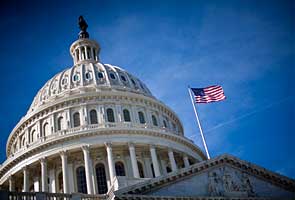
The latest bid to find a long-term solution to the US debt crisis looked doomed to fail on Sunday as lawmakers remained at odds over cutting social programs and raising taxes on the rich.
A bipartisan "supercommittee" is racing against a Wednesday deadline to reach agreement. Failure would trigger mandatory cuts from January 2013, but that timeframe means Congress can wriggle out of the supposed ultimatum.
CNN, citing both Democratic and Republican aides, reported that the 12 members of the supercommittee had already accepted the failure of talks and were planning a press conference on Monday to formally announce the impasse.
Congressional stalemate over how to tackle America's $15 trillion budget deficit is adding to global economic concerns dominated by the financial woes that are threatening to unravel Europe's cherished monetary union.
"It is a very serious situation, unprecedented in many ways," said IMF chief Christine Lagarde, warning of a worst-case scenario of social unrest if continued stalled growth and high unemployment keep markets depressed.
Speaking to CBS's "60 Minutes," the former French finance minister, who replaced Dominique Strauss-Kahn at the helm of the International Monetary Fund in July, was scathing about the "political bickering" in the United States.
"I would hope that on a bipartisan basis, both Democrats and Republicans can come to terms, in their supercommittee, about the deficit objectives and the deficit-cutting measures, and the debt... that is so much needed in the markets," she said.
The current gridlock in the congressional supercommittee follows partisan infighting back in July and August over raising the debt ceiling that threatened to plunge the United States into financial chaos.
Congress finally reached an 11th hour deal, but not before blue chip stocks on Wall Street plunged more than 2,000 points and Standard & Poor's cut America's sterling triple-A credit rating.
The logjam over the economy is already shaping the campaign for the November 2012 elections in which President Barack Obama is seeking to defy the dire economic climate and secure a second term.
The supercommittee's task was lent even more immediacy on Wednesday when US government debt passed the $15 trillion mark, roughly equal to 99 per cent of the size of the total US economy, a level which economists consider perilous.
Failure to enact a blueprint by mid-January would trigger deficit reduction measures that would cut into the social safety net and military spending.
But the trigger would not come into force until January 2013 and lawmakers on Sunday were already looking ahead to forging a new bill that would avoid such measures, which are politically unpalatable to both sides.
"I am committed to ensuring that the American people get the deficit reduction that they were promised," said Texas congressman Jeb Hensarling, the Republican co-chair of the panel.
"Under the law, Congress will have 13 months to do that in a smarter, more prudent fashion. And I plan to be part of the process."
Talks have stalled over the balance of cuts to social programs and tax increases for the wealthy, while the brittle US economy groans under stubbornly high unemployment of more than nine per cent.
The committee has until Wednesday to lay out a plan for $1.2 trillion in deficit reduction over 10 years, after which the full Congress would have until December 23 to approve the proposal in a fast-tracked legislative process.
Hensarling's Democratic co-chair Senator Patty Murray, said she was still hopeful the supercommittee could reach a deal and beat the deadline, which comes on the eve of Thursday's Thanksgiving holiday.
"I believe strongly that we still have the capability to come together to solve this problem," she told CNN's "State of the Union" program.
Osborne said this is the first time the British government has cut an entire country's banking sector off from the UK's financial sector.
The British government acted after the International Atomic Energy Agency highlighted fresh concerns about the possible military dimensions of Iran's nuclear program. Osborne said in a statement that Iran's nuclear activities "pose a significant risk to the national interests of the UK and countries across the region."
London is a major financial centre and Osborne said the British government's decision to cut links with Iranian banks will make it harder for them to use the international financial system to support Iran's nuclear and ballistic missile program.
He added: "This measure will protect the UK financial sector from being unknowingly used by Iranian banks for proliferation related transactions."
A bipartisan "supercommittee" is racing against a Wednesday deadline to reach agreement. Failure would trigger mandatory cuts from January 2013, but that timeframe means Congress can wriggle out of the supposed ultimatum.
CNN, citing both Democratic and Republican aides, reported that the 12 members of the supercommittee had already accepted the failure of talks and were planning a press conference on Monday to formally announce the impasse.
Congressional stalemate over how to tackle America's $15 trillion budget deficit is adding to global economic concerns dominated by the financial woes that are threatening to unravel Europe's cherished monetary union.
"It is a very serious situation, unprecedented in many ways," said IMF chief Christine Lagarde, warning of a worst-case scenario of social unrest if continued stalled growth and high unemployment keep markets depressed.
Speaking to CBS's "60 Minutes," the former French finance minister, who replaced Dominique Strauss-Kahn at the helm of the International Monetary Fund in July, was scathing about the "political bickering" in the United States.
"I would hope that on a bipartisan basis, both Democrats and Republicans can come to terms, in their supercommittee, about the deficit objectives and the deficit-cutting measures, and the debt... that is so much needed in the markets," she said.
The current gridlock in the congressional supercommittee follows partisan infighting back in July and August over raising the debt ceiling that threatened to plunge the United States into financial chaos.
Congress finally reached an 11th hour deal, but not before blue chip stocks on Wall Street plunged more than 2,000 points and Standard & Poor's cut America's sterling triple-A credit rating.
The logjam over the economy is already shaping the campaign for the November 2012 elections in which President Barack Obama is seeking to defy the dire economic climate and secure a second term.
The supercommittee's task was lent even more immediacy on Wednesday when US government debt passed the $15 trillion mark, roughly equal to 99 per cent of the size of the total US economy, a level which economists consider perilous.
Failure to enact a blueprint by mid-January would trigger deficit reduction measures that would cut into the social safety net and military spending.
But the trigger would not come into force until January 2013 and lawmakers on Sunday were already looking ahead to forging a new bill that would avoid such measures, which are politically unpalatable to both sides.
"I am committed to ensuring that the American people get the deficit reduction that they were promised," said Texas congressman Jeb Hensarling, the Republican co-chair of the panel.
"Under the law, Congress will have 13 months to do that in a smarter, more prudent fashion. And I plan to be part of the process."
Talks have stalled over the balance of cuts to social programs and tax increases for the wealthy, while the brittle US economy groans under stubbornly high unemployment of more than nine per cent.
The committee has until Wednesday to lay out a plan for $1.2 trillion in deficit reduction over 10 years, after which the full Congress would have until December 23 to approve the proposal in a fast-tracked legislative process.
Hensarling's Democratic co-chair Senator Patty Murray, said she was still hopeful the supercommittee could reach a deal and beat the deadline, which comes on the eve of Thursday's Thanksgiving holiday.
"I believe strongly that we still have the capability to come together to solve this problem," she told CNN's "State of the Union" program.
Osborne said this is the first time the British government has cut an entire country's banking sector off from the UK's financial sector.
The British government acted after the International Atomic Energy Agency highlighted fresh concerns about the possible military dimensions of Iran's nuclear program. Osborne said in a statement that Iran's nuclear activities "pose a significant risk to the national interests of the UK and countries across the region."
London is a major financial centre and Osborne said the British government's decision to cut links with Iranian banks will make it harder for them to use the international financial system to support Iran's nuclear and ballistic missile program.
He added: "This measure will protect the UK financial sector from being unknowingly used by Iranian banks for proliferation related transactions."
How may i help you today
Show full article
Track Latest News Live on NDTV.com and get news updates from India and around the world


