- President Xi agreed to free Pastor Ezra Jin at Trump's request, signaling improved US-China ties
- Pastor Jin arrived in Los Angeles on July 4, coinciding with the US 250th birthday celebrations
- Trump expects a meeting with Xi in Washington around September 24 before trade war truce ends
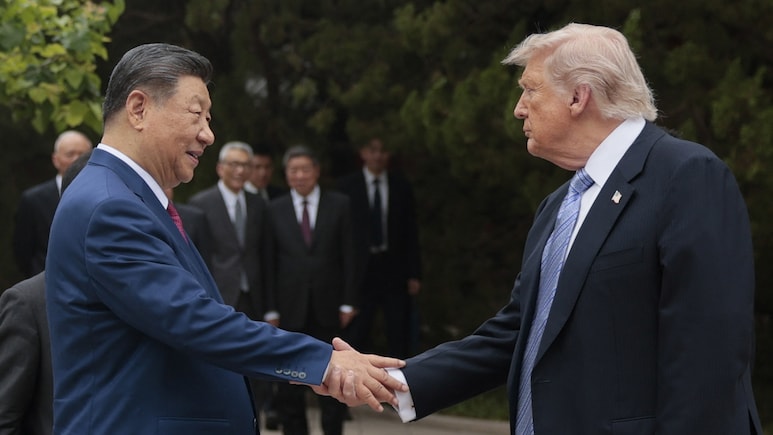
President Xi Jinping's agreement to free an imprisoned Christian pastor at President Donald Trump's request showcased an improved state of US-China relations ahead of challenging negotiations looming in the run-up to their next summit in September.
The political choreography surrounding the release of Pastor Ezra Jin Mingri, the leader of a prominent underground Chinese church, was underlined by his arrival in Los Angeles on July 4 - just as Americans marked their nation's 250th birthday.
It suggests a steady evolution in superpower ties, from zero senior-level contact years ago to a point where Beijing is now comfortable acceding to some of Washington's diplomatic requests. Even so, chances of broader rapprochement seem limited as both sides continue to deploy trade and investment measures aimed at reducing vulnerability to each other. And multiple cases of detained Americans remain unresolved.
"The release of Pastor Jin suggests there's some forward movement on relatively easy issues in US-China ties - possibly to smooth over relations in anticipation of the next Trump-Xi meetings," said Ja Ian Chong, an associate professor of political science at the National University of Singapore. "That said, there remain issues with technological restrictions and trade."
Following his visit to Beijing in May, Trump said Monday that he expects to meet with Xi in Washington around September 24, weeks before a one-year trade war truce is set to expire.
Jin's release appears to be the first such humanitarian move by China that Trump has secured since his "historic" summit with Xi. It may now raise hopes of further actions, though Beijing has made clear there are some red lines.
Trump has said that when he raised the plight of former Hong Kong media tycoon Jimmy Lai, Xi indicated that case would be a "tough one." Lai was sentenced to 20 years in prison for collusion and sedition, one of the highest profile moves in Beijing's wider crackdown on the former UK colony over the past decade.
The president raised those two cases directly with Xi, and will always champion religious freedom around the world, a US official said. Asked whether Trump has brought up cases other than Jin's and Lai's, the official declined to respond directly.
Despite Jin's release, several members of the underground Zion Church that he led remain detained. More broadly, the Dui Hua Foundation, a San Francisco-based human rights nonprofit group, estimates there were more than 200 Americans detained in China as of late-2024.
Begged and Pleaded
Publicly known cases include those of Dawn Michelle Hunt and Nelson Wells Jr., each arrested in 2014 on drug smuggling allegations. The two denied the charges, saying they were tricked into carrying luggage with drugs hidden inside, but continue to serve their prison sentences.
"We've begged and pleaded," Hunt's brother, Tim Hunt, said in an interview in Beijing Monday after visiting his sister at Guangdong Women's Prison last week. "From what I've been told, they just wanted a senior official to make a request."
Prior to the May summit, the Hunt and Wells families had pressed the White House to put the two cases on the agenda, citing the deteriorating health of their relatives and refusal to accept medical treatment over distrust of the Chinese prison system.
Now, freeing Jin has made Tim Hunt "one thousand percent" more optimistic about his sister's release.
Historically, prisoner releases have generated goodwill in Washington at relatively low political cost. Beijing's move also helps bolster Trump's image as a leader capable of bringing detained Americans and political prisoners home.
During Trump's first term, he helped secure the release of three basketball players who where detained in China for shoplifting after he personally asked Xi to resolve the case. The administration also negotiated the freeing of Wells Fargo & Co. executive Mao Chenyue from an exit ban.
Releasing prominent figures "would convey strength, confidence and mercy - all consistent with a major power," said Josef Gregory Mahoney, a professor of international relations at East China Normal University in Shanghai, who said he has made recommendations to the Chinese government on specific individuals that should be released.
But the small trickle of releases over the years indicates that Beijing's intentions are to generate goodwill without making major concessions.
"Given how hard it has been to negotiate these cases, it is more likely to be decided on a case-by-case approach instead of a blanket agreement," said Yun Sun, a senior fellow and director of the China Program at the Stimson Center. "Release of incarcerated foreigners in China has always been difficult."
(Except for the headline, this story has not been edited by NDTV staff and is published from a syndicated feed.)
Track Latest News Live on NDTV.com and get news updates from India and around the world


