Opinion | America, Trump, And The Politics Of Belonging In A Connected World
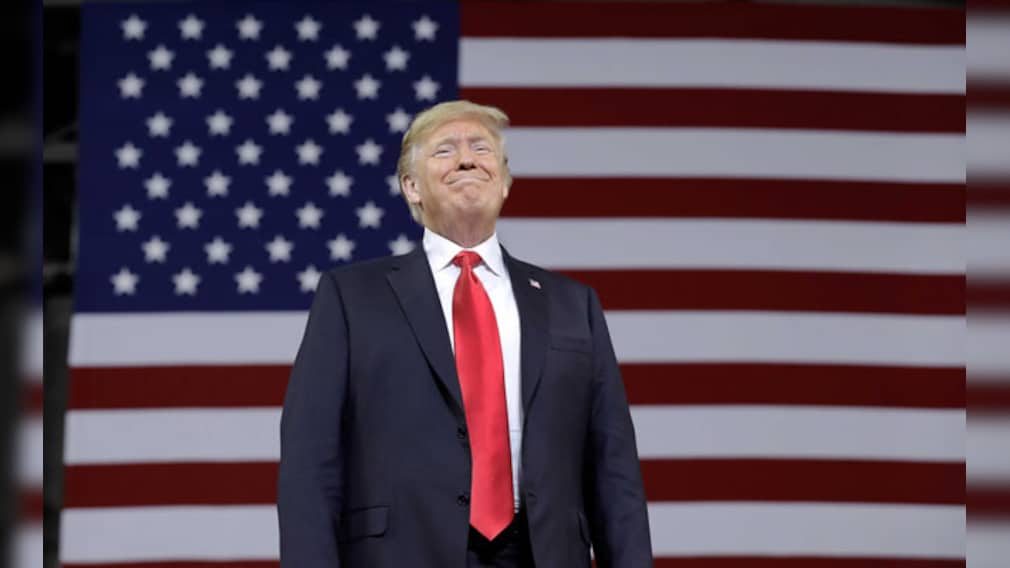
Many commentators view the current debate as another chapter in Donald Trump's political story. That explanation is incomplete.
The world's richest technology entrepreneur increasingly speaks about borders. His companies are built on technologies designed to overcome geography, connect communities and ultimately carry humanity beyond Earth. Around the same time, an influential American conservative commentator suggested sterilising foreign women before they entered the United States. The proposal was outrageous and unlikely ever to become public policy. Yet it reflected a political mood that is becoming increasingly familiar across democracies.
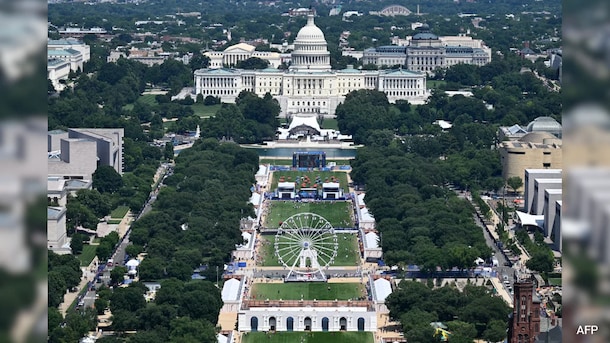
America, the country that has done more than any other to build a connected world, is today consumed by debates over birthright, immigration, citizenship and belonging. The recent controversy surrounding birthright citizenship is therefore much more than a constitutional dispute. It is a glimpse into a deeper transformation reshaping democratic politics.
I call this the Technology-Belonging Paradox. Technology seeks universality. Politics seeks belonging. The tension between these two organising principles may explain why an increasingly connected world is also becoming an increasingly fragmented political one.
Many commentators view the current debate as another chapter in Donald Trump's political story. That explanation is incomplete. Trump recognised an emerging political current, amplified it and transformed it into a successful electoral movement. The forces driving it extend well beyond one politician, one court judgment or even the United States.
Technology and Political Time
For nearly three decades after the end of the Cold War, the prevailing assumption was that technology and globalisation would steadily weaken the importance of borders. The internet dissolved distance. Air travel compressed geography. Digital platforms connected billions of people. Artificial intelligence is beginning to transform knowledge itself into a global resource. A world that became more connected, many believed, would also become more open.
History has taken a different course.
Technology and politics solve different problems. Technology rewards scale, interoperability and efficiency. It functions best when systems communicate seamlessly across borders. Politics performs a different task. It allocates rights, responsibilities and resources within a defined community. It therefore asks a question technology cannot answer: who belongs?
Technology evolves at an extraordinary speed. Political communities evolve over generations. Nations are not software waiting for an update. They are built upon history, memory, language,
culture and shared experience. These foundations change slowly, even when the technologies surrounding them change with astonishing speed.
The surprise is, therefore, not that technology connected humanity. It has done so beyond anything imagined a generation ago. The surprise is that political identity has remained remarkably resilient.
Technology has transformed the environment in which politics operates. Social media organises political tribes as efficiently as it builds global communities. Artificial intelligence accelerates scientific collaboration while strengthening border management. Digital technologies expand the reach of globalisation even as they provide governments with increasingly sophisticated tools to define membership and administer identity.
Technology can tell us who we are with extraordinary precision. It cannot answer the question that ultimately matters in politics: to whom do we belong? A passport, biometric authentication, Aadhaar or facial recognition can establish identity with remarkable accuracy. None can determine whether an individual belongs to a political community or enjoys the rights of citizenship. Those remain political decisions, shaped by history, law and collective choice rather than technological capability.
The Return of Belonging
Few individuals embody this transformation more vividly than Elon Musk. His companies depend upon global talent, global capital and technologies designed to transcend geography. Yet his political interventions increasingly revolve around borders, immigration and civilisational identity. The contradiction is less personal than structural.
The builders of the world's most connected technologies have become some of the strongest advocates of rebuilding political boundaries.
The United States is far from unique. Europe has witnessed the steady rise of parties organised around immigration and national identity. India's debates over citizenship, illegal migration and the integrity of electoral rolls similarly revolve around competing ideas of political membership. South Africa, despite its history of pan-African solidarity, has experienced repeated violence against migrants from neighbouring African states. China has embraced global commerce while simultaneously strengthening narratives of civilisational identity and national rejuvenation.
These examples differ in history, institutions and political context. What connects them is not ideology but a common political question: who belongs within the community?
Globalisation did not erase identity. It heightened its political significance. Greater migration, rapid technological change and economic disruption expanded opportunity while simultaneously generating insecurity. The faster societies changed, the stronger the search for stable markers of belonging became.
Lessons for India
For India, this transformation deserves careful attention. Much of Indian strategic analysis still examines the United States through the familiar lenses of military power, alliances and competition with China. Those remain indispensable. Increasingly, however, American domestic politics shapes trade, immigration, industrial policy, technological leadership and even foreign policy itself. Understanding how America defines belonging may become as important as understanding how it exercises power.
The lesson is equally relevant at home. India has built one of the world's most sophisticated digital public infrastructures, from Aadhaar to rapidly expanding digital governance systems. At the same time, political debates over citizenship, migration, electoral rolls and identity have become cruder and more salient. Technology can make identity verification easier. It cannot make belonging easier to agree upon. The American experience reminds us that once technology becomes deeply intertwined with identity politics, disputes over administration can quickly become contests over the meaning of citizenship itself. For India, the challenge is not to slow technological progress but to recognise its limits. Technology can strengthen governance. It cannot substitute for the political consensus on which democratic citizenship ultimately rests.
The twentieth century connected humanity in ways earlier generations could scarcely imagine. The twenty-first is discovering that connectivity alone cannot answer the oldest political question.
Technology seeks universality.
Politics seeks belonging.
Technology can tell us who we are.
Politics still decides where, and with whom, we belong.
(The author is a Research Fellow in the Geostrategy Program at the Takshashila Institution)
Disclaimer: These are the personal opinions of the author
-
How El Nino And Warming Oceans Could Shape Earth's Climate In 2027

From changing ocean currents to extreme weather, scientists are watching a combination of climate signals that could influence temperatures, rainfall and ecosystems in the months ahead.
-
Blog | Nana Patekar, And The Sharp, Lasting Sting Of His 'Plain-Speak'
"Subah ghar se niklo, bheed ka hissa bano..." Nana Patekar's characters often spoke with the bluntness of men who had little patience for pretence. Just like Nana himself.
-
Opinion | Pakistan's Saudi Pact Is Now Entering Dangerous Territory - As Expected
On October 5, the ministers of the pact's member states met in Riyadh for an emergency session and agreed to move to a 'practical implementation' of the defence commitments.
-
Hindu ka khoon-Musalman ka khoon? Nana Patekar's Krantiveer Questions Still Hang
Krantiveer was released in 1994, after the communal violence that had scarred Bombay and other parts of India. Nana's voice carried the pain of every riot, every broken home
-
'SIR' In America Too? India Cue In Trump's Mass Citizenship Check For Voters
Having got the nod from the US Supreme Court, Donald Trump's push for a voter roll "cleanup" puts citizenship at its centre. Arguments for India's Special Intensive Revision (SIR) have also centred on "illegal immigrants". Data remains scarce. Let's map the similarities and the nuance.
-
Opinion | Gyanesh Kumar Row May Be Doing Something Unthinkable For India's 'Lost' Opposition
There seems to be a greater willingness within the Opposition to accept Rahul Gandhi's leadership, at least on the SIR controversy. But the INDIA bloc itself seems to be undergoing a strange renewal.
-
Opinion | flydubai Hijack, And How Syria's Descent Into 'Jihadism' Has Now Become Everyone's Problem
Al Hammimi, the Omani pilot who tried to crash a plane with 175 passengers on September 30, is a symptom of Syria's long-raging sectarian and extremist fire that has now reached far beyond Syria's borders.
-
"Feel Deeply Abandoned By World": Tales Of Loss And Separation From Gaza
For Gazans, who have lived through the horrors of the last three years, life means a continuing encounter with impermanence and the repeated discovery that a home, a friendship, a livelihood, a familiar life and even one's former self can become things that exist only in memory.
-
Opinion | Gurugram Techie Suicide: Why Does A Woman Asking For Alimony Enrage Us So?
Social media, with its spectacular disregard for facts, turns one man's tragedy into an indictment of all women. The recent death of 28-year-old techie has become precisely that.