- United States and China focus on Moon's south pole in a new space race
- China plans a permanent Moon settlement by 2040, prompting US lunar base plans
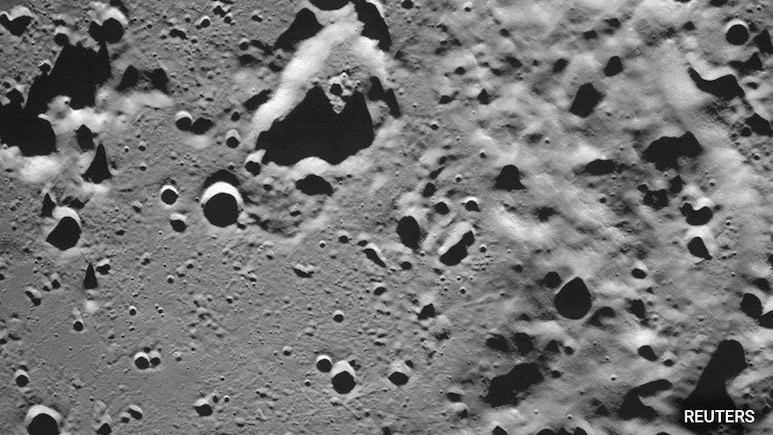
- Both nations aim to send robotic missions to the lunar south pole this year
The United States and China are entering a new space race, with the Moon's south pole becoming a major focus. According to a report by CNN, China has plans to build a permanent settlement on the Moon by 2040, a development that has rattled the US.
After launching its Tiangong space station and becoming the first country to bring soil samples from the far side of the Moon, China's new plan has prompted the US to have its own plans for a lunar base. The report added that both countries are interested in the Moon's south pole because scientists believe it contains water ice.
In a bid to expedite their process, both countries now plan to send robotic missions to the south pole this year. The US is using private companies to develop lunar landers. The report added that the US has plans to deliver a lander called Griffin, developed by Pittsburgh-based company Astrobotic Technology, to the lunar south pole in late 2026.The mission is funded by the US space agency NASA and will aim to reach the pole's treacherous terrain.
In contrast, China is preparing to launch its robotic Chang'e-7 mission as soon as this month. It will attempt to gather unprecedented data on this mission by using four different robotic vehicles: an orbiter, lander, rover and mobile “hopper”.
Why Is the Lunar South Pole In Focus?
In its upcoming mission, China will aim to use its four robotic vehicles to drill and analyse the water ice in the lunar south pole. Water ice can be vital to sustaining an extraterrestrial settlement, as it can help with drinking, making oxygen, and producing rocket fuel.
The US will only be able to attempt such actions with its robotic missions next year at the earliest, the report added.
“If lunar water ice is successfully located, it could significantly reduce the cost and time required to transport water from Earth, facilitating the establishment of a human base for long-term activities on the moon and enabling further exploration of Mars or deep space,” Tang Yuhua, the deputy chief designer of the Chang'e-7 mission, said in a 2025 interview with state media.
Why China May Have An Edge?
The report added that China is extensively investing in other areas to become a space power, something that has been described by President Xi Jinping as an “eternal dream.”
The country plans to become the second nation in the world to put its citizens on the moon after the US' 1972 mission. China's lunar budget is unclear, but the report added that it could achieve its goal of sending astronauts to the Moon by 2030.
This has emerged as a concern for the US, even though NASA proposes landing astronauts on the Moon by 2028. The report added that US lawmakers are particularly concerned as NASA's timeline continues to shift and faces engineering and technological challenges that could lead to delays. Also, landing near the uncharted south pole is much more difficult.
Given these challenges and China's latest success in demonstrating navigation, propulsion and sensing technologies, experts are of the view that Beijing's path to Moon landing by 2030 is more viable.
Track Latest News Live on NDTV.com and get news updates from India and around the world


