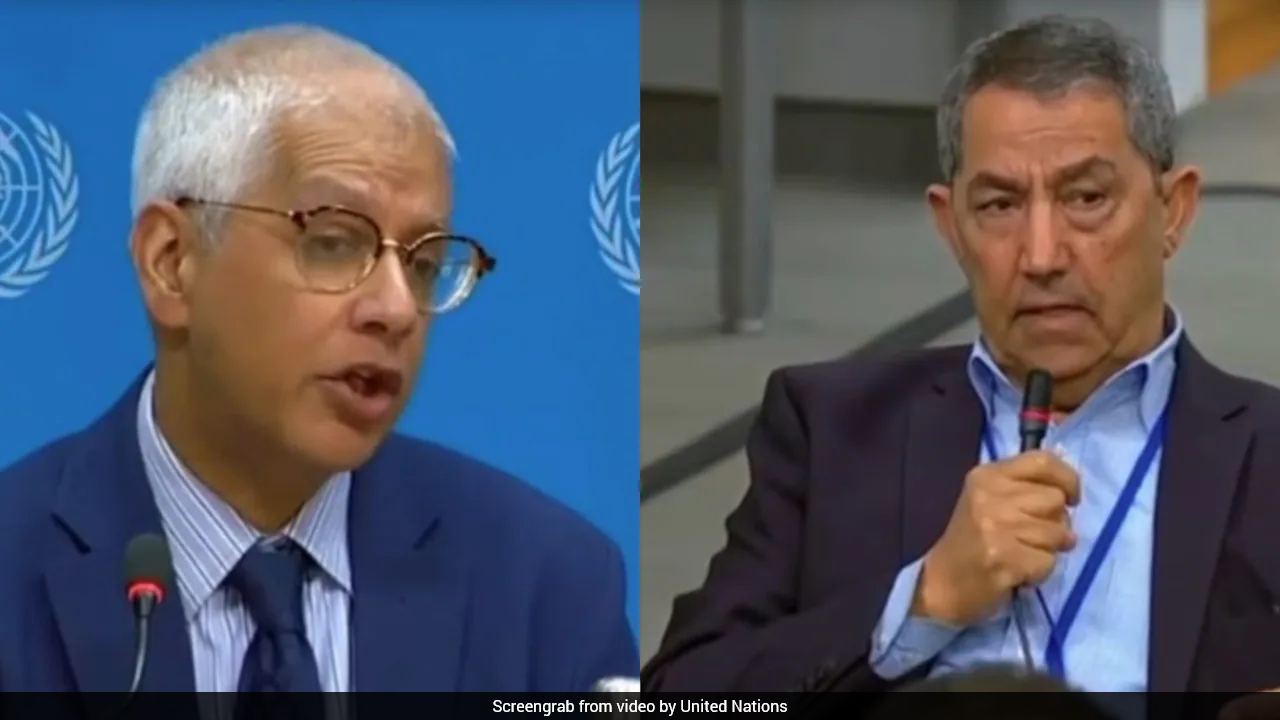
The United Nations has shut down the Pakistan-aligned narrative on India's move to end the special status given to Jammu and Kashmir (J&K) under Article 370. The global body reiterated its stand that Kashmir is a dispute between Pakistan and India, and no solution to the dispute could be legitimate without the participation of the people of the region.
The global agency's reply came in response to Palestinian journalist Abdul Hamid's query about the UN Secretary-General Antonio Guterres's position on New Delhi's move to abrogate Article 370 of the Indian Constitution -- a temporary provision that provided special status to the people of Jammu and Kashmir.
Hamid alleged that New Delhi's move altered the map of the political affiliations of the region, calling it a "violation of Security Council resolutions."
Shutting down the narrative, Farhan Haq, Deputy Spokesperson for the UN Secretary-General, said, "You're certainly aware of the Security Council's resolutions dating back to 1949 concerning the status of Kashmir, and those resolutions have not changed."
"But regarding our concerns, you'll have seen what was expressed, including by the High Commission for Human Rights, regarding our concerns that all basic rights are respected for the people of Kashmir," he added.
The United Nations Commission for India and Pakistan (UNCIP) passed a resolution on January 5, 1949, that provided the mechanism for holding a "free and impartial plebiscite" in Kashmir.
India's Stand On Kashmir
New Delhi maintains that the entire union territories of Jammu and Kashmir and Ladakh are an integral part of India. New Delhi also firmly rejects third-party mediation or internationalisation of the issue, asserting that Pakistan has been in "illegal and forcible occupation" of parts of these Union Territories
PoK Unrest
The Kashmir issue was raised in the UN at the time when the Pakistan-occupied region was witnessing a bloody crackdown on protestors demanding basic human rights. At least 100 civilians have been killed by security forces since last month in state action against people protesting inflated living costs, alleged administrative apathy and political discrimination, and atrocities against minorities.
On 17 July, UN High Commissioner for Human Rights Volker Turk, through his spokesperson Jeremy Laurence, expressed concern over the unrest ahead of the Legislative Assembly elections in Pakistan-administered Kashmir.
He appealed for calm and restraint and called for prompt, thorough, and impartial investigations into the deaths of protesters and security personnel. He also expressed concern over Pakistan's ban on the Joint Awami Action Committee (JAAC) under anti-terrorism laws and the arrest of its leaders and said the restrictions on public gatherings and internet access violate the rights to freedom of expression, peaceful assembly, and association.
The UN High Commissioner for Human Rights also called for meaningful and inclusive political dialogue to address local grievances.
Track Latest News Live on NDTV.com and get news updates from India and around the world


