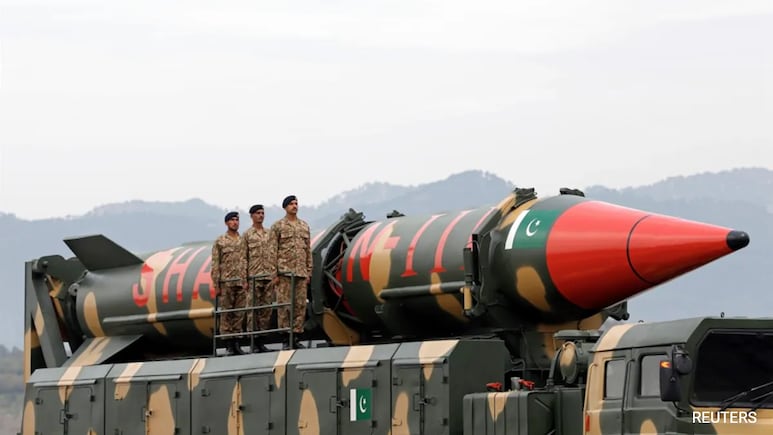
- Pakistan's longest-range operational missile is Shaheen 3 with a 2,750-km range
- But Shaheen 3 is not an intercontinental ballistic missile or ICBM that needs a minimum 5,500 km range
- US assessment says Pakistan's credible minimum deterrence has an element of global power projection
The longest-range operational missile of Pakistan, a nation whose policy of state-sponsored terrorism is well documented, is the Shaheen 3 that can hit targets up to 2,750 km. This range covers major Indian cities and places far away like Port Blair in the Andaman and Nicobar Islands.
But Shaheen 3 is not an intercontinental ballistic missile (ICBM). To call a ballistic missile ICBM, it needs to have a minimum range of over 5,500 km. The distance between the US and Pakistan is over 11,000 km.
The US? Why?
This 11,000 km distance is now at the centre of a hardening American intelligence assessment.
Director of US National Intelligence Tulsi Gabbard has placed Pakistan alongside Russia, China, North Korea and Iran as nations developing missiles capable of reaching the continental US.
She made the announcement at the 2026 Annual Threat Assessment before the Senate Intelligence Committee. Though she did not give a detailed breakup on the timelines of Pakistan's missile programme, US officials have separately said Pakistan's capacity to develop and deploy a functional long-range ballistic missile is still several years to a decade away.
Islamabad's official position has not changed from its consistently maintained narrative that its nuclear and missile programmes are aimed at India. Following India's Operation Sindoor in 2025, Pakistan had announced the formation of an Army Rocket Force Command, which is consistent with regional deterrence plans of other smaller nations.

Pakistan's existing arsenal is already sufficient to deter a regional nuclear or conventional attack, so an ICBM would serve a different purpose - deterring the US from launching preventive strikes against Pakistan's nuclear arsenal, or from intervening militarily on India's side in a future conflict, top analysts Vipin Narang and Pranay Vaddi said in June 2025.
North Korea, which the US sees as a threat, has nuclear weapons, while Iran is being pounded with American bombs and missiles because it does not have a functional nuclear platform yet. Pakistan must have seen this.
But Pakistani analysts have contested the claim. Gabbard's statement has a persistent flaw in American threat assessments by substituting worst-case speculation for grounded analysis, nuclear security scholar Rabia Akhtar told Al Jazeera.
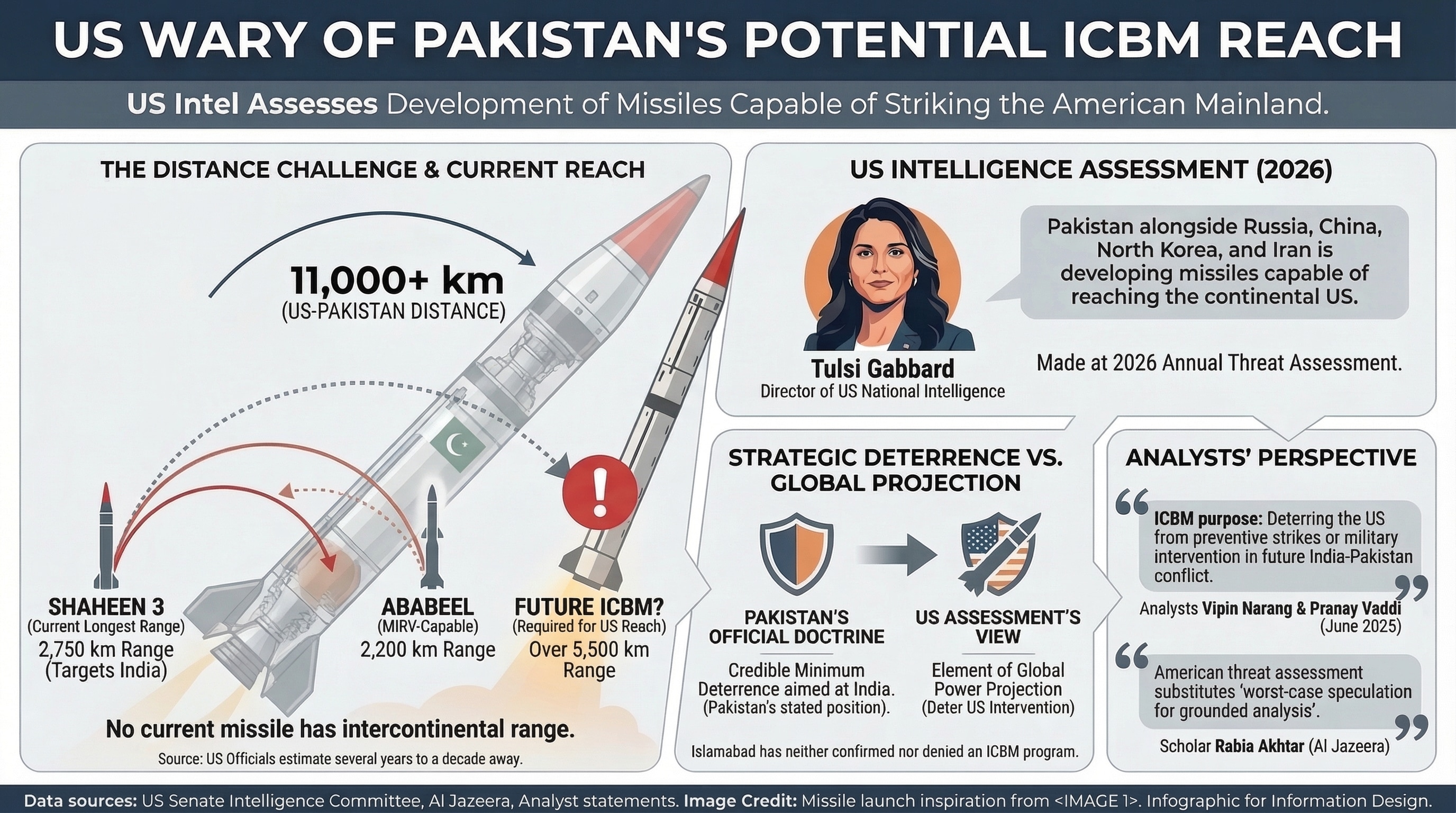
The US assessment still insisted that Pakistan's declared doctrine of credible minimum deterrence has an element of global power projection. This is because Islamabad has neither confirmed nor denied running a programme to develop an ICBM that can reach the US.
ALSO READ | Hitting A Bullet With A Bullet: No Such Thing As Ballistic Missile Shield
Pakistan currently fields no missile that comes close to intercontinental range. Its most advanced MIRV-capable (multiple warheads) system, the Ababeel, has a claimed range of 2,200 km, which means the Shaheen 3 is the longest-reach operation missile with them.
Track Latest News Live on NDTV.com and get news updates from India and around the world


