As the Middle East War enters its 21st day, and the reverberations of the US-Israel War on Iran ripple across continents - disrupting energy markets, the closure of the Strait of Hormuz, limiting airspace access and prompting cautious diplomatic manoeuvres - the world now turns its attention to Eid ul-Fitr 2026.
The celebrations are unfolding under the shadow of the US-Iran war and escalating tensions across the Middle East. For millions, this Eid carries a layer of caution and restraint. In the Gulf region, mosques have shifted prayers indoors. In conflict-affected regions like Iran, Qatar, Bahrain, Lebanon and Kuwait, the festival is observed in a muted, sombre manner.
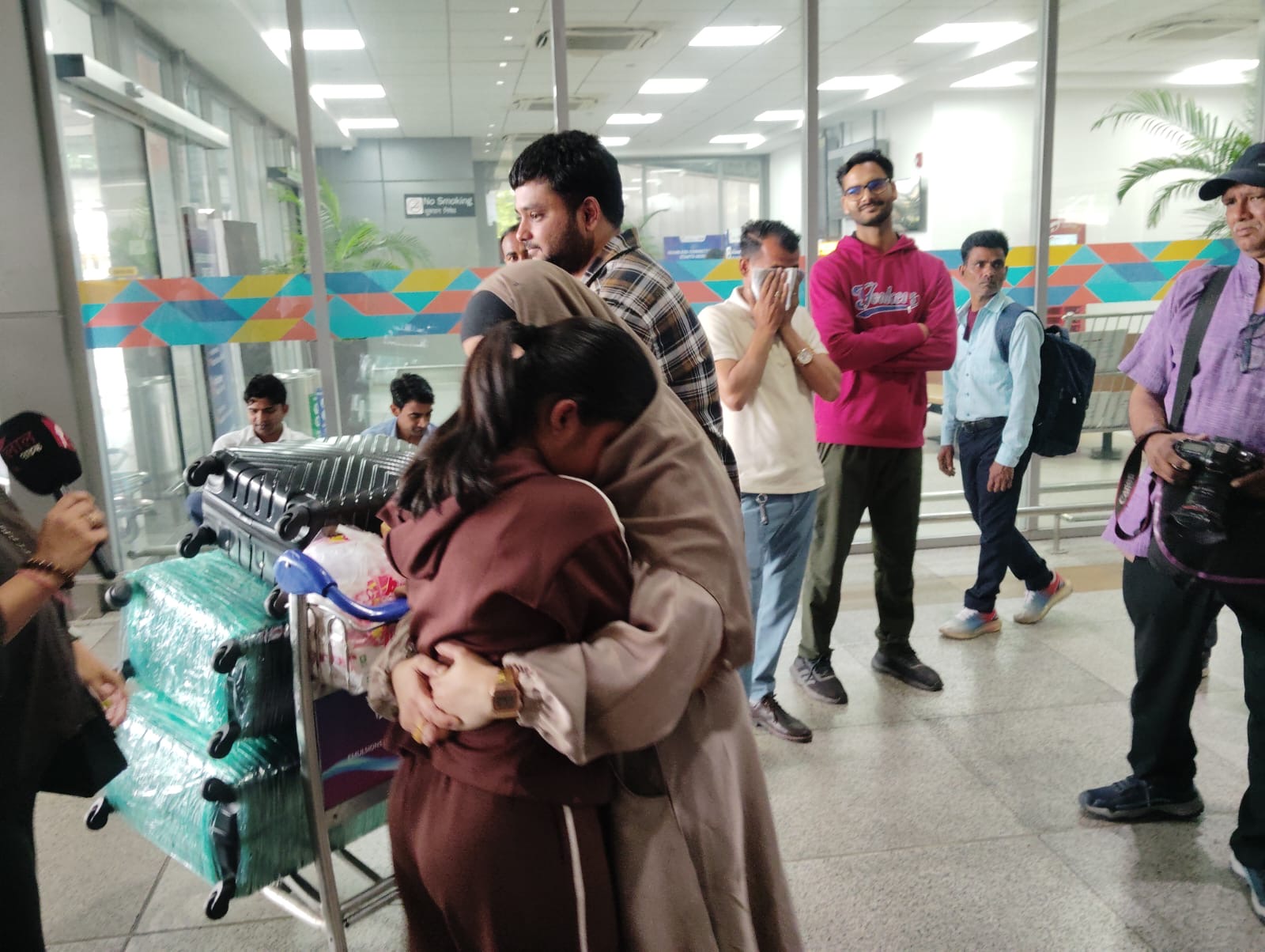
Amid this backdrop, thousands of Indian students stranded in Iran due to the conflict have been making their way home under extraordinary circumstances. The Ministry of External Affairs (MEA) and the Indian Embassy in Tehran have been orchestrating evacuation operations, relying on alternate land and air routes to bring students to safety.
With direct flights curtailed because of airspace closures and security concerns, many students embarked on gruelling overland journeys to neighbouring country Armenia, from where they boarded flights home. Hundreds have already crossed into Armenia, arrived in Delhi, Lucknow, and Kashmir in phased movements. In one notable instance, over 70 students from Iranian universities returned via Armenia.
The moment of arrival brought profound relief and emotion. "The journey was exhausting from Tehran to Yerevan. We had to travel for hours to reach the border, then wait and hope that flights were available. It took days, but finally stepping onto Indian soil felt like a dream," said Mir Jabir, a student.
Another student's father, Maulana Jalal Haider Naqvi, shared his personal anecdote saying, "Embassy is our lifeline, without their guidance, the journey would have been much scarier. The government did a great job in bringing these students back home, and the cooperation between both countries, India and Iran, is amazing."
Beyond the physical journey, the war disrupted academics and daily life. Classes were cancelled, exams postponed, and anxiety hung over students for months. "It was a shared fear among all of us," said Pervez Islam, another student. "This Eid will be extra special. We want to be with our families, pray together, and share a meal," he added.
Tomorrow, across India, these students will join relatives for Eid prayers and celebrations. But for them, Eid is more than tradition-it is a testament to resilience, reunion, and spiritual renewal.
Track Latest News Live on NDTV.com and get news updates from India and around the world


