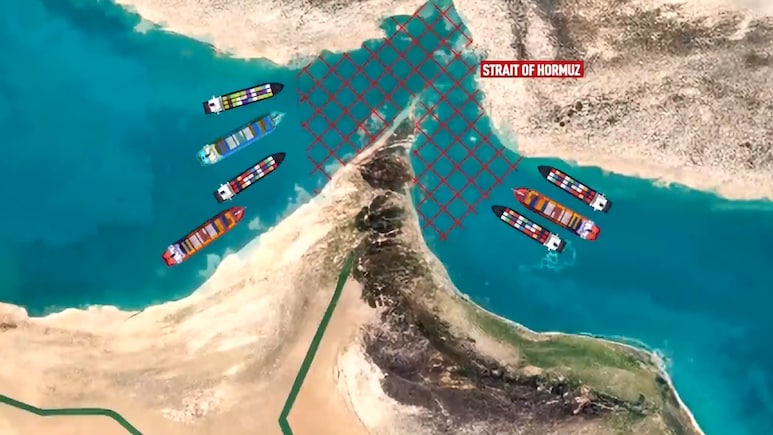
Global financial markets may have reacted instantly to news of a US-Iran ceasefire, but for those operating on the water, the situation is still muddy.
While delayed vessels have begun moving through the Gulf once again, the maritime community is far from returning to business as usual.
Ship owners like Captain Pradeep Singh are monitoring global trade routes closely as tensions between Iran and Israel persist. Although a ceasefire between the United States and Iran has brought some relief, it is marred by uncertainty.
Speaking to NDTV, Captain Singh explained that while markets react quickly to such developments, the impact is felt more slowly in shipping and trade, which continue to face disruptions. While risk sentiment has improved, Captain Singh warns that this is a familiar pattern where markets adjust to reduced uncertainty but do not necessarily reflect long-term stability.
Singh described the ceasefire as a pause rather than a solution. He said it brings temporary stabilisation but not a full resolution. While financial markets move within minutes, the physical world of shipping takes time to adjust.
Nearly one-fifth of global energy trade passes through the Strait of Hormuz. Any tension in this region directly affects freight rates, insurance costs, cargo movement and crew safety. Despite the ceasefire, shipowners are not rushing back to normal operations. They are watching the situation closely and making cautious decisions. Insurance premiums, security updates and naval activity are all being monitored before vessels are moved.
Crew confidence also remains a concern. After days of high risk, confidence does not return overnight.
The ceasefire has opened a small operational window, allowing delayed vessels to move and backlogged cargo, including crude oil and LNG, to be cleared. Supply chains in the Gulf may see some relief, though this window remains limited and uncertain.
Captain Singh said the situation remains complex with multiple players and no clear long-term agreement. From a shipping and trade perspective, risk has reduced but not disappeared.
He said that lasting stability will only come through sustained diplomacy. Without it, global trade routes will remain vulnerable, and oil markets will continue to carry risk. He compared the current situation to a crisis at sea, where the system is stabilised to keep it running while the underlying problem still needs to be fixed.
Track Latest News Live on NDTV.com and get news updates from India and around the world


