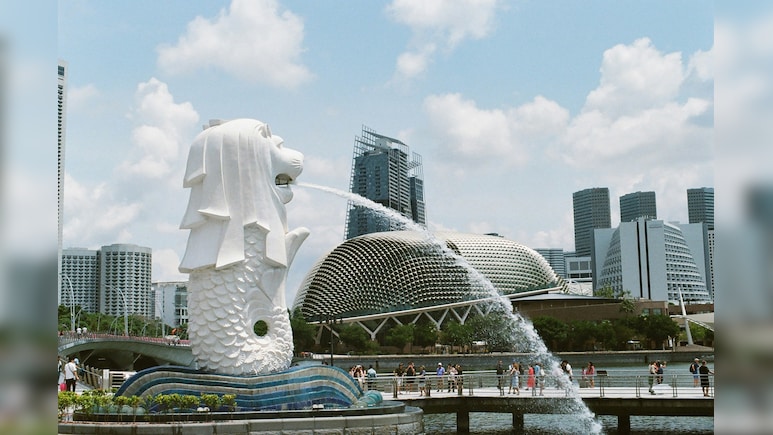
Singapore's growth is poised to moderate as its export-driven model is strained by geopolitical tensions and a fragmenting global trading system, though it could draw support from opportunities in the Middle East, according to Bloomberg Intelligence.
Growth in the Asian financial hub is expected to ease to about 2.5 per cent this year before settling into a 2 to 3 per cent range over the longer term, BI analysts led by Sarah Jane Mahmud said in a report on Monday.
Still, the city is projected to outpace many developed peers as economies grapple with fallout from the Iran war. Singapore will update its economic outlook from its earlier forecast of 2 to 4 per cent in May.
"Singapore has prospered on the back of burgeoning trade and foreign-investment flows, yet it now faces a less positive environment as protectionism increases and big countries bring some investment home for national-security reasons," BI said.
"Authorities are responding to these risks, and we believe Singapore will continue to grow moderately faster than the developed-world average in coming years."
Officials in the city-state have long warned of rising economic and geopolitical headwinds, a message that helped the ruling party increase its share of the vote in last year's election.
In a budget unveiled roughly a fortnight before the US and Israel attacked Iran, Prime Minister Lawrence Wong said that "standing still is not an option - we cannot wait for conditions to turn more favorable, nor can we fall back on strategies designed for a previous era."
While parts of Asia have faced fuel disruptions as the Iran war has disrupted shipping through the Strait of Hormuz, Singapore has avoided rationing though government offices have reined in the use of air-conditioning.
And even with the risks arising from disruptions to supplies of fuel, fertilisers and other commodities, instability in global markets may to an extent benefit Singapore, which can harness careful regulation, a strong currency and its AAA credit rating to draw wealth-management business, according to BI.
Inflows linked to the Middle East conflict have been modest so far, but customers from there could exceed 6 per cent of the private banking client base if the conflict persists, pushing assets under management toward the upper end of the 6 to 10 per cent annual growth forecast through 2030.
Assets under management at major banks rose 13 per cent in 2025, a number the report says is also likely to rise in that scenario.
In the long term, investments in technology are positioning Singapore as a regional center for AI adoption, something that could unlock over S$190 billion ($149 billion) in value by 2030, the report says, citing Google.
That would come from investment in semiconductors, advanced manufacturing and data infrastructure.
Still, there are mounting structural risks that could erode Singapore's role as a bridge economy. "The fading of the rules-based international order, and the divide between China and the US, could be the biggest long-term risk for the small nation-state," BI said.
(Except for the headline, this story has not been edited by NDTV staff and is published from a syndicated feed.)
Track Latest News Live on NDTV.com and get news updates from India and around the world


