Saudi Arabia has lost more than half a million barrels a day of oil output capacity because of Iranian attacks while a key pipeline that bypasses the Strait of Hormuz was also hit, ratcheting up risks to global energy supplies from the war in the Middle East.
Almost 600,000 barrels a day of production capacity has been affected, according to the state-run Saudi Press Agency. Strikes on a pumping station serving the vital East-West pipeline this week crimped daily throughput by 700,000 barrels, according to the report.
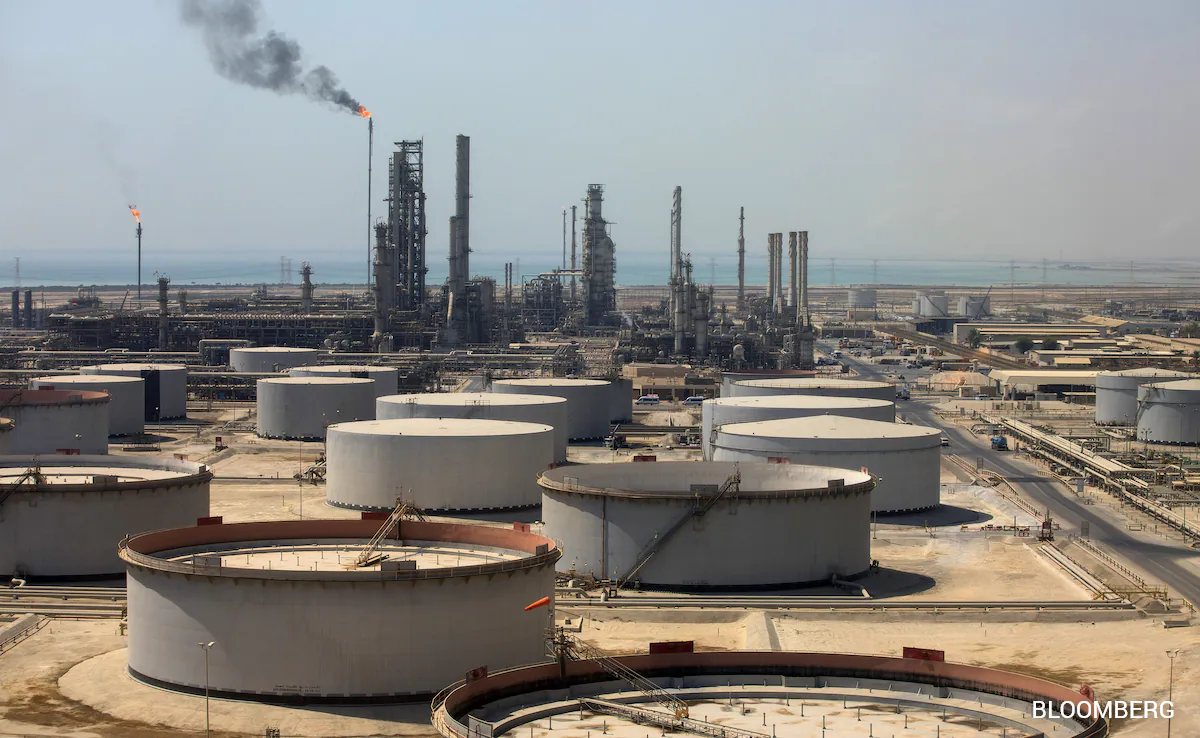
Missile and drone barrages have damaged swaths of Saudi Arabia's vast energy infrastructure, including refineries, oil fields deep in the desert and petrochemical plants. The kingdom has already slashed crude production following Iran's near blockage of the Strait of Hormuz, but has been recouping some lost exports by diverting flows through the conduit to the Red Sea coast.
The reduction in production capacity is equivalent to almost one out of every 10 barrels of pre-war Saudi crude exports, according to Bloomberg calculations.
The extent of damage to facilities is a key issue that traders, consumers and governments are watching because it will factor into how long it will take to restore supplies once the US-Israeli war on Iran concludes.
Bloomberg reported Wednesday that the pipeline to the Red Sea had suffered limited damage in a drone strike but that oil exports continued from Yanbu at the conduit's western end.
International crude prices have surged more than 30 per cent since the war commenced Feb. 28 and are trading near $97 a barrel. Markets face a daily shortfall of more then 10 million barrels, equal to roughly one-tenth of global demand due to the strait blockage.
The East-West pipeline can pump as much as 7 million barrels of crude daily from the country's main fields near the Persian Gulf to the port of Yanbu that can export about 5 million barrels a day. The remainder of that oil is used to satisfy local demand, or to make products such as diesel and jet fuel, which also are exported.
Attacks on Aramco's offshore Manifa oil production facility and the onshore Khurais complex cut output capacity by about 300,000 barrels a day each.
Khurais produces the type of light crude that Aramco had been pumping through the East-West pipeline, while Manifa and Aramco's other offshore deposits generally pump thicker and heavier barrels. Aramco Chief Executive Officer Amin Nasser said on March 10 that the company was slowing output of heavier barrels as storage tanks filled.
Refineries, including joint ventures with TotalEnergies SE and Exxon Mobil Corp., have also been struck, SPA said.
The attacks on Saudi oil and gas production, pipes and plants killed one citizen and injured seven employees, SPA in the report.
(This story has not been edited by NDTV staff and is auto-generated from a syndicated feed.)
Track Latest News Live on NDTV.com and get news updates from India and around the world


