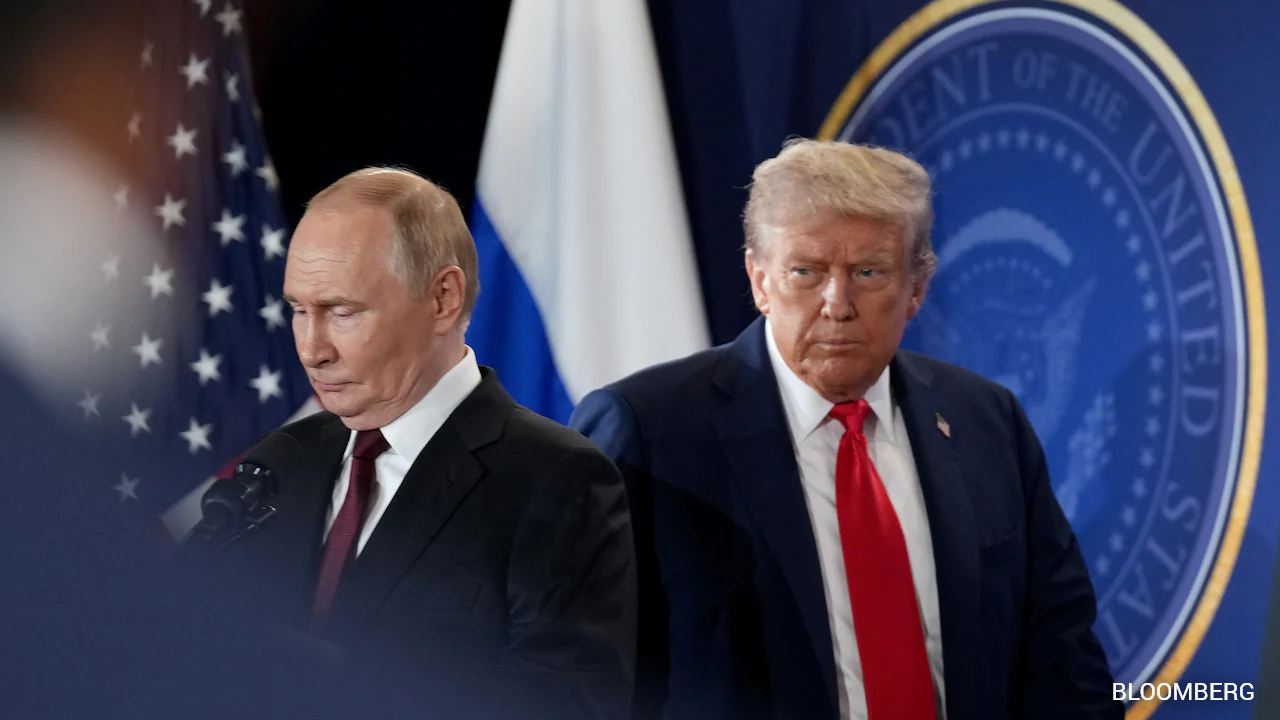
Russia is preparing to escalate attacks on Ukraine after concluding that negotiations for a peace deal have reached a dead end, according to three people close to the Kremlin.
For now, Russia is weighing an intensification of powerful conventional ballistic missile attacks on Kyiv, including the center of the capital, and infrastructure targets in other Ukrainian cities, the people said, asking not to be identified because the matter is sensitive.
Negotiation frameworks have effectively collapsed, leaving the two warring sides back at square one, the people said. Putin won't end the war under economic pressure from sanctions and Ukrainian attacks on Russian refineries and logistics networks, they said.
Moscow increasingly views the Ukrainian strikes as attacks by NATO states because alliance members supply Kyiv with weapons and intelligence, the people said. The current phase of hostilities isn't the peak of military escalation, they said.
President Vladimir Putin signaled his intentions in weekend comments to a state TV reporter, as he shrugged off the impact of the attacks on Russia's economy. Ukraine "opened this Pandora's box," he said. "Well, be ready to get a blowback on your most sensitive sectors of the economy."
US efforts to end the war have failed to produce a breakthrough, and negotiations have stalled with President Donald Trump focused on the conflict with Iran. The Kremlin has also abandoned reliance on what it believed was an understanding reached between Putin and Trump at their summit in Alaska last August.
That would have required the US to pressure Ukraine to surrender its eastern Donetsk region as part of a deal to end the war. Ukraine has consistently rejected Putin's demand to hand over a fortress belt of cities in Donetsk region that Russia's forces have failed to capture in fighting since 2014.
US Secretary of State Marco Rubio made clear in June that Washington didn't share Russia's view, saying "if there had been an agreement, we would have had an end to the war." Following talks with Russian Foreign Minister Sergei Lavrov in the Philippines in July, Rubio said "new concepts" were needed.
CIA Director John Ratcliffe made a rare visit to Moscow on Tuesday for talks with Russian counterparts, though it's unclear what they focused on. The Wall Street Journal reported Wednesday that the trip's purpose was to warn Russia not to attack NATO countries, citing unnamed people briefed on the visit.
US envoys Steve Witkoff and Jared Kushner were expected to travel to Moscow after an eight-month break and to visit Kyiv for the first time, but no date has emerged for either trip.
In the absence of diplomacy, Moscow sees few alternatives to further escalation in pursuit of its war goals, according to four people close to the Kremlin. While Russia hopes Kushner and Witkoff will come to Moscow with new proposals, expectations for a breakthrough are very low, they said.
The Kremlin believes it has already made concessions during the war and that each one weakened Russia's position, according to two of the people. It saw Anchorage as another compromise that failed, according to the people.
Kremlin spokesman Dmitry Peskov didn't immediately respond to a request for comment.
Russia and Ukraine have stepped up air attacks on each other's territory in recent months. Ukraine has targeted oil refineries, leading to widespread fuel shortages in Russia, and warehouses of e-commerce giants Wildberries and Ozon, causing billions of dollars of damage to logistics networks.
Russian missile strikes on Ukraine have exposed a chronic shortage of air defense interceptors, leaving Kyiv vulnerable to attacks on power and heating infrastructure that plunged millions into cold and darkness last winter.
Russia and Ukraine are also targeting each other's commercial ships and ports in the Black Sea area, raising fears about the impact on grain supplies to world markets. The two countries account for more than a quarter of global wheat exports, and the attacks come in the middle of this year's harvest.
The escalating spiral of strikes is leading a growing number of Russian officials to the conclusion that Putin could eventually opt to use tactical nuclear weapons as a last resort in Ukraine, according to the people close to the Kremlin.
The risk that Putin would break a global taboo on the wartime use of nuclear weapons that has stood since the US dropped two atomic bombs on Japan in 1945 has long been a major concern of western officials.
The volume of chatter in Moscow from hawks advocating such a step has increased recently. An extreme response is viewed as possible because the only outcome worse than continuing the war for Putin would be losing it.
Tactical nuclear weapons carry less powerful warheads and have a shorter range than strategic missiles, and are intended to influence a particular battlefield rather than devastate an entire city or country. Still, explosive yields can be enormous, with nuclear fallout contaminating large areas of land.
To be sure, there's no sign yet that Russia is preparing to fire nuclear weapons in Ukraine. The full-scale invasion that Putin started in February 2022 was meant to bring victory in a few days but is now deep into its fifth year with massive Russian casualties and no end in sight.
Putin has also repeatedly indulged in nuclear saber-rattling over the years to try to intimidate Ukraine's western allies into reducing support for its defense.
"For Putin there is no sign of collective will anywhere to resist him and so many ways in which he can grind people down," said Fiona Hill, a senior fellow at the Brookings Institution who served as a national security advisor to three US presidents including Trump in his first term. "This is why a concerted collective and consistent effort to resist his actions, and to engage in diplomacy, is essential. He has a singleminded focus and we are all over the place."
The Joe Biden Administration effectively told Russia there'd be a massive US conventional response if nuclear weapons were used in the war, though it's doubtful Trump would issue the same warning, Hill said. Putin is testing how far he can and needs to go before people give in to him, she said.
Key Russian partners including China and India have warned Putin strongly against using them. China relayed a message to Russia not to even consider detonating tactical nuclear weapons in Ukraine, Ukrainian President Volodymyr Zelenskyy and a senior European official said last month.
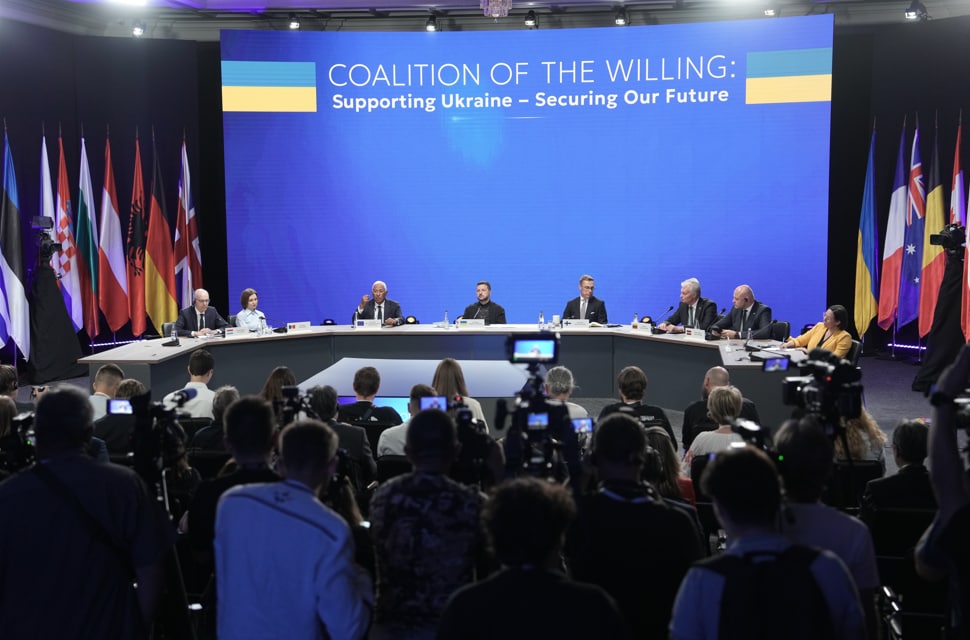
Volodymyr Zelenskyy during the Coalition of the Willing meeting in Kyiv, on Aug. 24. (Bloomberg)
Putin's due to meet with Chinese President Xi Jinping and Indian Prime Minister Narendra Modi at the Shanghai Cooperation Organization summit in Kyrgyzstan next week.
"The risk of Russia using tactical nuclear weapons remains extremely low because their military effectiveness on today's dispersed battlefield is limited, while the political cost of breaking the nuclear taboo would be high," said Alexander Gabuev, Berlin-based director of the Carnegie Russia Eurasia Center.
"As long as Moscow has room to escalate with conventional weapons, including by intensifying missile strikes, it has little incentive to cross the nuclear threshold," he said.
(This story has not been edited by NDTV staff and is auto-generated from a syndicated feed.)
Track Latest News Live on NDTV.com and get news updates from India and around the world


