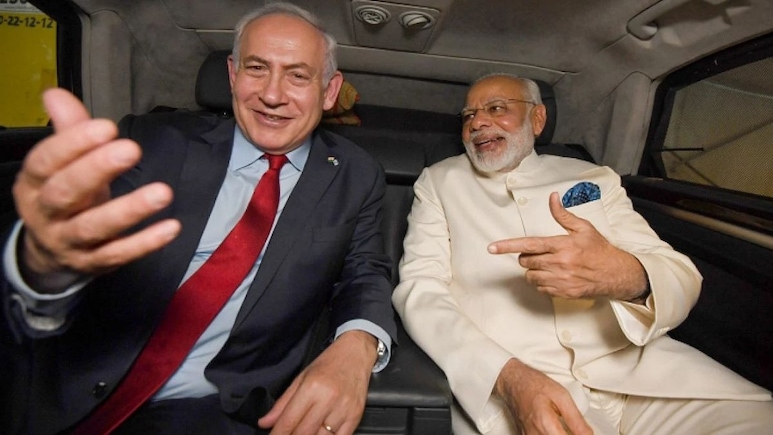
Prime Minister Narendra Modi's visit to Israel today is being widely viewed as a milestone moment in India-Israel relations, underscoring growing strategic trust, deepening economic cooperation, and a strong personal bond between PM Modi and Israeli Prime Minister Benjamin Netanyahu.
Speaking to NDTV's Senior Executive Editor in Jerusalem, Israel's Special Envoy for Trade and Innovation Fleur Hassan-Nahoum described the visit as coming at a "critically important time" for the region. She said that the past two years of geopolitical churn have fundamentally altered global and Middle Eastern dynamics, opening new possibilities for cooperation. "We could be looking at a new region," she remarked, pointing to shifting alliances and emerging economic corridors.
India, according to Hassan-Nahoum, is not only a key trade partner for Israel but also a nation with shared values and a common vision centred on innovation, growth and resilience. She highlighted trilateral and multilateral cooperation involving the United Arab Emirates, particularly the proposed India-Middle East-Europe Economic Corridor (IMEC). The corridor aims to link India with Europe through the Middle East and Israel, potentially transforming global trade flows and regional connectivity. "There is just so much that we can do together for the joint prosperity of our peoples, but also the region," she said.
A defining feature of India-Israel ties has been the strong rapport between Prime Minister Modi and Prime Minister Netanyahu.
PM Modi's current visit is his second to Israel, following his landmark 2017 trip, while Netanyahu's planned visit to India was postponed due to domestic developments in Israel. Hassan-Nahoum noted that their relationship goes beyond formal diplomacy. "At the end of the day, it's about chemistry," she said, describing both leaders as bold decision-makers unafraid to challenge established norms for the benefit of their countries.
Recalling widely shared images from their earlier meetings, including the barefoot walk along the Mediterranean Sea, she said the symbolism reflected a deeper alignment on innovation, sustainability and leadership. Both leaders, she added, face similar political pressures and security challenges, which have further strengthened their understanding of each other.
Counter-terrorism remains a key pillar of bilateral cooperation. Both India and Israel have long dealt with terrorism, creating a shared strategic outlook. "We share a lot of challenges," Hassan-Nahoum said, noting similarities in mindset, resilience and commitment to national security.
On the economic front, she expressed strong optimism about the possibility of a Free Trade Agreement between India and Israel. "A free trade agreement with India would be game-changing," she said, adding that such a pact would make sense given the natural synergy between the two economies. Israel, she noted, sees India not just as a market, but as a trusted partner and friend.
Prime Minister Modi's address to the Knesset, Israel's parliament, is expected to be one of the highlights of the visit. Hassan-Nahoum described the gesture as highly significant, noting that Israel reserves this honour for its most strategic allies. "We don't do this very often," she said, pointing out that only a handful of leaders have addressed the Knesset in recent years. PM Modi, she added, is regarded in Israel as a charismatic global leader whose words carry weight.
Hassan-Nahoum also spoke about her personal connection to India through her husband's family roots in Kolkata.
Track Latest News Live on NDTV.com and get news updates from India and around the world


