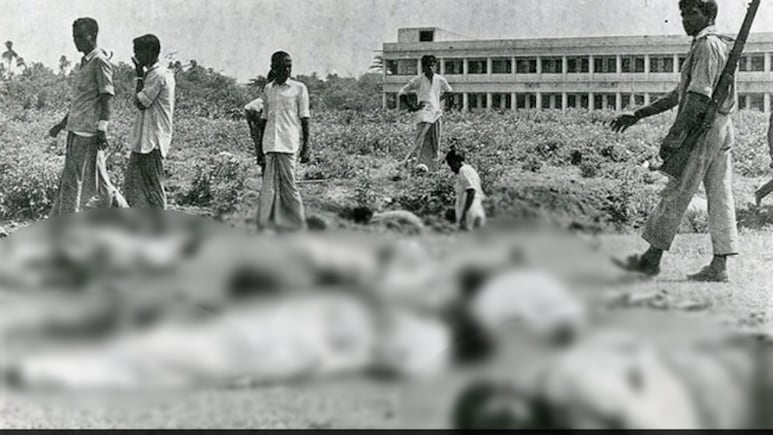
India on Friday supported Bangladesh's pursuit of justice over the atrocities carried out by Pakistan during the Liberation War in 1971.
Ministry of External Affairs spokesperson Randhir Jaiswal highlighted how 'Operation Searchlight' included systematic and targetted killing of millions of Bangladeshis alongside widespread sexual violence against women by Pakistani forces.
He spoke about how the campaign triggered a massive displacement, forcing millions of Bangladeshis to seek refuge in India.
"We are all aware of the terrible atrocities that were committed by Pakistan during Operation Searchlight in 1971. The genocide involved the systematic and targeted killing of millions of Bangladeshi people, innocent people, and mass sexual violence against women. It also forced millions of Bangladeshi people out of their country. They came to India as refugees. These atrocities, needless to say, shook the conscience of the world at large. Pakistan, however, remains in denial to this very day of its crimes. We support Bangladesh in its desire for justice," said Jaiswal.
Bangladesh Prime Minister Tarique Rahman recalled how the events of March 25, 1971, were a "pre-planned massacre" and called it one of the most "disgraceful and brutal days".
"March 25, 1971, is observed as Genocide Day. On the occasion of Genocide Day, I pay my deepest respect to all the martyrs. In the history of freedom-loving Bangladesh, March 25, 1971, remains one of the most disgraceful and brutal days," read a statement issued Rahman.
Tarique added that Pakistani forces indiscriminately opened fire on teachers, intellectuals and innocent civilians at multiple places, including Dhaka University, Pilkhana and Rajarbagh Police Lines, resulting in numerous deaths.
Jaiswal added that India seeks to maintain multi-dimensional ties with Bangladesh while also further strengthening and advancing them.
He noted that during the swearing-in ceremony of the new Bangladesh Nationalist Party (BNP) government last month, Prime Minister Narendra Modi sent a congratulatory letter through Lok Sabha Speaker Om Birla, outlining India's vision for the future of bilateral relations.
"A new government has been formed in Bangladesh. Our Speaker, the Speaker of the Lok Sabha, was sent to attend the swearing-in ceremony of this government. Our Prime Minister sent a congratulatory letter through him, and also sent a letter outlining our vision for how we want to take this relationship forward. Discussions are ongoing on both sides. We want to not only maintain our diverse relationships with Bangladesh, but also strengthen and expand them further," said Jaiswal.
Track Latest News Live on NDTV.com and get news updates from India and around the world


