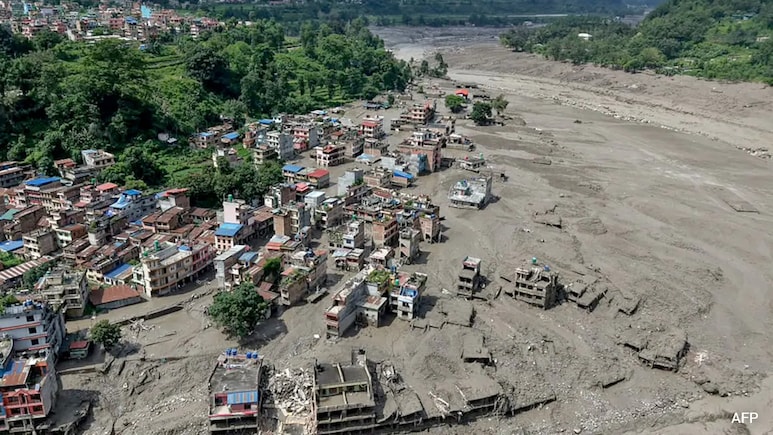
At least 100 people have been killed and hundreds remain missing after a massive flash flood swept through villages in Nepal near the Tibetan border, sweeping away homes and damaging roads, bridges and hydropower projects.
The Bhotekoshi River surged at around 9 am on Wednesday, leaving a trail of mud and debris across several districts.
District administrator Narendra Pariyar said entire villages and infrastructure project sites had been washed away.
430 MW Power Capacity Hit
The disaster has also struck Nepal's hydropower sector.
Nepal's energy ministry said around 430 megawatts of electricity supplies had been affected, largely because of damage to hydroelectric projects. That is more than 12 per cent of the country's total installed hydropower capacity of 3.2 gigawatts, according to a Reuters calculation.
"The disaster has damaged the production, transmission and distribution facilities of the Authority ... resulting in disruption of electricity supply," Nepal's Electricity Authority said.
The losses could have a major economic impact because Nepal depends heavily on hydropower and has spent years developing projects along its mountainous river systems.
Authorities warned people living near the Bhotekoshi, Trishuli and Narayani rivers to move away from the riverbanks and seek safer ground.
Images from Nuwakot district showed buildings coated in thick mud, with some appearing to have mud piled as high as their second floors. Vehicles were buried, and debris was left hanging from trees and power lines.
Climate experts at the Kathmandu-based International Centre for Integrated Mountain Development said an avalanche from a glacier was likely behind the sudden flooding.
Across the border, China's state broadcaster CCTV reported that a mudslide in Gyirong County in Tibet killed at least three people and left 265 missing. Drone footage from the area showed roads destroyed and buildings buried beneath mud and debris.
A Region Increasingly Hit By Extreme Weather
In August last year, a glacial lake in Tibet overflowed amid high temperatures, killing nine people and damaging critical infrastructure, including a bridge linking Nepal and China.
Scientists say such events are becoming a growing threat across the Hindu Kush Himalayas, a region stretching across several countries, including India. Rising temperatures are contributing to more frequent extreme weather, including intense rainfall, floods, landslides and accelerated glacier melt.
Track Latest News Live on NDTV.com and get news updates from India and around the world


