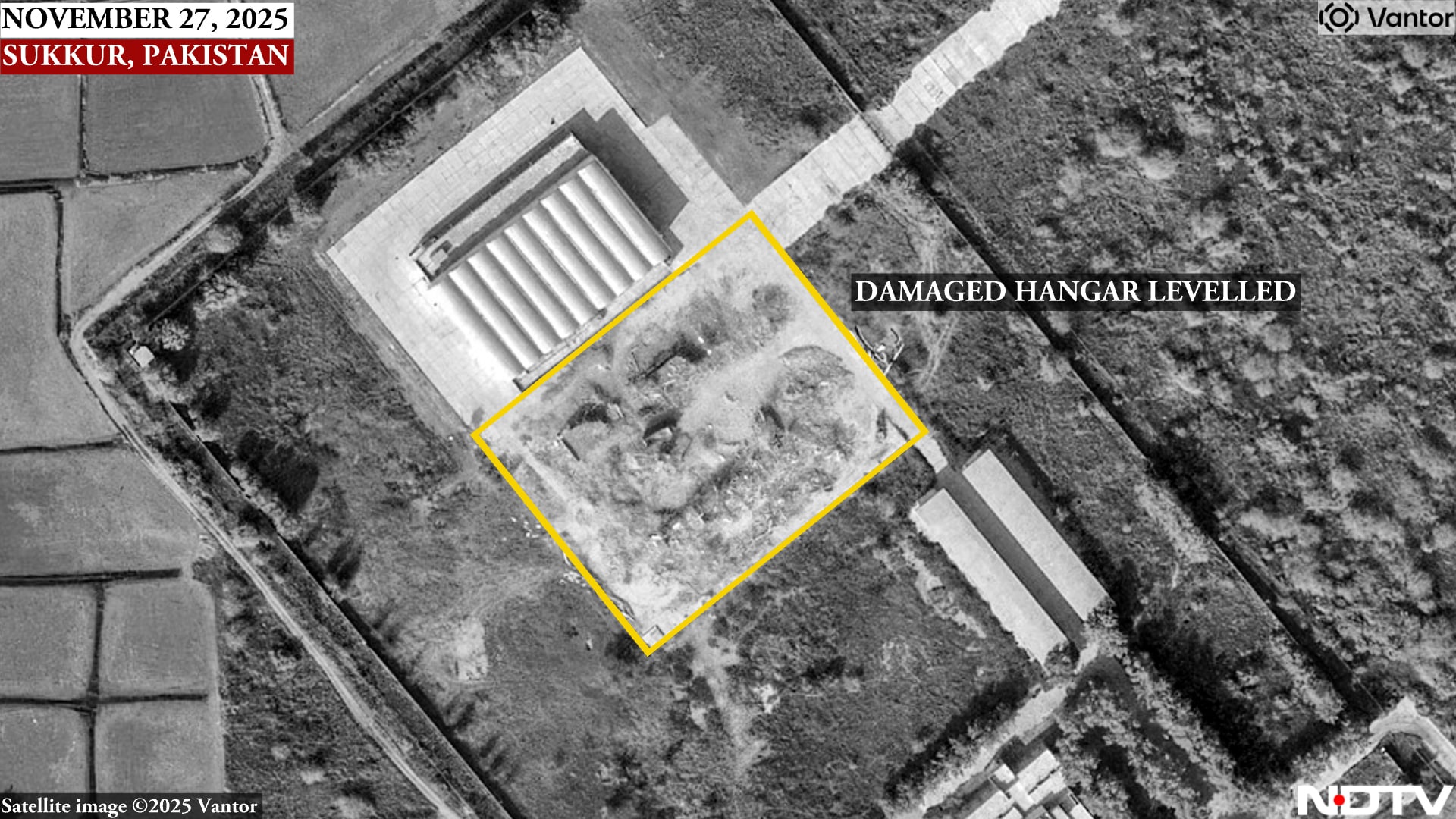
New high-resolution satellite imagery with NDTV indicates that Pakistan has cleared out debris of a hangar at its airbase in Sukkur, struck by the Indian Air Force during Operation Sindoor on May 10 this year.
The base, believed to house Unmanned Aerial Vehicles (UAVs), was struck between 2 am and 5 am on May 10, hours before Pakistan came to the ceasefire table later that day, which eventually brought an end to hostilities between the two nations.
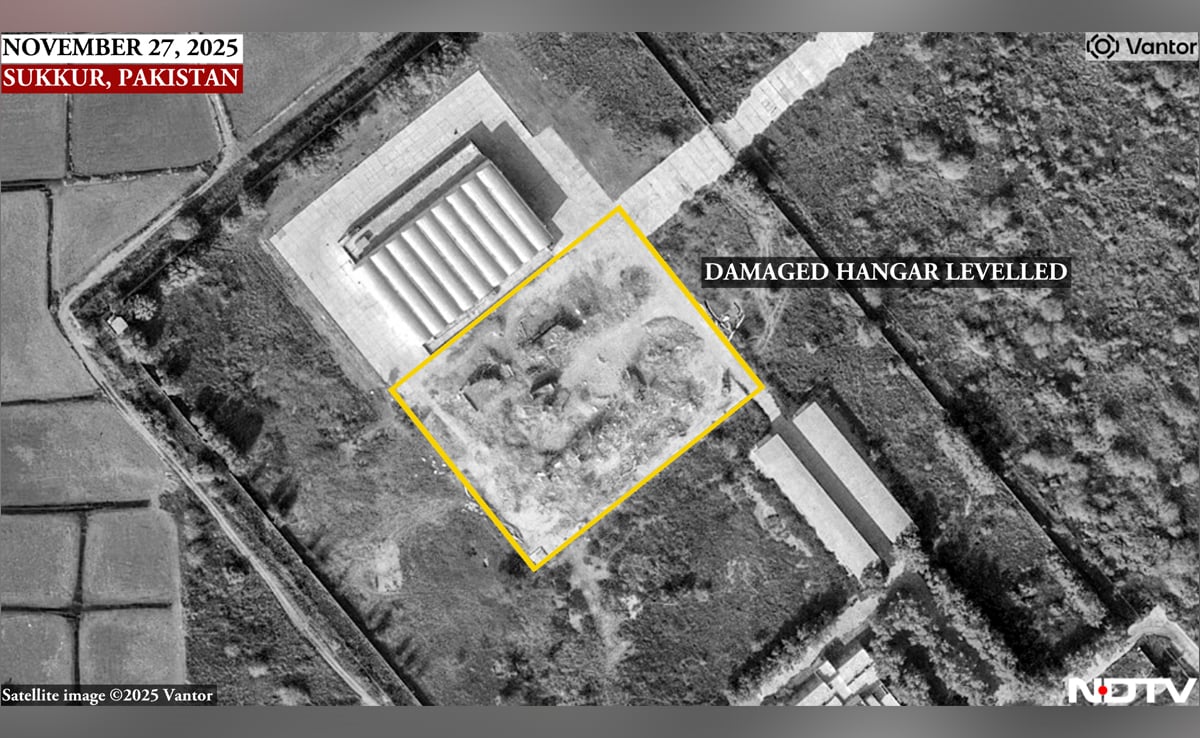
The Sukkur site struck by the Indian Air Force (IAF) on May 10 has now been levelled. This is believed to have been a hanger for Unmanned Aerial Vehicles (UAVs). High-res image here
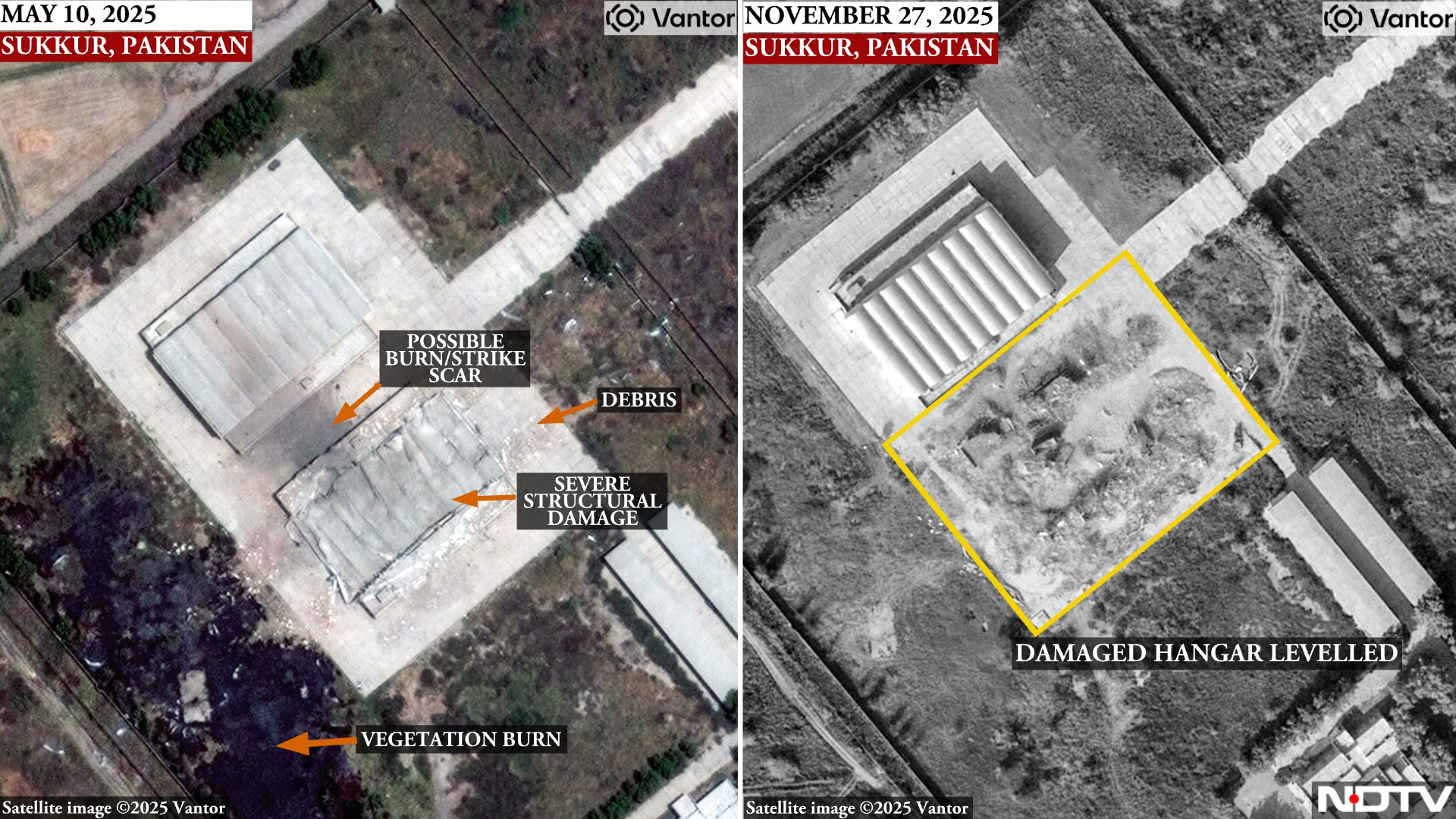
The original post-strike satellite image of Sukkur sourced from Maxar (now Vantor) showed the complete destruction of the UAV hangar with evidence of a significant vegetation fire on the periphery of the structure.
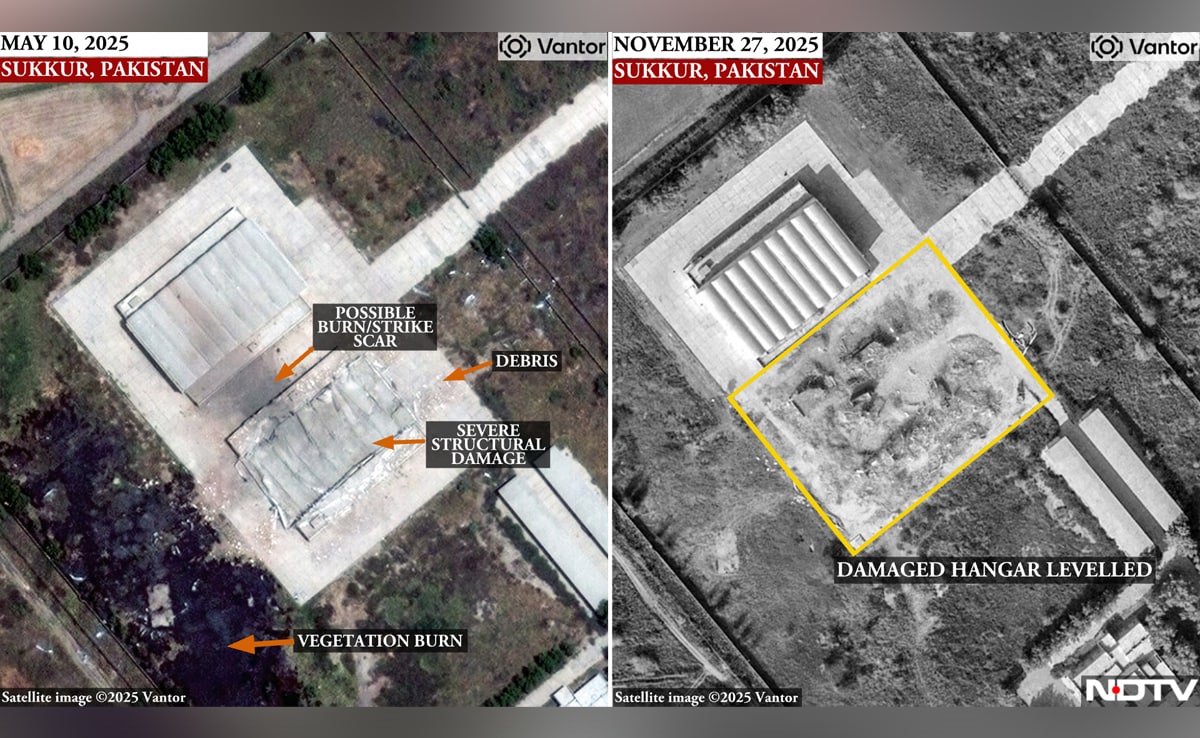
The Sukkur hangar struck by the IAF on May 10 by a precision-guided missile collapsed, with severe structural damage and vegetation burnt along its periphery. That hangar has now been levelled. High-res image here
The new image in this report shows the site of the hangar having been levelled. No new structure presently appears at the site. A second hangar, next to the one that was hit, appears untouched.
"The Sukkur hangar, struck by India in May 2025, sustained major structural damage. Imagery from the time, verified with NDTV, revealed major crumpling of the roof inward, among other damage on-site. Newer imagery shows the site has finally been demolished, a process that began sometime in October 2025. The delay in cleanup likely stems from prolonged safety evaluations or possibly due to hazardous materials remaining under the rubble—clearing these would have been a prerequisite before demolition could begin," according to Damien Symon, a renowned geo-intelligence researcher and OSNIT expert at The Intel Lab, best known for analysing satellite imagery to debunk disinformation and verify military developments in conflict zones like the 2025 India-Pakistan clashes.
READ: How India's All-Weather Friend Russia Played Key Role In Op Sindoor Success
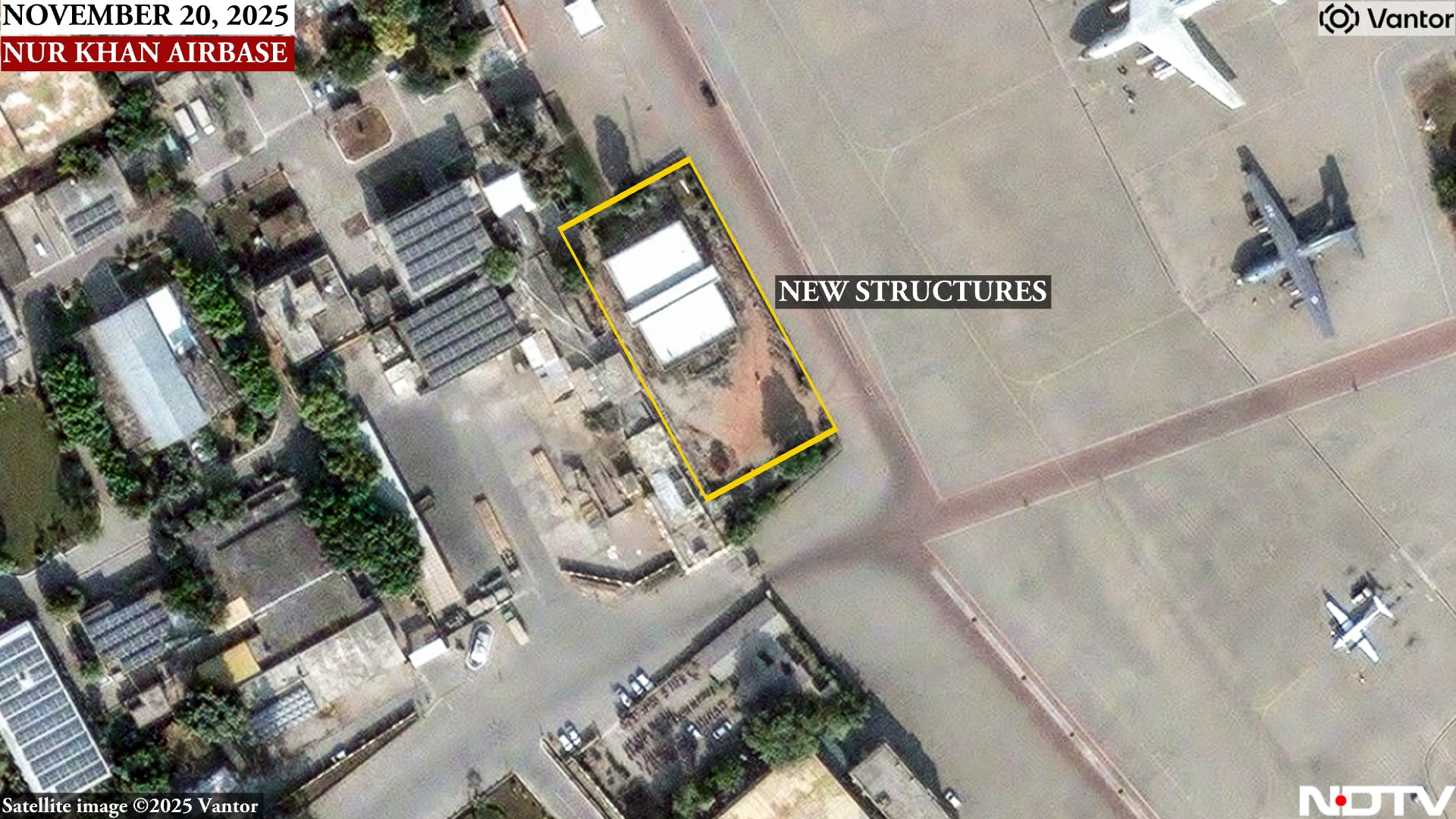
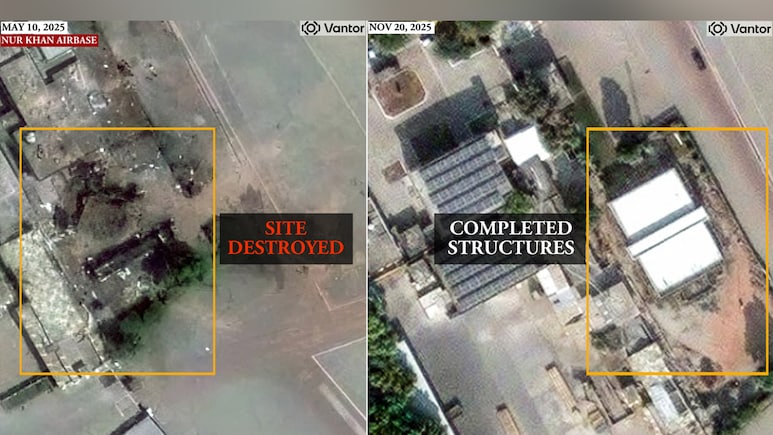
Another image, part of a sequence presented in this report, shows the site of a command-and-control centre at the Pakistan Air Force's Nur Khan Base in Chaklala, also struck by the Indian Air Force on May 10 between 2 am and 5 am. New structures appear at this site, where two large tractor trailers, believed to be Special Purpose Vehicles (SPVs), were struck during the IAF attacks.
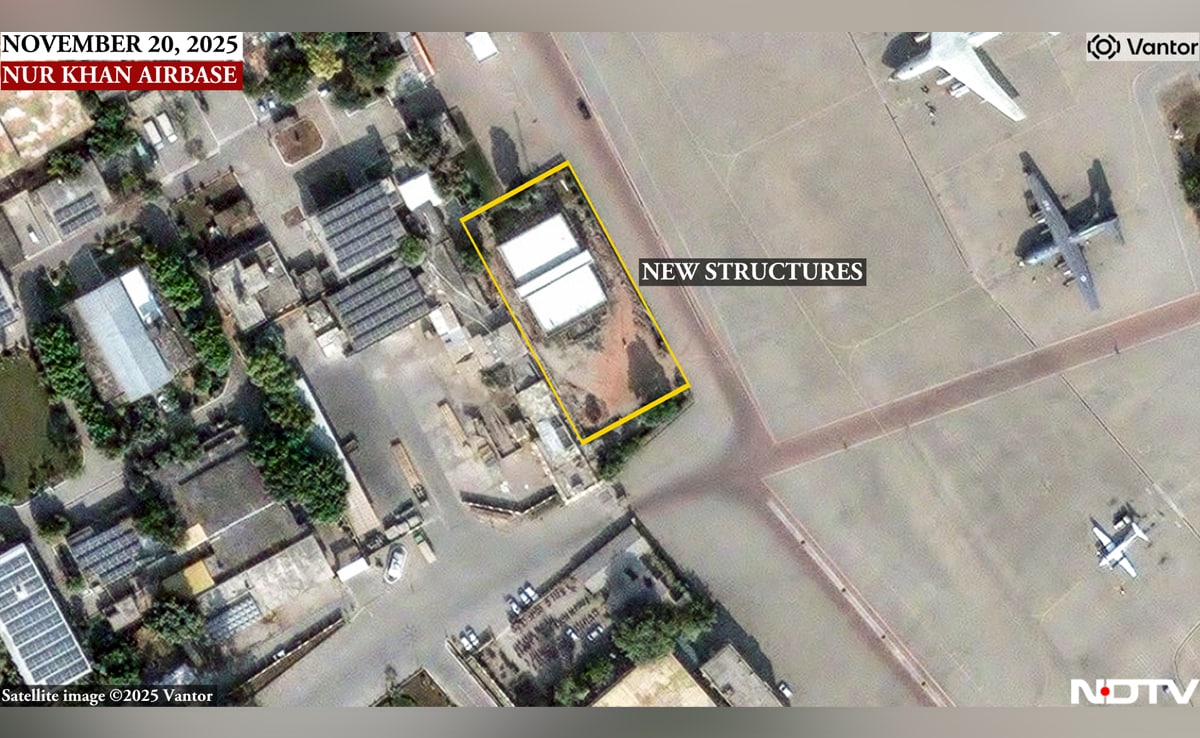
Two new structures appear at the site in Nur Khan Airbase, located in Rawalpindi, which was struck by the IAF on May 10. This is believed to have been a command-in-control facility. High-res image here
Pakistan's Nur Khan base, located in Chaklala, Rawalpindi, is situated just 10 km southeast of Islamabad, the heart of power in the country. "I got a call at 2:30 (Saturday, May 10) on a secure phone from army chief General Syed Asim Munir," said Prime Minister Shahbaz Sharif at the time. Munir "informed me that India just now launched ballistic missiles, and one of them fell at the Nur Khan Airport, and the other fell in some other areas."
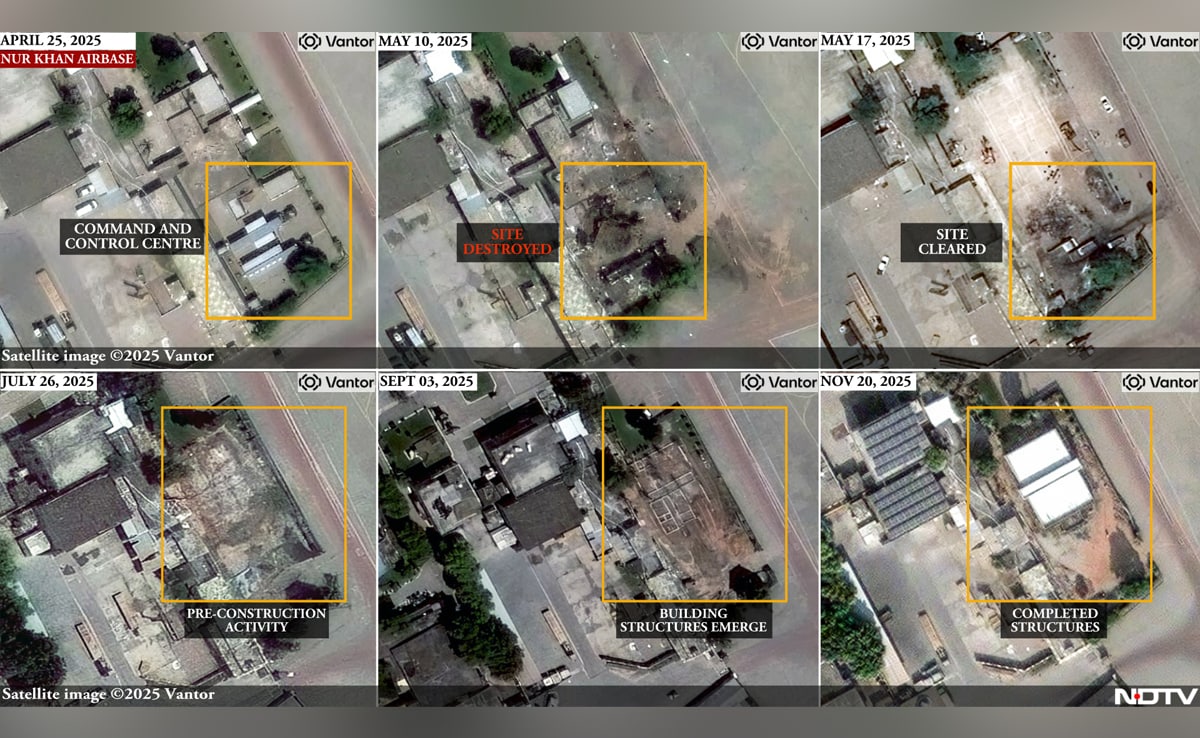
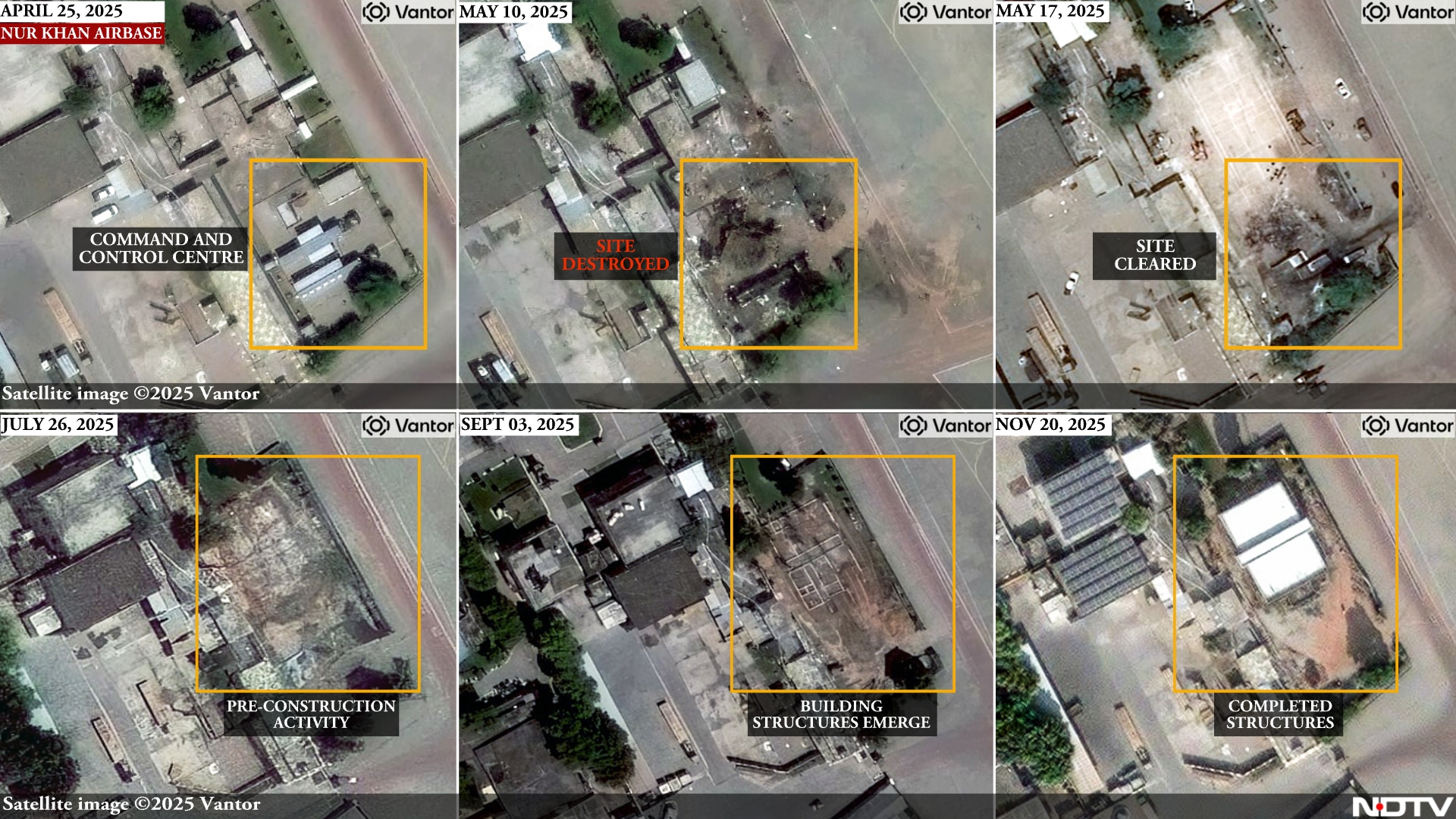
A sequence of events from April 25, 2025, to November 20, 2025, of Pakistan's Nur Khan Airbase. The first image shows two special purpose vehicles (SPVs) which were destroyed on May 10. The site has since been cleared with two completed structures now visible in satellite images. High-res image here
"India's strike on Nur Khan during the May 2025 conflict targeted specialised military vehicles at the airport but also led to heavy collateral damage to adjacent infrastructure. The buildings around the impact site were leveled and have since been replaced by a fresh structure. Interestingly, while the new construction occupies the previous building's foundation, its design diverges from the demolished structures. This newly built structure is about 20×25 meters and appears to be composed of two independent but adjoining sections," Damien Symon said.
While India has never confirmed the use of ballistic missiles in the attacks, it is widely believed that the Indian Air Force used a host of air-to-surface missiles, including SCALP missiles from Rafale fighters, Rampage missiles from jets such as the MiG-29 and Su-30, and the BrahMos missile from the Su-30, to make deep strikes at a host of Pakistani airbases.
The escalation from India came after intense Pakistani drone and missile activity from May 8 onwards. On the night of May 8, going into the early hours of May 9, India detected increased pan front drone activity at thirty-six locations.
Up to 400 Pak drones were detected as Pak forces made attempts to saturate Indian air defences, localise and target radars, and surface-to-air missile systems. The Pak attacks also included the launch of a limited number of CM-400 cruise missiles - used to target India's Russia-built S-400 surface-to-air missile site in Adampur. There were also heavy exchanges of artillery fire along the Line of Control.
READ: 'New Era Of Coercive Clarity In India's Security Doctrine': Report After Op Sindoor
India responded to the Pakistani aggression on the night of May 8 and in the early hours of May 9 by what it says was 'shaping the area of operations in case of further escalation.' This meant targeting Pakistani air defence sites using armed drones. At least one such site was destroyed.
By the night of May 9th, both sides had increased the intensity of their attacks - with Pakistan launching a host of standoff attacks on major IAF airbases such as Udhampur, Pathankot, and Bhuj. There was no substantial damage at any of the sites.
On the same night - May 9- Prime Minister Narendra Modi received a phone call from the US Vice President - JD Vance, who told him that US intelligence had picked up information that Pakistan was planning a drastic military escalation. In a statement in parliament, Modi later said, "If Pakistan intends to carry out such an attack, it will have to pay a very heavy price. That's exactly what I told the US Vice President."
India did escalate - massively - in the early hours of May 10, striking not just Sukkur and Nur Khan detailed in this report, but also Rahwali, Rafiqui, Rahim Yar Khan, Murid, Nayachor, Sargodha, Bholari, and Jacobabad. The IAF also engaged several aircraft, including an Airborne Early Warning or Electronic Intelligence platform of the Pakistan Air Force in addition to fighter aircraft.
The beginning of the end of the active military fighting between India and Pakistan came at 3:35 pm on May 10 when Pakistan's Director General of Military Operations, Major General Kashif Abdullah, called his counterpart, Lt. General Rajiv Ghai, to discuss a ceasefire.
That ceasefire took effect at 5 pm the same day, though in effect, it took more than 24 hours for the actual fighting between forces to wind down.
The mini-war between India and Pakistan had lasted approximately 88 hours - it began after India struck nine Pakistani terror camps, including the Jaish-e-Mohammed (JeM) and Lashkar-e-Taiba (LeT) headquarters in Bahawalpur and Muridke on May 7. It ended on May 10, but not before the Indian Air Force carried out its deepest strikes on Pakistan since the 1971 war.
Track Latest News Live on NDTV.com and get news updates from India and around the world