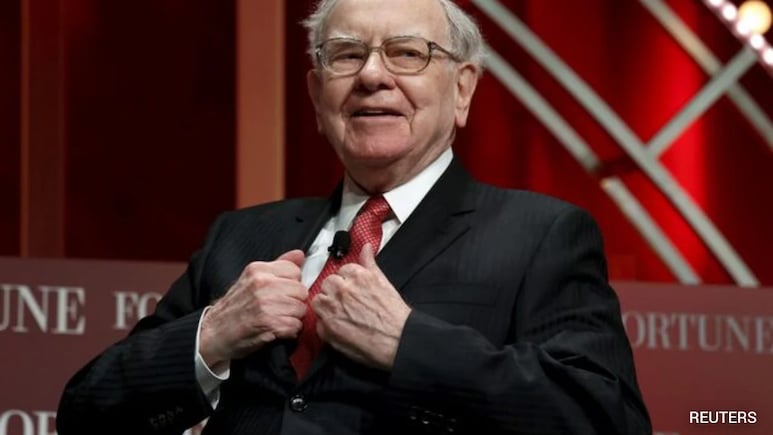
Warren Buffett's decision to buy New York Times Co. stock in the legendary investor's final quarter running Berkshire Hathaway Inc. is a sign of confidence - and perhaps nostalgia - from a billionaire who's had a lifelong fascination with newspapers.
Berkshire acquired 5.1 million shares of the publishing company in the three months through December, a stake worth $351.7 million at year end, according to a regulatory filing Tuesday.
Buffett's investment in the Times was looking like trouble just a couple of weeks ago. The shares fell by the most in six years on Feb. 4 after a quarterly earnings report raised concerns about spending, finishing down more than 6%. But investors bid the stock back up in recent days, and it's now at an all-time high, boosted by news of Buffett's interest.
At a time when the US media landscape is undergoing massive retrenchment and transformation, the Times is a rare success story. As one of the country's leading newspapers, it has continued to build a loyal subscriber base, adding 450,000 new digital subscribers in the last quarter, bringing the total to more than 12 million. Headed by Chief Executive Officer Meredith Kopit Levien, the Times is profitable and growing. Net income jumped 17% last year to $344 million, boosted by a 12% increase in advertising revenue.
Subscribers are being driving in part by a diversification into online games and recipes. The company has also been making a big push into video, which Kopit Levien sees as a long-term opportunity to establish the Times as a "preferred brand for watching news in addition to reading and listening to that news."
The Times' achievement contrasts with the troubled fates of its onetime rivals. Storied papers from the Los Angeles Times to the Washington Post are losing money and have laid off hundreds of journalists and administrative staff to cut costs. New technologies such as artificial intelligence, a shift in how people consumer their news - from TikTok clips to podcasts and individual newsletters - and relentless attacks from the Trump administration, have transformed the industry.
President Donald Trump filed a $15 billion defamation lawsuit against the Times in September, while the newspaper has its own suits against OpenAI Inc., Microsoft Corp. and Perplexity AI Inc., alleging that the tech companies used copyrighted articles in their AI tools.
Buffett, 95, is no stranger to the world of newspapers and media more broadly, and has been through the industry's highs and lows. He delivered the Washington Post as a teenager and Berkshire Hathaway at one point had a media portfolio that included more than two dozen newspapers, including the Buffalo News and Buffett's hometown paper the Omaha World-Herald.
Buffett stepped down as CEO of Berkshire Hathaway in January though he's still serving as chairman of the company, whose whose holdings span insurance, utilities, railroads and a stock portfolio valued at $283 billion as of Sept. 30.
One of Buffett's most famous and enduring newspaper holdings was his investment in Washington Post Co., which spanned more than 40 years. The relationship ended in 2014 when Berkshire Hathaway exited its 28% stake, valued at $1.1 billion at the time, in Graham Holdings Co., the Post's former parent. Buffett, who became a shareholder in the Post in 1973, was close with the paper's iconic publisher Katharine Graham, and their friendship was legendary in investment circles.
While Berkshire sold its newspaper operations to Lee Enterprises in 2020 for $140 million, it still owns one local TV station, WPLG in Miami, which it acquired in 2014 from Graham Holdings.
Buffett's exit from the Washington Post came just after the newspaper was sold to Amazon.com Inc. Chief Executive Officer Jeff Bezos in 2013.
Bezos initially set about expanding the Post's footprint, injecting much-needed investment. But in recent years, the post has cut back as ad revenue dried up and subscriptions shriveled. The newspaper laid off about a third of its staff earlier this month, closing its sports department as well as the books section and the Post Reports podcast while the digital and print editor desks will merge into one team. Several foreign bureaus were also shut down. Will Lewis, the paper's CEO, resigned days after the newsroom bloodbath, which triggered a backlash against Bezos.
The Times, controlled by the Sulzberger family, was also once at risk. In 2009, amidst the financial crisis, business had stalled and the company was facing a debt-refinancing crisis. Instead of selling, like the owners of the Wall Street Journal had done, the Times accepted a crucial $250 million lifeline from Mexican billionaire Carlos Slim, who eventually became the paper's largest individual shareholder with about a 17% stake. He later sold about half of his holdings in 2017, after profiting from high interest rates on the loan, which was repaid in 2011, years ahead of schedule.
The loan gave the newspaper some breathing room and time to restructure, setting the stage for a digital powerhouse it has become. Today's Times has a redesigned mobile app and an abundance of video and audio journalism, in addition to separate or bundled paid subscriptions for cooking, sports and games.
This strong, unique business model has seen growth even as its competitors have struggled, according to Douglas Arthur, a managing director at Huber Research Partners.
"AI is not going to replace the New York Times tomorrow," he said in an interview.
By 2010, Buffett was openly lamenting the declining circulation and ad revenue for print newspapers and by 2019 he declared that most newspapers are now "toast," and didn't think they could be saved. "The world has changed hugely," Buffett said in an interview with Yahoo Finance at the time.
He predicted that only a few national titles, such as the Times, would survive.
(Except for the headline, this story has not been edited by NDTV staff and is published from a syndicated feed.)
Track Latest News Live on NDTV.com and get news updates from India and around the world


