
Scientists have discovered 26 new types of bacteria growing inside NASA's cleanrooms - the place where spacecraft are built. These species can survive in extreme conditions similar to those found in space, according to a study published in Microbiome.
The study, conducted by scientists at King Abdullah University of Science and Technology (KAUST) in Saudi Arabia and in collaboration with NASA Jet Propulsion Laboratory, appears to be a surprising discovery given how clean and sterilised NASA's cleanrooms are to keep spacecraft free from contamination.
-

-
 Who Is Rajiv Mehta? Lilavati Hospital Trustee To Speak At NDTV World Summit 2026
-
 Ex-CIA Director To Decode 'War In Times Of AI' At NDTV World Summit
-
 From Call Centre To Billion-Dollar Disruptor: Nikhil Kamath At NDTV World Summit
-
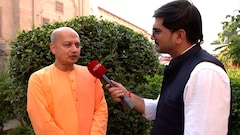 'Every 5 Years, You'll See A New India': Swami Sarvapriyananda Ahead Of NDTV World Summit
-
 AI Can Think, But Can It Be Conscious? Swami Sarvapriyananda Weighs In
-
 Alain Ebobisse, Africa50 CEO, To Attend NDTV World Summit 2026. All About Him
-
 Kriti Sanon At NDTV World Summit: A Look At Her Career And Business Ventures
-
 Ex-CIA Director To Decode 'War In Times Of AI' At NDTV World Summit
-
 Who Is Vikram Rai, CEO, South Asia GE Aerospace, Set To Attend The NDTV World Summit 2026
-
 Rahul Kanwal: The World Is Changing. What Comes Next? | NDTV World Summit 2026
NASA builds satellite rovers in cleanrooms where temperature, humidity and airflow are controlled to keep the environment super clean, making it impossible for bacteria to survive.
The team noted that some can even survive radiation or resist harmful chemicals. This suggests that they could potentially withstand the harsh environment of space travel.
Dr Kasthuri Venkateswaran, retired Senior Research Scientist at NASA's Jet Propulsion Laboratory and a lead author of the study, said, "This partnership not only supports Saudi Arabia's ambitious vision through the Saudi Space Agency but also reinforces KAUST's emergence as a global leader in microbial and space biology research."
He added, "Together, we are unravelling the mysteries of microbes that withstand the extreme conditions of space."
Professor Alexandre Rosado, the lead KAUST researcher on the project, said the study helps understand the types of microbes that could survive and travel to space. It is crucial to avoid spreading these Earth germs to other planets during space missions, he said.
"Our study aimed to understand the risk of extremophiles being transferred in space missions by analysing their genetic traits," he said.
Postdoctoral researcher Junia Schultz, who supervised the study, mentioned that these microbes weren't just a warning but could also be useful as their special genes might help us create new medicines, ensure food safety, or be used for other experiements in the future.
Track Latest News Live on NDTV.com and get news updates from India and around the world


