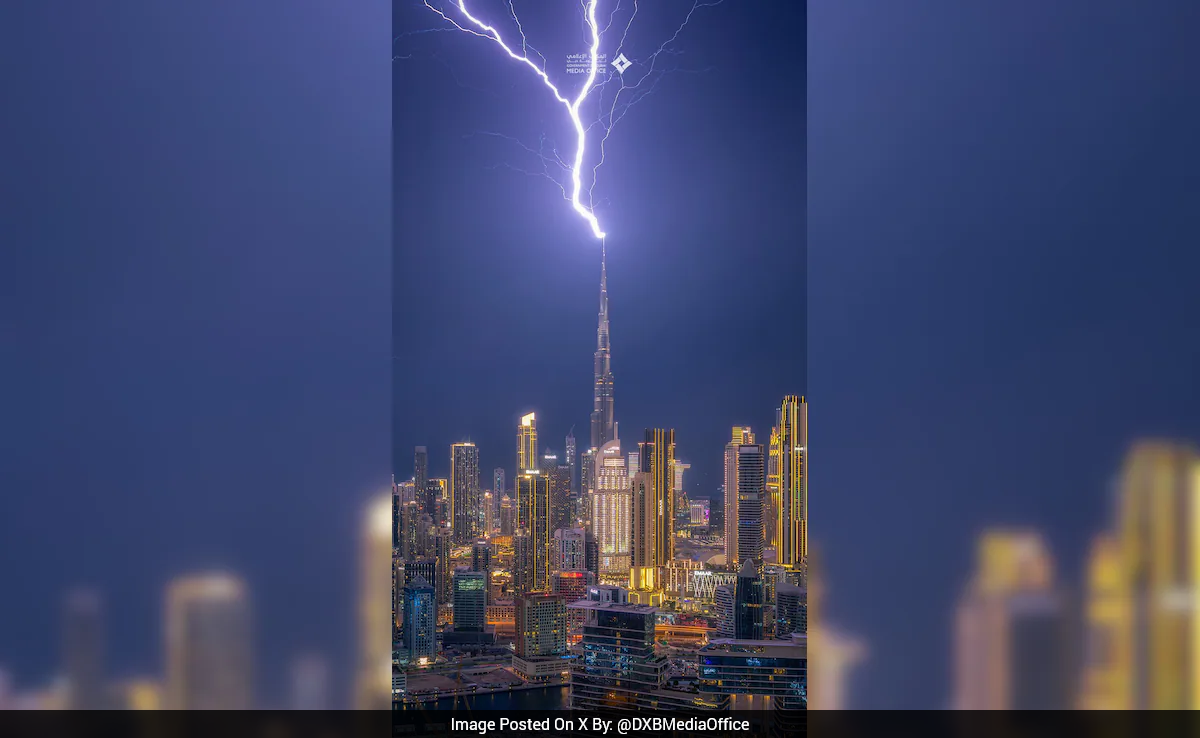
A massive bolt of lightning struck the iconic Burj Khalifa, the tallest building in the world, during heavy thunderstorms on Friday night. The strike occurred during rare and extreme weather affecting several parts of the UAE, including Abu Dhabi and Sharjah.
The towering skyscraper, measuring 2,272 feet, was hit as dark clouds, rain and thunder rolled across Dubai's skyline.
Videos and pictures circulating on social media show lightning striking the top of the Burj Khalifa. The visuals quickly caught the attention of people online, with many sharing clips of the tower.
Wow ..#Dubai pic.twitter.com/aQAoB5FGnO
— أحمد خليفة (@_A_khalifa) March 26, 2026
دبي
— Dubai Media Office (@DXBMediaOffice) March 26, 2026
Dubai pic.twitter.com/lBMn4mSmRP
Earlier this month, videos shared online showed explosions and smoke rising near the Burj Khalifa area as Iran launched missiles and drones towards the UAE in retaliation for strikes by the US and Israel.
Despite all of it, Burj Khalifa stays safe. Here's how
The building has a strong steel frame that acts like a shield. At the top of the tower is a lightning rod which has a special lightning protection system installed when it was built. So, when a storm comes, this rod attracts the lightning which makes it hit there first instead of anywhere else.
At the bottom of the building, there is a grounding system which sends all the lightning electricity safely into the earth, so it doesn't travel inside the building. This protects people, elevators, lights, and other equipment from being damaged or causing harm.
The system can handle several lightning strikes at once, which keeps the building safe and protects the people inside during storms.
The developer, Emaar Properties, has insured the Burj Khalifa for about $1.5 billion. The skyscraper offers observation decks on the 124th, 125th, and 148th floors, attracting millions of visitors every year to enjoy views of Dubai and the Arabian Gulf.
Track Latest News Live on NDTV.com and get news updates from India and around the world


