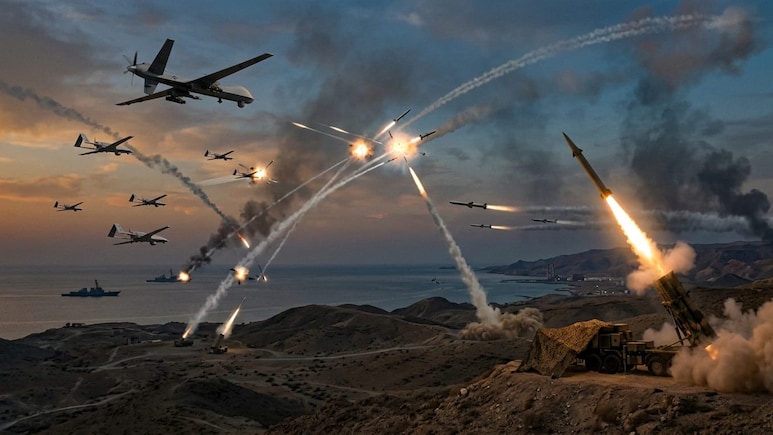
Oil, gas and transport costs have surged noticeably amid the ongoing West Asia war that began on February 28 and continues to unfold. The impact is no longer limited to the three countries - US, Israel & Iran - involved. Several regions, both directly and indirectly, now face economic pressure linked to the conflict.
A major point of concern remains the Strait of Hormuz, which is one of the world's busiest routes for energy shipments. But is one major shipping route enough to slow global activity?
Shipping traffic falls in the Strait of Hormuz
Ship movement through the Strait of Hormuz has dropped sharply during the conflict. The seven-day moving average as of February 27 this year was 106 ships a day. It was 83 ships on the same day last year. This shows that before the war, traffic this year was much higher than last year.
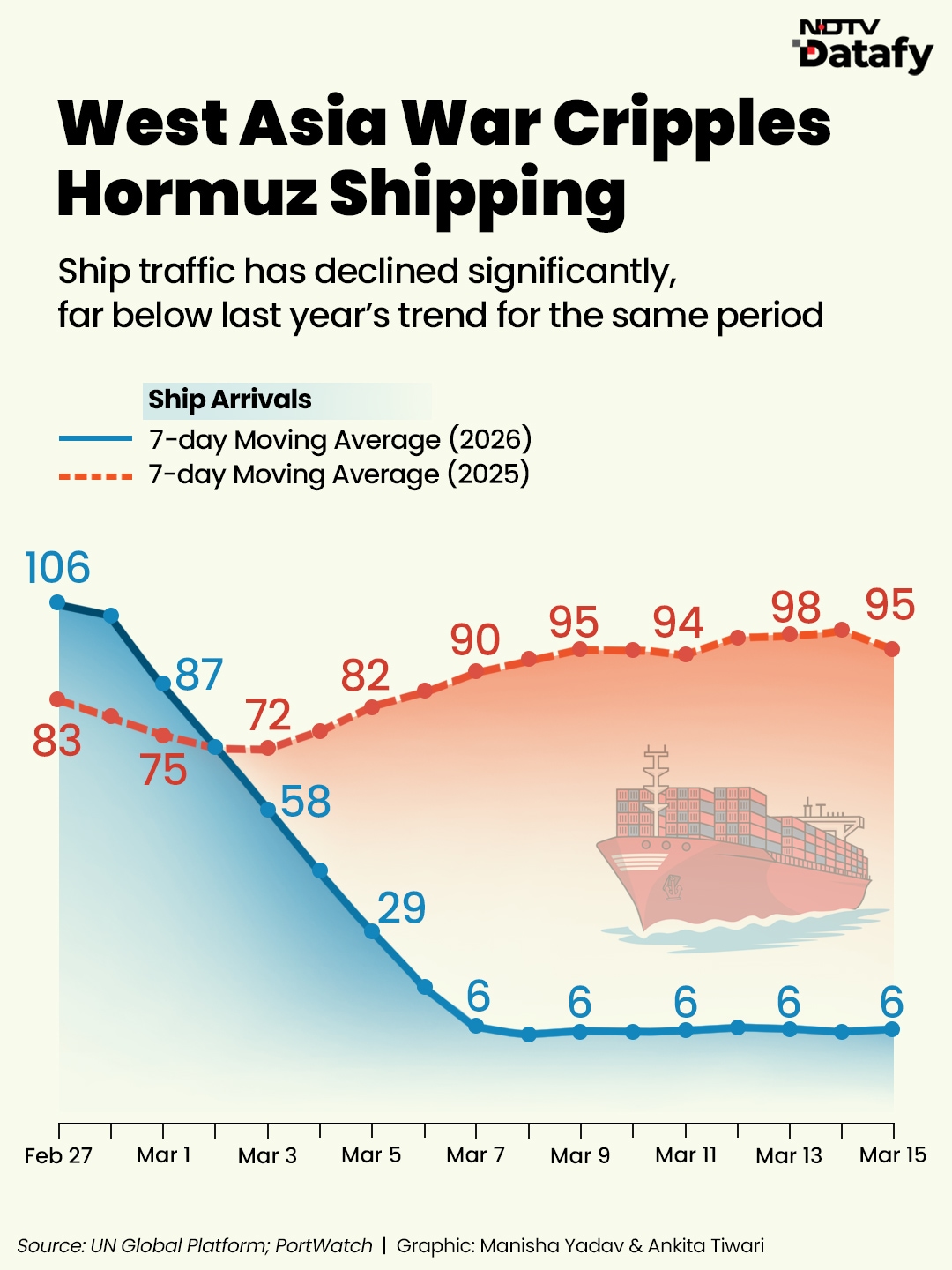
As the war progressed, the current year's numbers kept falling and dropped to mere six ships by early March.
Natural gas prices move higher
The disturbance in the Strait of Hormuz has also contributed to a severe price hike in the oil market. Natural gas prices surged by about 10 per cent as markets responded to the risk of supply shortages.
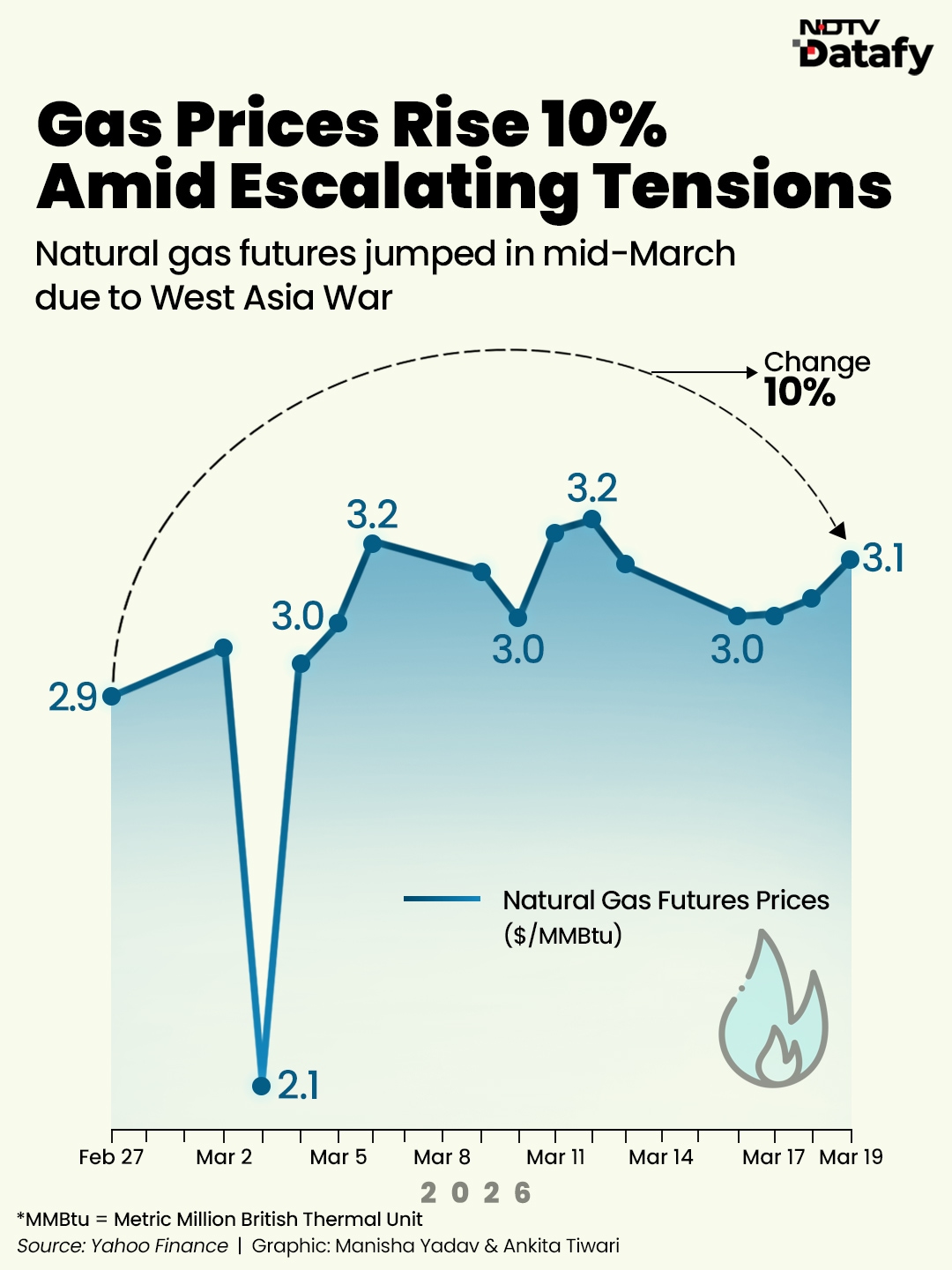
Between February 27 and mid-March, prices moved from $2.9 per MMBtu (Metric Million British Thermal Unit) to $3.2.
Gasoline prices rise in several countries
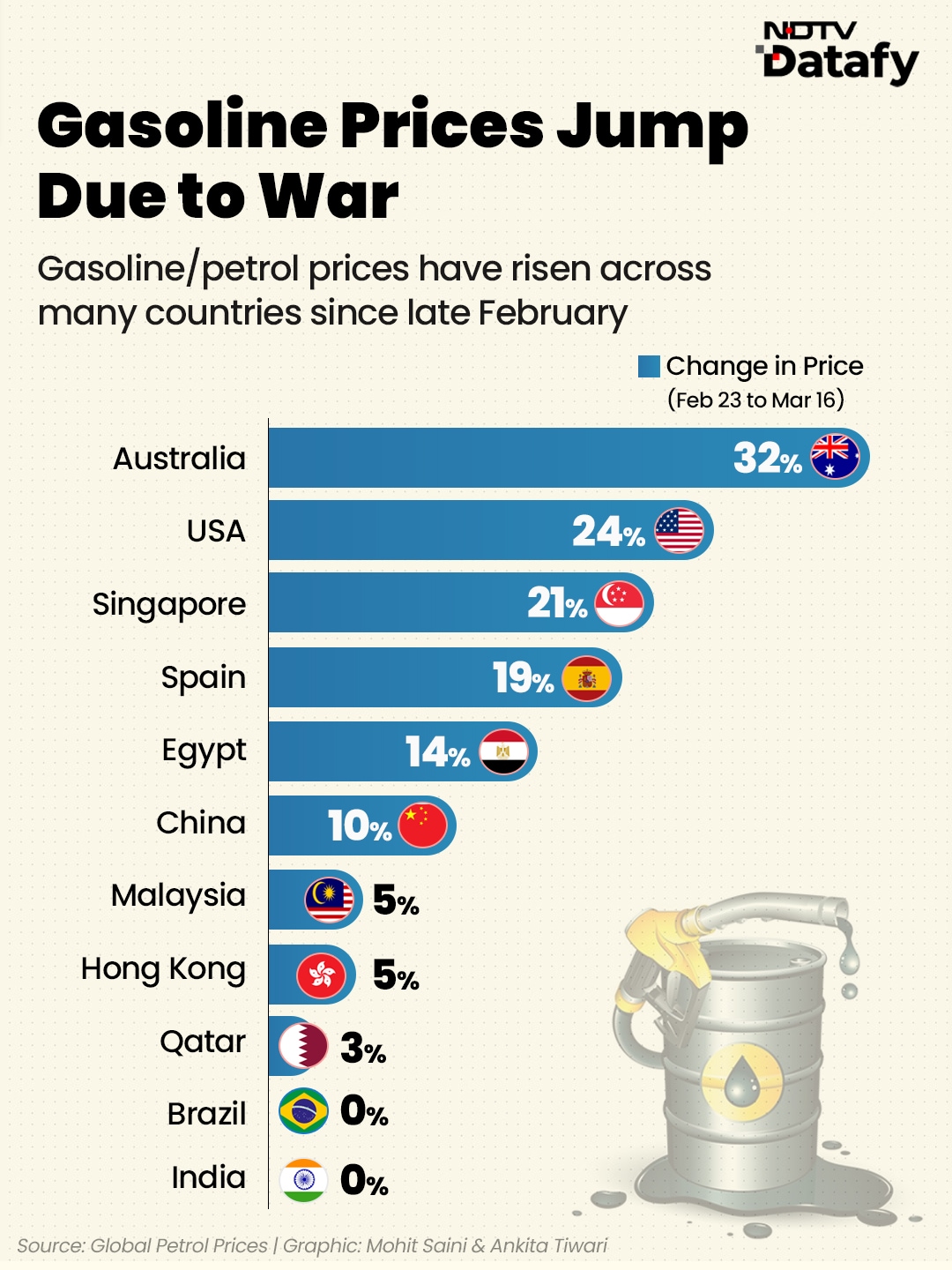
Consumer fuel costs have followed the same trend. Between February 23 and March 16, gasoline/petrol prices rose 32 per cent in Australia, 24 per cent in the US and 21 per cent in Singapore. Spain also reported a 19 per cent rise during the same period. Some countries saw little or no change. India and Brazil recorded no increase, mostly because prices are regulated by the government in these countries.
Diesel prices show similar increases
Diesel prices, too, have shot beyond the roof. Australia recorded a 40 per cent rise in diesel prices between February 23 and March 16. The US saw a 33 per cent increase while Singapore recorded a 34 per cent surge.
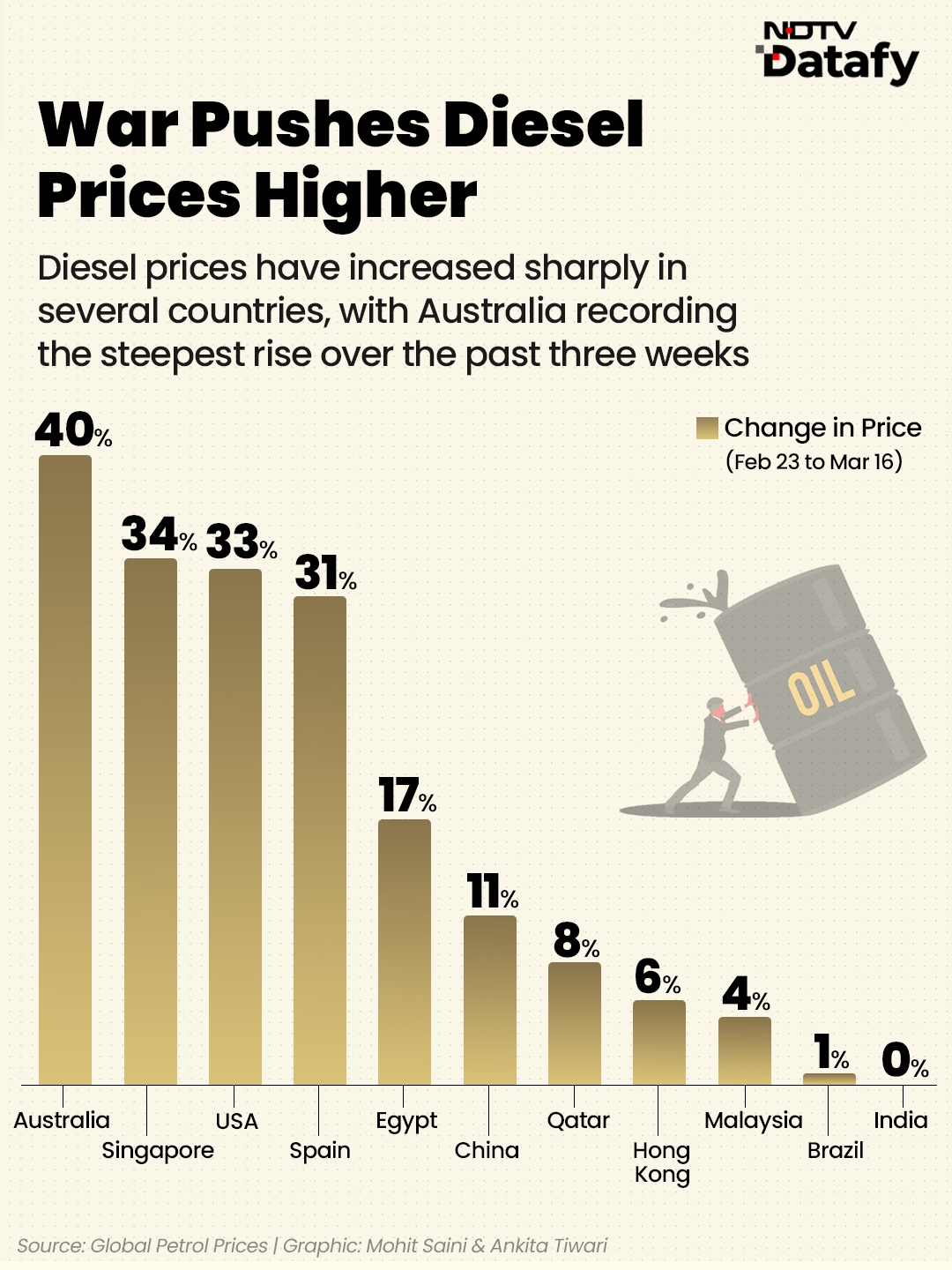
Countries such as Egypt, China, Malaysia and Qatar have reported smaller increases in the prices.
LPG prices show wide differences across countries
One of the major impacts of the supply chain disruption that has already reached millions of homes, especially in India, is the rise in LPG prices. Import-dependent nations are paying much higher rates, while producer economies have some relief.
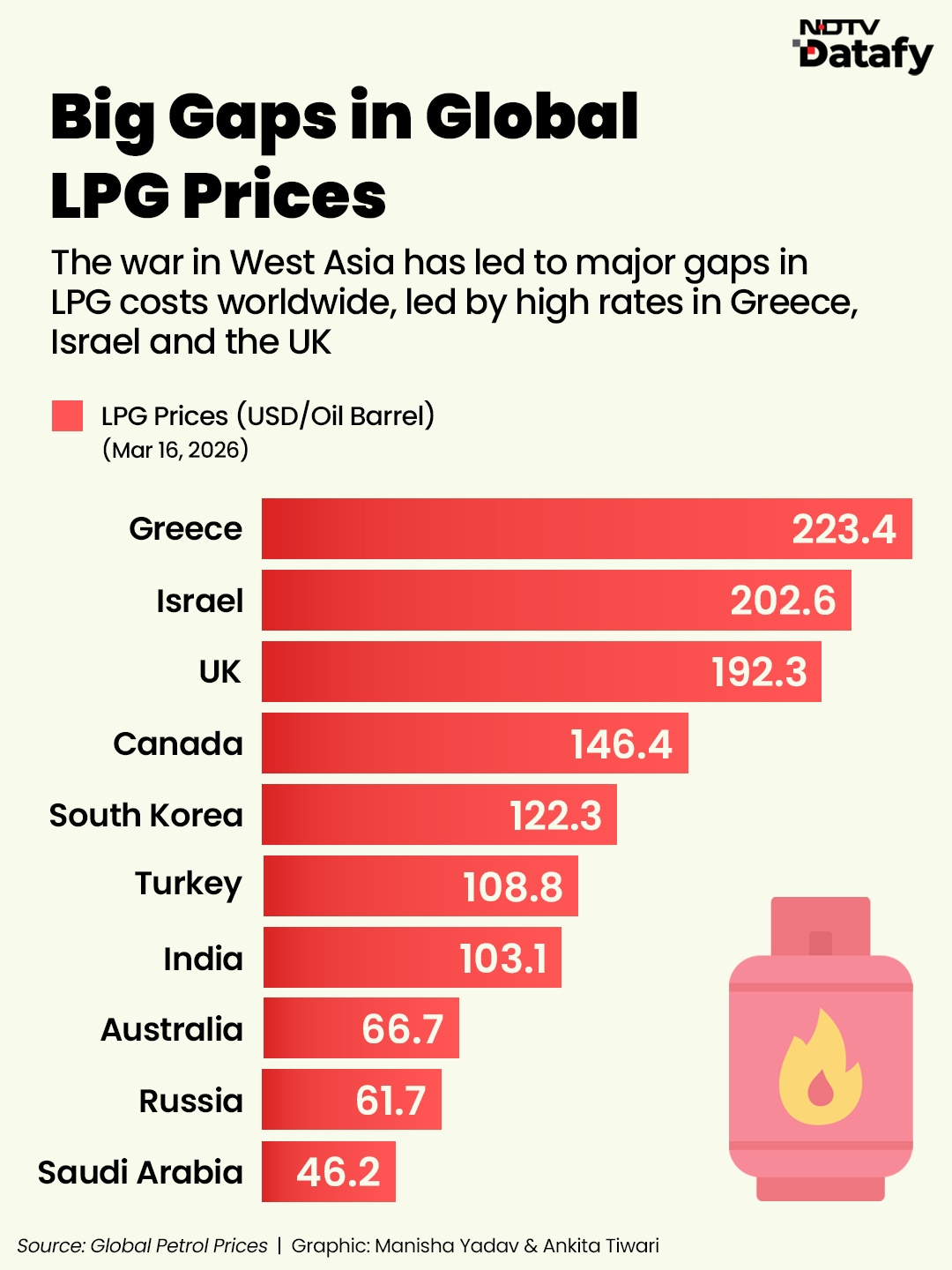
Greece recorded the highest price at $223.4 per oil barrel equivalent. Israel followed at $202.6 and the United Kingdom at $192.3. On the other side, countries with their own production reported much lower prices. Russia recorded the LPG prices at $61.7 and Saudi Arabia at $46.2. The prices in India and Australia were in the middle of this range at $103.1 and $67.7, respectively.
Domestic flights face higher fuel price pressure
Airlines around the world, including those operating in and from India, are dealing with the impact of higher jet fuel prices. Jet fuel is one of the main expenses for airlines, and the increase in global energy prices has added pressure on their operations.
Airlines, in turn, have added fuel surcharges. IndiGo has added Rs 425 while Air India has increased the surcharge by Rs 399. Akasa Air has a wider range between Rs 199 and Rs 1,300.
Airlines say that if global jet fuel prices continue to rise, ticket prices may need to be further adjusted. The trend reflects how supply chain disruptions in a small ocean passage have affected various industries worldwide.
And these may only be the early economic impact of the West Asia war. If the conflict lasts for a longer period, these pressures may spread to inflation and low business activity around the world.
Track Latest News Live on NDTV.com and get news updates from India and around the world


