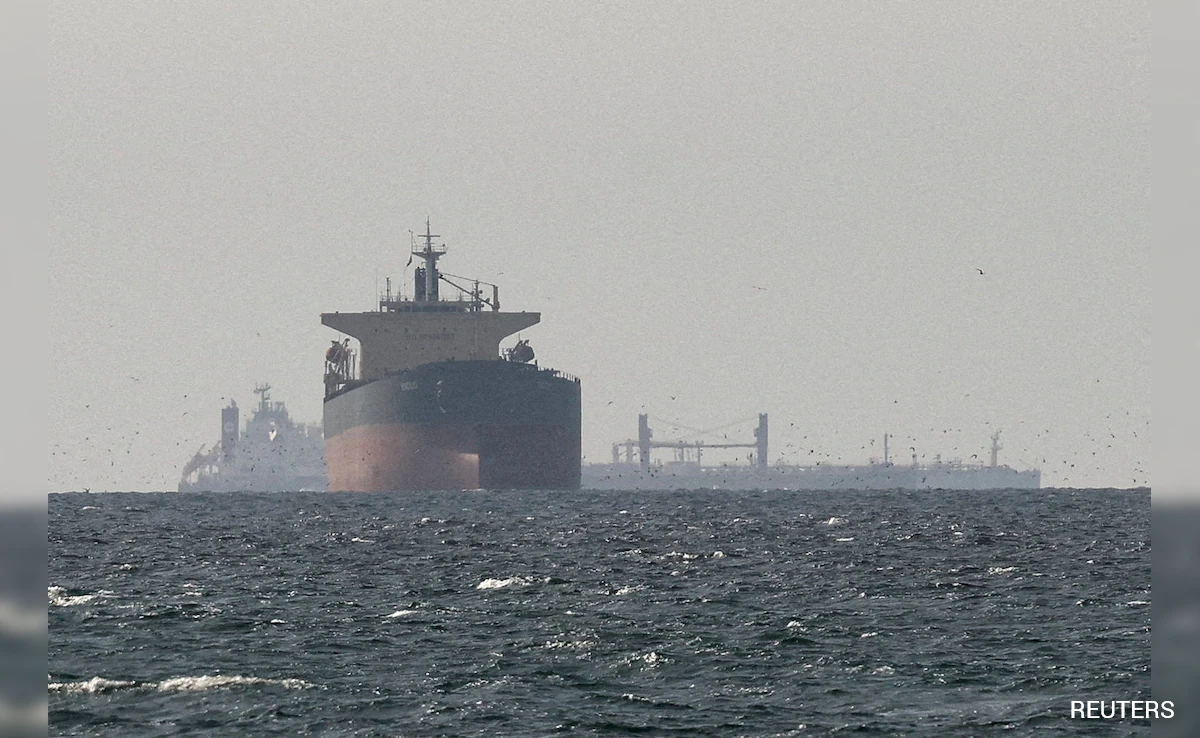
An oil tanker worker, stuck at sea for six weeks in the Gulf region, said the situation is becoming mentally unbearable. Around 20,000 seafarers are currently trapped because of tensions involving Iran near the Strait of Hormuz, a key global oil route.
"You can try to minimise the impact that this situation has on your mental health but it's becoming impossible," said a crew member, according to The Guardian.
He added that their ship is anchored along with dozens of other fully loaded oil tankers near the coast of the UAE. None of the ships have been allowed to move, and there is no clear timeline for when they will be able to leave.
"I've no doubt that this particular issue, this mental breakdown, is happening [on tankers] all around us from the stress of this situation," said a seafarer.
Seafarers also said that they can even see a Kuwaiti oil tanker that was recently attacked and set on fire by an Iranian missile which has made everyone on board more scared. Even after a ceasefire was announced, missiles were still being intercepted in the sky, and over the past weeks there have been drone attacks and reports of underwater mines.
Another crew member said he has already resigned from the job due to safety reasons. "I gave my notice exactly one month ago. I've informed the master, I'm not willing to sail through the strait. It's about safety, it's all about safety," said the seafarer.
Around 90 percent of workers on that ship don't want to continue their journey. The stress is so high that one crew member has already had a mental breakdown, said the seafarer.
"I was a bit overwhelmed and I wasn't sure if I could handle how I was feeling. It's important to me that others don't see me cry. It did help, just to vent out all the feelings to a stranger," the seafarer told a helpline.
"I'm in no mental condition to perform any intense task after all of this. It is the hardest situation that I have ever been in,” the worker said.
Workers mention that helplines are available and trying to support them, but, everyone already knew that phone support alone wouldn't be enough to deal with such extreme stress. However, a shipping union leader, David Appleton, explained that while helplines try to help, they can only do so much.
"Everyone does their best to assist, but really what you want to do is get people out of the situation," said Appleton. "In addition to the mental toll that the threat of violence takes on people – the fact that you're sitting there almost as a sitting duck – there is also the uncertainty, and not knowing how long it's going to go on," he added.
According to a recent report by Lloyd's List Intelligence, more than 600 large ships are currently stuck in the Gulf region, as of April 9. Each vessel is carrying over 10,000 tonnes of cargo. Out of these, about 325 are oil tankers, and many of them are fully loaded with oil, reported Gulf Business.
Track Latest News Live on NDTV.com and get news updates from India and around the world


