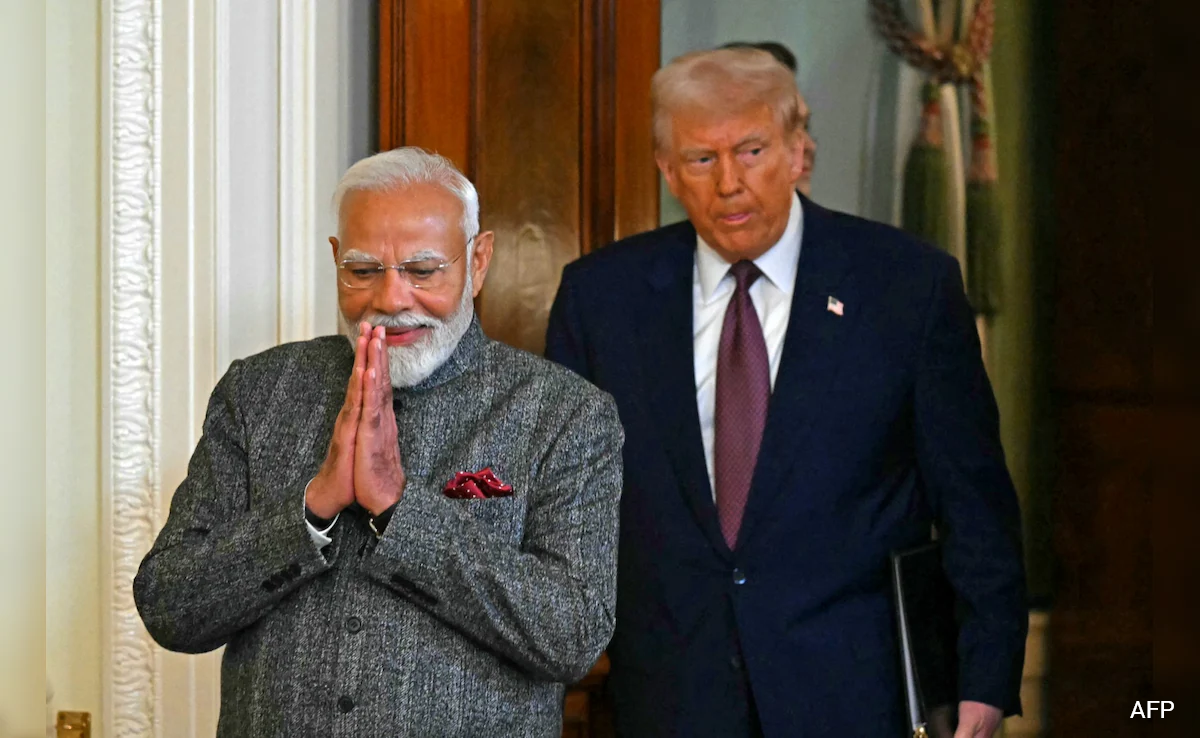
Leading American and Indian business advocacy groups hailed President Donald Trump's announcement of a breakthrough in US-India trade relations, calling the reduction of tariffs on Indian goods from 50 per cent to 18 per cent a "historic first step" toward a long-awaited bilateral trade agreement between the world's two largest democracies.
In statements issued shortly after President Trump's conversation with Prime Minister Narendra Modi, the US Chamber of Commerce and the US-India Strategic Partnership Forum (USISPF) praised the political will shown by the two leaders to address longstanding trade barriers and deepen economic cooperation.
The US-India Strategic Partnership Forum (USISPF) described the move as a "significant and positive first step" that signals momentum toward a comprehensive US-India Bilateral Trade Agreement (BTA). The forum noted that while the specifics of the agreement are still being worked out, the tariff reduction demonstrates a shared commitment to tackle tariffs, market access challenges, and non-tariff barriers across a wide range of sectors.
"A BTA between the two nations would deliver meaningful benefits for businesses, workers, and consumers in both countries, while strengthening supply chains and economic resilience," USISPF said in its statement from Washington. The group added that this announcement is "only the beginning," with further phases of negotiations expected in the coming months.
Echoing that sentiment, the US Chamber of Commerce welcomed what it called "progress toward a trade deal that American and Indian businesses have long sought." Chamber President and CEO Suzanne P Clark congratulated both governments for their efforts to reduce tariffs and non-tariff barriers that affect companies and workers in both nations.
"We appreciate the efforts of President Trump and Prime Minister Modi, and their officials," Clark said, adding that the Chamber and its affiliate, the US.-India Business Council (USIBC), look forward to reviewing the details of the deal and partnering with both governments to help implement it.
Clark noted that the US-India economic relationship is "one of the most consequential in the world" and emphasised that a trade agreement would not only benefit the two economies but also contribute to broader global security and stability.
Prime Minister Narendra Modi also publicly acknowledged the announcement following his conversation with Trump, calling it a moment that unlocks "immense opportunities for mutually beneficial cooperation." In a message posted on social media, PM Modi expressed gratitude for the tariff reduction and highlighted the broader significance of cooperation between "two large economies and the world's largest democracies."
Business leaders view the tariff cut as especially significant given the friction in recent years over reciprocal duties, regulatory hurdles, and market access concerns. For US exporters, high Indian tariffs have often been a sticking point, while Indian manufacturers have faced steep duties entering the US market. The reduction to 18 per cent is being seen as a compromise that opens space for further negotiation.
USISPF emphasised that both governments have now laid the groundwork for a broader trade framework aimed at expanding bilateral trade toward a $500 billion target, a goal repeatedly discussed by policymakers in both capitals. The forum underscored that stronger US-India trade ties are central not only to economic growth but also to building a resilient, rules-based Indo-Pacific economic order.
Industry observers say the alignment of political leadership with sustained advocacy from business groups such as USISPF, USIBC, and the Chamber has created a rare window for progress on an issue that has been under discussion for over a decade.
With additional negotiations anticipated in the months ahead, business groups are urging both governments to maintain the current momentum and translate this announcement into a comprehensive trade agreement that addresses tariffs, digital trade, supply chains, and investment flows.
For now, leaders on both sides of the Pacific are celebrating what they describe as a decisive breakthrough, one that could redefine the economic partnership between the United States and India for years to come.
Track Latest News Live on NDTV.com and get news updates from India and around the world


